


If you were hurt at work in North or South Carolina, you may be entitled to significant benefits.

Even common workers’ compensation injuries can result in costly medical bills – but we can help you seek maximum benefits.

This page refers to Common Injuries in Workers’ Compensation Cases in North Carolina.
Since laws differ between states, if you are located in South Carolina, please click here.
Common Workers’ Compensation Injuries in North and South Carolina
As a workers’ compensation attorney who helps people injured on the job, I’ve seen how a workplace accident can change a person’s life in an instant. One moment, you’re focused on your tasks, and the next, you’re dealing with an injury, medical appointments, and uncertainty about your next paycheck. The North Carolina and South Carolina workers’ compensation systems are in place to provide a safety net for injured workers.
Many people are surprised to learn that it’s not just injuries from a sudden accident that might qualify for benefits; many of the most common workers’ compensation injuries are those that develop slowly over months or even years.
Key Takeaways About Common Workers’ Compensation Injuries
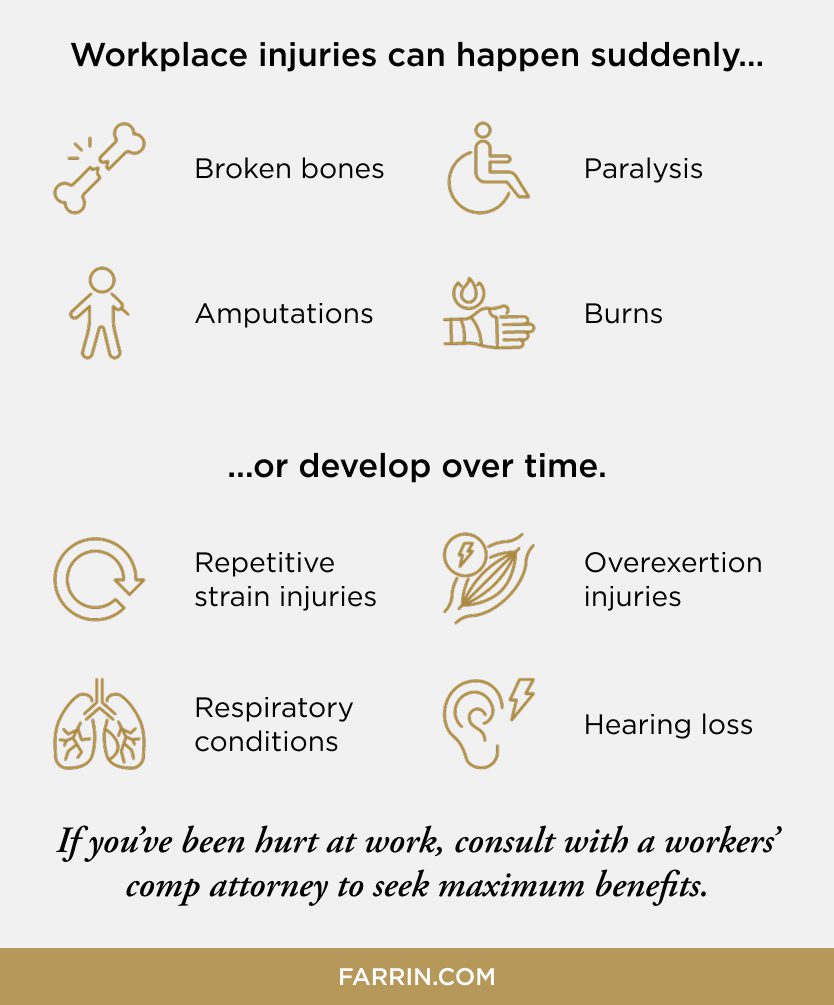
- Workplace injuries can be caused by a single, traumatic event or can develop gradually over time from repetitive tasks.
- Common categories of work injuries include musculoskeletal issues like back injuries, repetitive motion injuries such as carpal tunnel syndrome, and occupational illnesses from workplace exposures.
- The workers’ compensation system is generally a “no-fault” system, meaning how the injury occurred is often less important than the fact that it arose from employment.
- Both physical injuries and, in some specific circumstances, psychological conditions stemming from a physical injury might be covered.
- Properly reporting an injury to an employer and seeking medical care are crucial steps in the process.
What Is a Workers’ Comp Injury?
Before we explore specific injuries, it’s helpful to understand what workers’ compensation generally covers. In both NC and SC, a workplace injury is typically defined as an injury or illness that happens in the course and scope of employment. This simply means the injury occurred while you were performing your job duties. Following is an interactive chart which dispalys common causes of workplace injuries within specific industries.
The workers’ compensation system is designed to provide benefits — such as payment for medical treatment and partial replacement of lost wages — to most people who get hurt or ill at work. The focus is on the connection between your work and your injury.
Injuries From a Single Workplace Accident
Many on-the-job injuries are the result of a single, unexpected event. These are often what people first think of when they hear about workplace accidents. They are sudden, traumatic, and can be quite serious.
Slips, Trips, and Falls
Falls are a leading cause of injuries across many industries, from construction sites in Greenville to retail stores in Charlotte. A wet floor, an uneven surface, or a cluttered walkway can lead to a serious fall. These accidents frequently result in:
- Broken bones or fractures
- Severe sprains and ligament tears
- Head injuries, including concussions and traumatic brain injuries (TBIs)
- Back and spinal cord injuries
These injuries often require immediate medical attention and can involve a long recovery period, sometimes preventing a return to the same type of work.
Struck-By or Caught-In-Between Accidents
In industrial, warehouse, and construction settings, the risk of being struck by an object or caught in machinery is a daily reality. The Occupational Safety and Health Administration (OSHA) identifies “struck-by object” as one of the leading causes of death in the construction industry. These incidents can involve falling materials, moving vehicles like forklifts, or accidents where a worker’s body part gets caught in or between heavy equipment.
The results can be devastating and might include crush injuries, internal organ damage, and amputations. These are among the most severe and life-altering common workers’ compensation injuries.
Back and Spinal Cord Injuries
Back injuries are incredibly frequent in the workplace. They can happen suddenly from lifting an object that is too heavy or lifting with improper technique. A fall from a ladder or scaffolding can also cause immediate and severe damage to the back and spinal cord.
These injuries range from muscle strains and herniated discs to catastrophic spinal cord damage resulting in paralysis. Even a seemingly minor back injury can lead to chronic pain and limitations that affect your ability to work and live your life normally.
Burns and Electrocutions
Workers in restaurants, manufacturing plants, and those who work with electrical systems face the risk of burns. These can be thermal burns from hot surfaces or liquids, chemical burns from corrosive substances, or electrical burns from contact with live wires. Severe burns are not only painful but also carry a high risk of infection and can require extensive medical procedures like skin grafts.
Injuries That Develop Over Time
Not all work injuries are dramatic. Many develop slowly, becoming progressively worse until they are debilitating. Because there isn’t a single event to point to, people sometimes question whether these conditions qualify for workers’ compensation. In many cases, they do.
Repetitive Strain Injuries (RSIs)
A repetitive strain injury, also called a repetitive motion injury, happens when you perform the same physical motion over and over again. This repeated stress can cause damage to muscles, tendons, and nerves. I often speak with people who have developed these conditions from jobs that require constant, repeated actions.
Some common examples of RSIs include:
- Carpal Tunnel Syndrome: This condition affects the hand and wrist and is common among office workers who spend all day typing, as well as assembly line workers who make the same hand motions repeatedly.
- Tendonitis: Inflammation of a tendon, often seen in workers who lift, push, or use vibrating tools throughout their shift
- Bursitis: Inflammation of the fluid-filled sacs that cushion the joints, frequently affecting the shoulders, elbows, and knees of workers in physically demanding jobs.
These conditions might start as minor aches but can become a source of chronic pain that makes performing your job impossible without medical intervention.
Overexertion Injuries
According to the National Safety Council, overexertion is a leading cause of workplace injuries. This category includes injuries from lifting, pushing, pulling, holding, or carrying objects. These actions can lead to muscle strains and sprains, particularly in the back and shoulders. While a single instance of overexertion can cause an acute injury, the cumulative effect of these activities day after day can also lead to chronic pain and tissue damage. Many people in physically demanding roles, such as nursing, construction, and warehouse logistics, endure these types of injuries.
Occupational Illnesses and Exposures
Another category of workers’ compensation injuries involves illnesses that develop due to exposure to hazardous conditions or substances in the workplace. These cases can be complex because the illness might not appear for years after the exposure occurred.
Hearing Loss
Workers who are consistently exposed to loud noise from machinery or equipment can experience gradual, permanent hearing loss. Industries like manufacturing, aviation, and construction present a high risk for noise-induced hearing loss. This is a real, compensable condition under workers’ compensation laws in the Carolinas.
Respiratory Conditions
Inhaling dust, chemicals, or toxic fumes can cause serious and sometimes fatal lung diseases. For example, exposure to asbestos can lead to mesothelioma and asbestosis, while breathing in silica dust from cutting concrete or stone can cause silicosis.
Other workers might develop occupational asthma from exposure to irritants in the workplace. OSHA provides extensive resources on these preventable but serious conditions.
Work-Related Stress and Mental Health Conditions
This is an especially complicated area. In North Carolina and South Carolina, claims for a purely psychological injury (like anxiety from a stressful job) are generally very difficult to pursue successfully. However, when a worker develops a psychological condition as a direct result of a serious physical work injury, it might be compensable.
For example, someone who endures a traumatic amputation might develop depression or post-traumatic stress disorder (PTSD). In these situations, the mental health treatment may be covered as part of the overall workers’ compensation claim.
Why Documenting Common Workers’ Compensation Injuries Is Important
Regardless of how your injury occurred, taking the right steps afterward is crucial. The workers’ compensation system has strict rules and deadlines that must be followed. Failing to do so could jeopardize your ability to receive potential benefits you may need.
Your three most important responsibilities are:
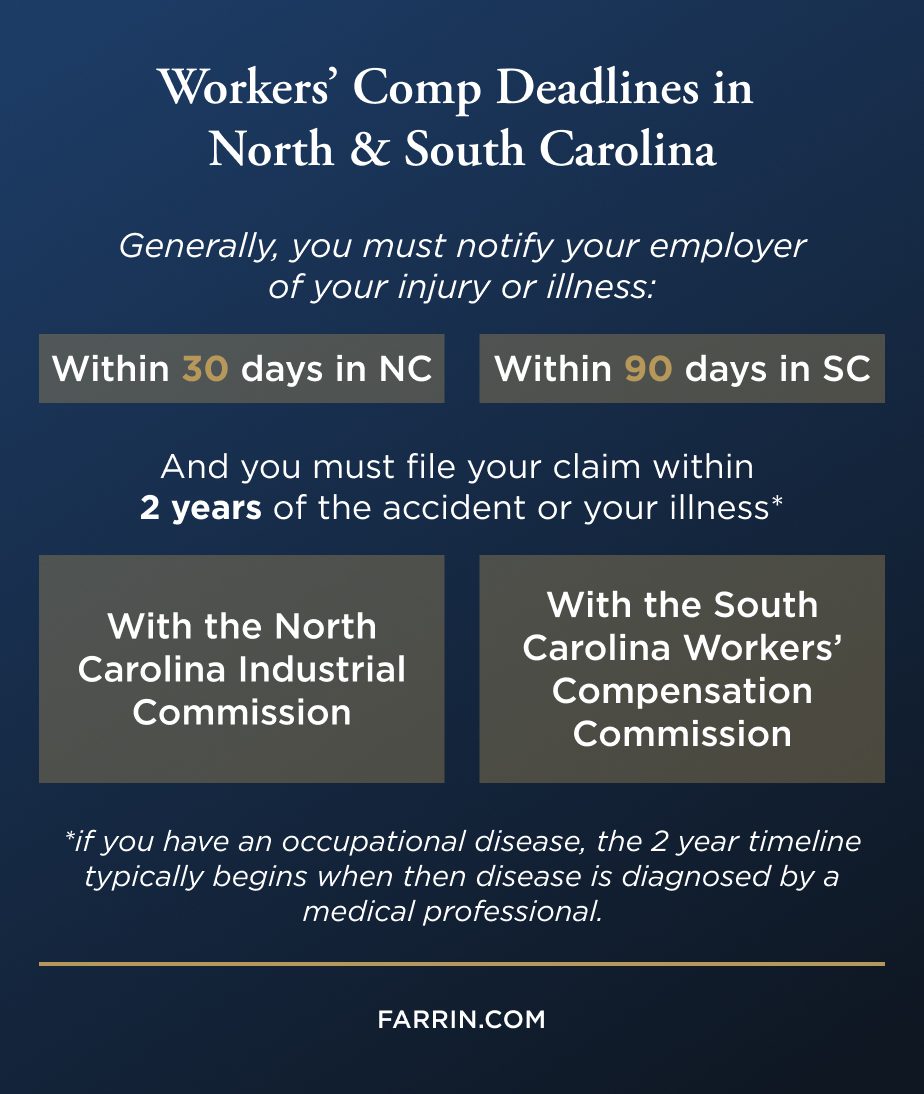
- Report the Injury: You must report your injury to your employer. In North Carolina, you should provide written notice within 30 days. In South Carolina, the general rule is to provide notice within 90 days. It is often best to report it immediately.
- Seek Medical Treatment: Getting a medical evaluation is essential not only for your health but also to create a record that documents the connection between your work and your injury. Follow your doctor’s treatment plan carefully.
- File a Workers’ Comp Claim: An attorney can help you adhere to your state’s deadlines and guidelines for filing.
The agencies that oversee these processes are the North Carolina Industrial Commission and the South Carolina Workers’ Compensation Commission. Their websites provide forms and information, but the process can be difficult for anyone, let alone someone who is already dealing with the stress of an injury. A workers’ compensation attorney can help guide you through the requirements and fight for the full benefits you might be owed.
 Text Us
FAQs for Common Workers’ Compensation Injuries
Here are answers to some questions people frequently ask about on-the-job injuries.
What if my pre-existing condition was aggravated by my work?
If your job duties materially aggravated a pre-existing condition, you may still be eligible for workers’ compensation benefits. For example, if you had a mild back condition that significantly worsened after a lifting accident at work, the aggravation could be considered a compensable injury.
Can I choose my own doctor for a work injury?
The rules for choosing a doctor vary. Generally, your employer or their insurance carrier directs your initial medical care. In certain circumstances, you might be able to petition to change physicians, but this can be a complicated process where an attorney’s guidance could be valuable.
What types of workers' compensation benefits are available?
Typically, workers’ compensation benefits can include payments for reasonable and necessary medical treatment related to the injury, wage replacement for the time you are out of work (temporary total disability benefits) or returned to work at reduced wages (temporary partial disability benefits), and compensation for any permanent impairment resulting from the injury (permanent partial disability benefits).
What happens if my employer doesn't have workers' compensation insurance?
In most cases, employers are required by law to carry workers’ compensation insurance. If your employer fails to do so, there are state funds and other mechanisms that might provide benefits, and the employer could face significant penalties. You might also have the option to file a civil lawsuit against your employer.
How long do I have to file a formal claim for my injury?
Beyond the initial reporting deadline, there is a statute of limitations for filing a formal claim with the state commission. In North Carolina, you generally have two years from the date of injury to file a Form 18. In South Carolina, you generally have two years to file a Form 50 or Form 52. While you have two years before the claim is legally barred, you should give notice of the accident within 30 days. Failing to give proper notice may complicate the claim and your recovery.
Are injuries that happen during a lunch break covered?
This depends on the specifics. If you are injured on your employer’s premises during a lunch break, it might be covered. If you leave the premises to run a personal errand and get hurt, it is less likely to be considered a work-related injury. These cases are very fact-specific.
Contact Us for Help With Your Workplace Injury
If you have been hurt on the job, you are likely facing a difficult time filled with physical pain, financial pressure, and uncertainty about the future. The workers’ compensation system was designed to help most hurt employees, but dealing with insurance carriers and complex paperwork can be a challenge.
The insurance company has professionals fighting to protect their interests, and having a dedicated advocate on your side levels the playing field. At the Law Offices of James Scott Farrin, we fight for injured workers like you. Our team can handle the details of your workers’ comp case so you can focus on your recovery. And you pay no fee unless we obtain compensation for you. Guaranteed.²
If you, or a loved one, have been injured or gotten sick at work, contact the Law Offices of James Scott Farrin today for your free case evaluation. Call us at 1-866-900-7078 or contact us online.
Together, let’s tell them you mean business.