

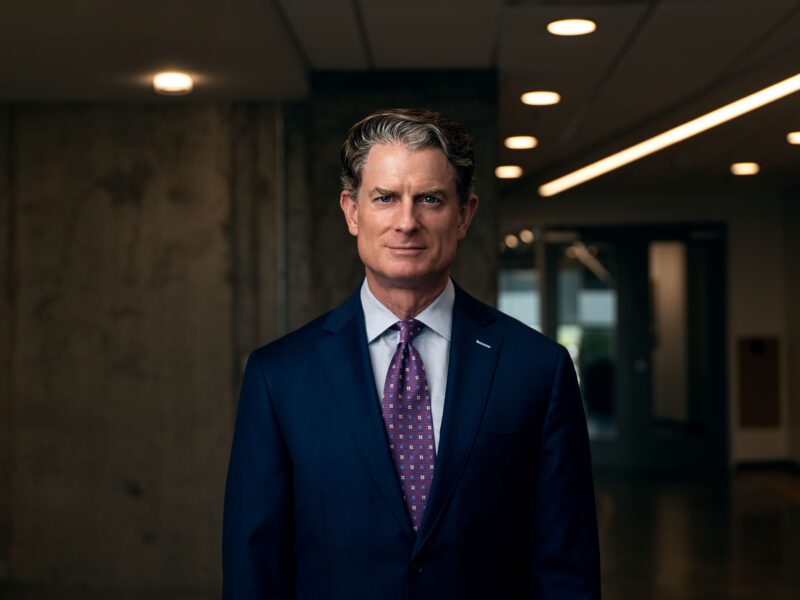
“I can’t promise my clients that the road ahead will be easy. But I can promise that I’ll listen, I’ll be prepared, and I’ll do everything I can to help them find a way forward.”

Fellow, American Bar Foundation5

Received two Emmys, 2009 and 2013

Named to “Best Lawyers”4 list for Personal Injury Litigation by Best Lawyers in America, 2024 – 2027
Attorney Coleman Cowan (Partner)
I know firsthand how quickly life can change. And how hard it can be to put the pieces back together when it does.
In 1999, I was a young trial attorney leaving a deposition in Durham when a stranger opened fire. A bullet shattered my left wrist, leaving me with permanent nerve damage and little feeling in my left hand. In an instant, I went from building a career helping others navigate difficult circumstances to facing an uncertain future of my own.
There were surgeries, months of physical recovery, and years of coming to terms with what had happened. Things I’d always taken for granted suddenly became frustrating challenges. And some things, including my ability to play guitar, were gone for good.
But that experience also changed how I saw the world. I learned that being strong doesn’t always mean pushing through on your own. Sometimes it means accepting help, adapting to circumstances you never wanted, and finding a way to build a meaningful life, even when it looks different from the one you imagined.
Today, as a Partner and head of the Litigation Department at James Scott Farrin, I carry those lessons with me when I represent people whose lives have been turned upside down by catastrophic injuries and other devastating events.
I know what it’s like to feel frightened, frustrated, and uncertain about the future. And I know how much it can mean to have someone in your corner who understands what you’re going through.
Learning That Strength Sometimes Means Accepting Help
I was 28 when I was shot. I remember lying in the hospital, wondering what I’d still be able to do with my injured arm and hand. I had no idea how much my life was about to change.
Over the following months, I had to relearn how to do ordinary things with limited use of my left hand. Even buttoning a shirt became an exercise in patience. And long after my physical injuries had stabilized, I still struggled to feel safe in crowds and unfamiliar places.
But one of the hardest lessons I learned during my recovery had little to do with my injured hand. It was learning to accept help.
I’ve always been fiercely independent. So, I was a bit reluctant when my mother essentially moved into my home to take care of me without even bothering to ask permission. Looking back, I’m glad she didn’t. I probably would have told her I could manage on my own.
The truth was, I needed her. And I’ve never forgotten what she did for me.
I also came to understand that not every injury is visible. My physical recovery took months, but dealing with the emotional impact of what happened took years. That’s something I carry with me when I meet people who’ve suffered serious injuries.
I understand the anxiety of not knowing what your future will look like. I also know how difficult it can be to accept that your life may never be exactly the same.
And I’ve learned that recovery isn’t always about getting back everything you’ve lost. Sometimes, it’s about finding another way to live the life you want.
Taking the Road Less Traveled
My path to becoming the attorney I am today hasn’t exactly been a straight line.
I graduated from the University of North Carolina at Chapel Hill with a degree in Economics and went on to earn my law degree from Wake Forest University School of Law. After clerking for a federal judge, I began building a career as a trial attorney.
Then came the shooting.
Surviving such a random act of violence made me pause and seriously reconsider how I wanted to spend the rest of my life. And, after a decade in the legal profession, I made a decision that surprised many people: I walked away from an established legal career to pursue journalism. I earned a master’s degree from Columbia University Graduate School of Journalism and eventually became a producer for the CBS News program 60 Minutes.
Over the next decade, I traveled to six continents, working on stories that took me into war zones, remote jungles, and some of the world’s most dangerous places. I reported on gangs in Chicago, drug cartels in Mexico, the war in Afghanistan, and Russian opposition leader Alexei Navalny.
It was an extraordinary chapter of my life. And it taught me lessons I still rely on today in the courtroom.
Some of the most compelling stories I encountered weren’t really about the dramatic events themselves. They were about the people caught up in them. Their struggles. Their choices. What mattered to them. And what they were willing to do when the odds were stacked against them.
I didn’t fully appreciate it at the time, but those years in journalism were preparing me to become a different kind of trial attorney.
Standing Up for the Underdog
In 2018, I returned to practicing law. And within four weeks, I was back in a courtroom trying a case before a jury.
I’ll admit, returning after so many years away was a challenge. But I also knew I wasn’t coming back as the same lawyer who had left ten years ago.
Journalism taught me how to investigate complicated issues, identify the facts that matter most, and explain them in ways people can understand. And my own injury gave me a much more personal understanding of what it means when someone’s life is suddenly changed through no fault of their own.
Today, I lead the firm’s Litigation Department, where I handle complex, high-stakes cases involving catastrophic personal injuries, product liability, and other civil litigation matters. I’ve never been intimidated by the size of the company or the number of lawyers on the other side. What matters to me is making sure the person I’m representing has a fair opportunity to be heard.
Many of the people I represent are individuals and families taking on corporations, manufacturers, trucking companies, or insurance companies with substantial financial and legal resources.
But having more money, more lawyers, or more resources doesn’t necessarily make one side right. And I believe people who have suffered devastating losses deserve the opportunity to tell their stories and have their claims evaluated fairly.
Listening First
When I first meet someone who’s been seriously injured, I don’t begin by talking at them about the law.
Whenever possible, I like to meet clients where they’re most comfortable, whether that’s in their home, at an office, or even at the hospital. I want to understand who they are, what they’ve been through, and what matters most to them.
Then we can start talking about the legal process, the questions they have, and the options available to them.
I know how overwhelming life can feel after a serious injury. There may be medical decisions to make, financial worries, family responsibilities, and questions about the future that no one seems able to answer.
That means being prepared, anticipating problems, keeping people informed, and helping them make decisions with a clearer understanding of what they’re facing.
I also know that reaching out to an attorney can be difficult. I remember how reluctant I was to accept help after I was shot, even when I desperately needed it. I never want someone to feel uncomfortable asking me a question or telling me what they’re worried about.
I can’t eliminate every uncertainty or promise how a case will turn out. But I can listen, explain what I know, be candid about the challenges, and help my clients understand what we can do next.
And I can make sure they know I’m on their side, and I’m paying attention.
Finding the Story That Matters Most
I believe being an effective trial attorney takes more than knowing the law or mastering the evidence. You have to understand how an injury has changed someone’s life. And then you have to help a jury understand it, too.
For me, losing the ability to play guitar meant giving up something that had brought me joy since childhood. And now that my son is a musician, I feel that loss in another way. I can’t share that experience with him the way I once imagined I would.
To someone else, that might seem like a small thing compared with the more obvious consequences of being shot. But it isn’t small to me.
I know my clients have losses of their own that may not be immediately apparent in a medical record or a stack of legal documents.
That takes time and preparation. I may spend years investigating a case, examining evidence, interviewing witnesses, and preparing for trial. I work to anticipate the other side’s arguments and find clear, compelling ways to explain complicated information.
Because when someone places their trust in me, I take that responsibility seriously. Their future may depend on whether a jury understands not just what happened to them, but what it means for the rest of their life.
Helping Clients Find a Way Forward
For me, the ultimate goal isn’t simply to build a compelling case. It’s to help people regain some control over their lives after an injury has taken so much away from them. I want my clients to understand their options and feel confident making decisions about their own futures. I’ll be there by their side to provide the experience, preparation, and guidance they need, but it’s their life. Their priorities matter.
And when someone has suffered a catastrophic injury, the stakes can be extraordinary. A successful claim may help provide access to ongoing medical treatment, necessary care, or a home adapted to new physical limitations. No amount of compensation can undo what happened, but it may give someone the resources to regain a measure of independence and stability.
Sometimes, pursuing a claim can also give people the satisfaction of standing up for themselves and knowing their voice mattered.
I know the road after a devastating injury can be long and unpredictable. And I know how much it means to have people beside you who are willing to help carry some of the weight.
That’s the kind of advocate I strive to be.
Experience Earned. Lessons Shared.
I’ve been fortunate to have a career that has taken me in unexpected directions, and I’m grateful for the recognition I’ve received in both law and journalism.
- As a trial attorney, I’ve helped litigate cases resulting in multimillion-dollar jury verdicts and have been recognized for my work in personal injury litigation and other complex matters.¹
- During my journalism career, I earned two Emmy Awards, a Peabody Award, and other honors for investigative reporting and storytelling.
But when I think about the experiences that have shaped me most, I think about the people who helped me along the way. My family. My mentors. Colleagues and friends who encouraged me, challenged me, and stood beside me when I needed them.
In many ways, I see my work with clients as an opportunity to pass some of that support along.
Because for me, the most meaningful part of being a trial attorney isn’t simply striving to win a case. It’s helping someone who’s experienced a devastating setback find the strength, resources, and opportunities to move forward.
Read and Hear More
- 31 James Scott Farrin Attorneys Named to 2027 "Best Lawyers in America" Lists4
- James Scott Farrin Partner Coleman Cowan Named to 2026 'Super Lawyers' List4
- “Coleman Cowan – Partner, Law Offices of James Scott Farrin,” Chatter with BNC, July 17, 2025
- “How a Litigator Became a ‘60 Minutes’ Producer and Lived to Return to the Courtroom with Coleman Cowan,” Voices of NCAJ, Sept 27, 2025
- Partner Coleman Cowan Points Out Hazards of Unsecured Inground Utility Boxes on WRAL 5 On Your Side
- 33 James Scott Farrin Attorneys Recognized by "Best Lawyers in America" in 2026 Edition4
- Federal court allows former NC student to sue over racial discrimination claims
- James Scott Farrin Attorneys Win $5.1 Million Verdict in Johnston County Wrongful Death Case1
- Law Offices of James Scott Farrin Attorneys Recognized on 2025 "North Carolina Super Lawyers" Lists4
- Standing on the Shoulders of Giants – An Interview With Coleman Cowan
- 22 James Scott Farrin Attorneys Recognized by "Best Lawyers in America" on 2025 'Best Lawyers' and 'Ones to Watch' Lists4
- 29 James Scott Farrin Attorneys Recognized by "Best Lawyers in America" on 2024 'Best Lawyers' and 'Ones to Watch' Lists4
- Four James Scott Farrin Attorneys Named by "Super Lawyers" to 2024 North Carolina 'Super Lawyers' list4
- Attorney At Law Magazine: Coleman Cowan: To Live. Not Exist.
- The Thriving Lawyers Podcast: Coleman Cowan-Thriving In and Out of Law (and Back in Again!) (Pt, 1)
- The Thriving Lawyers Podcast: Coleman Cowan-Thriving In and Out of Law-and Back In Again (Pt. 2)
- Five James Scott Farrin Attorneys Recognized on “Super Lawyers” 2023 North Carolina ‘Super Lawyers’ and ‘Rising Stars’ Lists6
- James Scott Farrin Named to "U.S. News - Best Lawyers" 2023 'Best Law Firms' List, 8th Straight Year4
- Attorneys for Ronnie Long Issue Statement Regarding Civil Case
- Former NC Christian school employee arrested again, faces new charges in sex abuse case
- WRAL.COM: Student interview with police details progression of alleged sex assault at home of Cape Fear Christian employee
- The News & Observer's Exclusive: ‘There are more victims’ of sexual abuse at Cape Fear Christian, lawyers allege
- Law Offices of James Scott Farrin Attorneys Win What Is Believed to be a Record-Setting $2.1 Million1 Case in Hoke County
- James Scott Farrin Named to 2020 Edition of "Triangle Business Journal" Best Place to Work
 Former Auto Accident Client, Online Google Review
Former Personal Injury Client, Online Google Review
For legal reasons and client confidentiality, reviews have been slightly edited to remove identifying information and correct typos.
5For information regarding the American Bar Foundation’s 1% of lawyers licensed to practice in each jurisdiction, visit www.americanbarfoundation.org/fellows.