


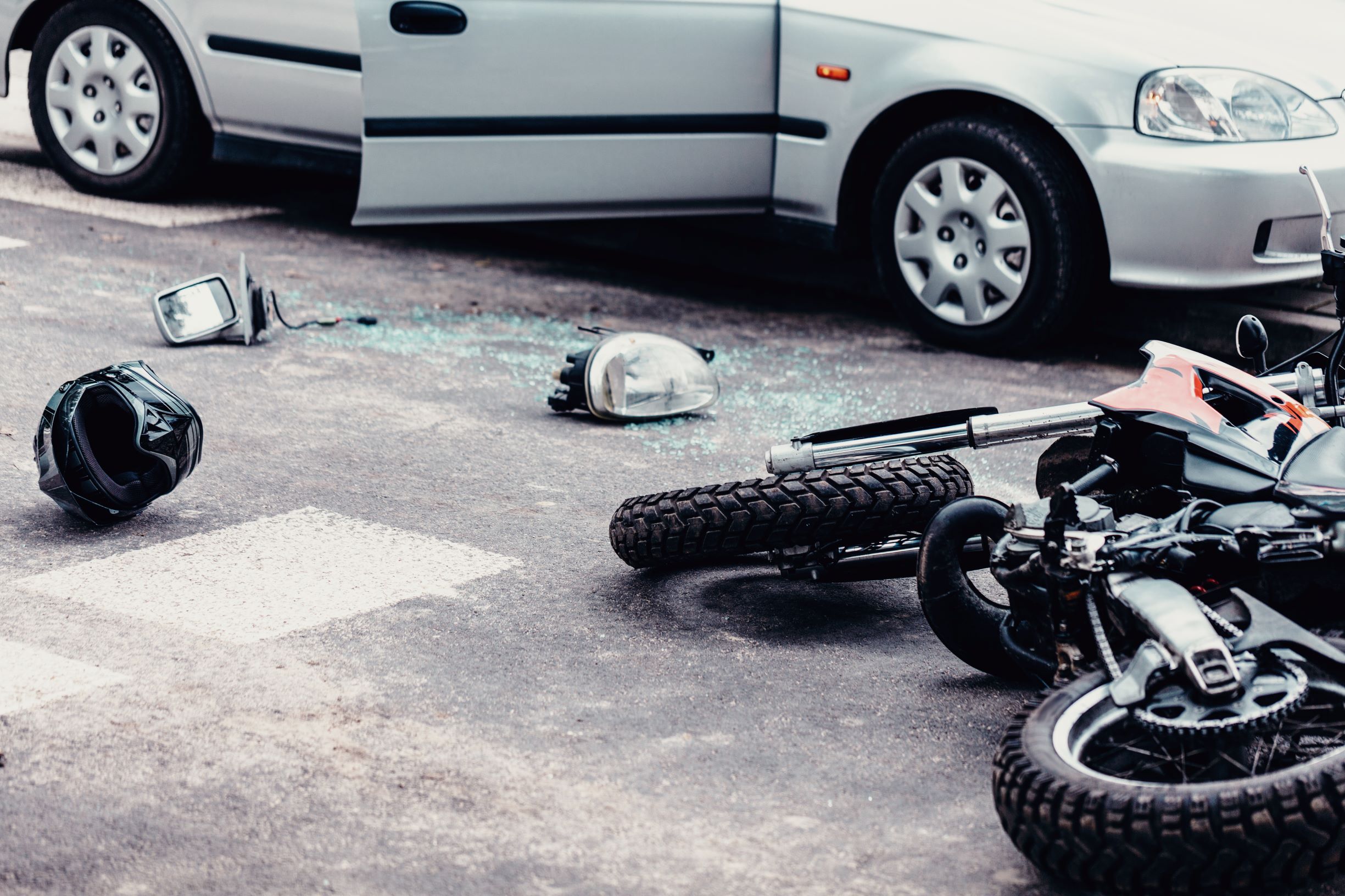
Injured in a motorcycle crash and facing an uphill battle?
Knowing what to do next can be confusing, but you don’t have to handle this alone.
Free case evaluation. No obligation. And no fee unless you recover.2

This page refers to Motorcycle Accidents in North Carolina.
Since laws differ between states, if you are located in South Carolina, please click here.
North Carolina Motorcycle Accident Lawyers Who Know How to Help
One minute you are cruising down the road on your motorcycle, enjoying the ride, and the next minute you are swerving to avoid a car that took a sharp left turn right in front of you. It happened all too quickly – and it wasn’t your fault.
The motorcycle enthusiasts on our personal injury team are passionate about helping injured riders across North Carolina. We understand that standing up to the insurance company can feel overwhelming, but we will be by your side, guiding you every step of the way. Learn more about our team of experienced North Carolina motorcycle accident attorneys…
We have:
- Represented motorcycle accident victims since 1997.
- More than 250 years of combined legal experience in personal injury cases.
- Attorneys and staff with many years of riding experience.
- Several NC motorcycle accident attorneys that have worked as defense lawyers for insurance companies and understand their motivations and tactics.
- Investigators who can come to you and can visit the site of your accident.
- 24/7 toll free phone access at 1-866-900-7078.
North Carolina Motorcycle Crashes at a Glance
According to the North Carolina Department of Transportation’s 2024 Traffic Crash Facts, the most recent year reported:
- 3,789 reportable motorcycle crashes statewide
- 193 motorcyclists were killed, down 4% from 2023
- More than 3,000 motorcyclists injured
Nationally, NHTSA reports that per mile traveled in 2024, motorcyclists were almost 27 times more likely than passenger car occupants to die in a crash, and almost five times more likely to be injured.
We offer free case evaluations for injured riders who need help, answers, and recommendations on what to do after a motorcycle wreck. Call 1-866-900-7078 so we can start helping you today!
What You Need to Know After Being in a North Carolina Motorcycle Accident
- What Do I Do After a Motorcycle Accident in North Carolina?
- How Can a North Carolina Motorcycle Accident Attorney Help Me?
- How Long Do I Have to File a Motorcycle Accident Claim in North Carolina?
- Rider Bias and Insurance Company Tactics in North Carolina
- How We Build North Carolina Motorcycle Accident Cases
- How Much Can I Expect From My Motorcycle Accident Settlement?
- What Are the North Carolina Motorcycle Laws?
- What Are Common Causes of Motorcycle Accidents in North Carolina?
- What Are Common Motorcycle Accident Injuries?
- How Do I Contact the Law Offices of James Scott Farrin?
What Do I Do After a Motorcycle Accident in North Carolina?
If you have been injured in a motorcycle accident, try to remain calm and move out of traffic to safety first. Then:


Once you leave the scene of the accident:


Tip: Do not give a recorded statement or sign a blanket medical authorization for the at-fault driver’s insurance company before speaking with a lawyer. You are not required to, and it is much harder to undo afterward.
If you ride a motorcycle, you are at higher risk for being involved in an accident – and for being injured or killed in the wreck. Per mile traveled, the National Transportation Safety Administration reports motorcyclists are almost 27 times more likely than passenger car occupants to die in a crash, and almost five times more likely to be injured.
Motorcycles are smaller, less protected, and less visible than other vehicles. Car and truck drivers often fail to detect motorcyclists in traffic, and this leaves motorcyclists vulnerable on the road. And when a crash occurs between a motorcycle and another vehicle, it’s the driver without the protective shell of the automobile that often suffers most.
In 2024, 193 motorcyclists were killed and more than 3,000 were injured in North Carolina crashes.
We understand how a motorcycle wreck can change your life and make you feel alone and vulnerable. We will listen to you, answer your questions, and handle the details of your case so that you can focus on healing. Call 1-866-900-7078 today for a free case evaluation.
What to Bring to Your Free Case Evaluation
You do not need any of this to call us. If you have it, it helps us give you a clearer answer faster.


Do not worry if your list is short. Riders call us from the hospital with nothing but a phone. We can help you track down the rest.
Talk to a real person 24/7. Call 1-866-900-7078.
[ Back to Top ]How Can a North Carolina Motorcycle Accident Attorney Help Me?
If you have been injured in a motorcycle wreck, it’s time to get help immediately. While there are many reasons to hire an experienced motorcycle accident lawyer, some of the most important include:
- Collecting and preserving evidence
- Working to establish blame, or fault
- Determining liable parties
- Identifying damages
- Applying pressure for answers from the insurance company
How Long Do I Have to File a Motorcycle Accident Claim in North Carolina?
North Carolina sets firm deadlines, called statutes of limitations, and missing one can end a claim no matter how strong it is.
- Personal injury: three years. Most motorcycle accident injury claims must be filed within three years. Under N.C. Gen. Stat. § 1-52(16), the clock generally starts on the date of the crash.
- Wrongful death: two years. If a rider dies, the personal representative of the estate generally has two years from the date of death to file, under N.C. Gen. Stat. § 1-53(4).
- Claims involving a government agency are different. These follow separate procedures and can move on a shorter timeline. (See Road Defects and Government Liability.)
- Some situations change the deadline. For an injured rider who is under 18, for example, the clock is generally paused on select portions of their claim until they turn 18.
Waiting is a risk even when you have time left on the clock. Video gets overwritten, skid marks wash away, and witnesses move or forget. The sooner a lawyer can start preserving evidence, the more of it there likely is to preserve.
Tip: If you are not sure which deadline applies to your situation, ask. A free case evaluation costs nothing, and there is no obligation.
If you have been injured in a motorcycle accident caused by another, the attorneys at the Law Offices of James Scott Farrin will be by your side, supporting and guiding you, as they seek justice and compensation for your injuries. Call us today at 1-866-900-7078.
Contributory Negligence in North Carolina: Why Fault Matters So Much Here
North Carolina follows a rule called pure contributory negligence. It is sometimes called the “1% rule,” because if the insurance company can show you were even slightly at fault for your wreck, you may be barred from recovering anything at all. Only a few states still apply this rule. North Carolina is one of them.
That is why fault is one of the most important questions in most North Carolina motorcycle cases, and it is why some insurance companies may work so hard to pin a small share of the blame on the rider.
Two things are worth knowing before you assume your case is over:
- The insurance company has to prove it. Under N.C. Gen. Stat. § 1-139, the party asserting contributory negligence carries the burden of proving it. It is a defense the other side must raise and support with evidence, not something you have to disprove on your own.
- North Carolina recognizes exceptions. Under the last clear chance doctrine, you may still be able to recover if the other driver had a final, realistic opportunity to avoid the crash and did not take it. Recovery may also still be possible when the other driver’s conduct rises to gross negligence, such as driving while impaired or at extreme speed.
Whether either exception fits your wreck depends on the facts and on the evidence, which is why you should talk to a North Carolina motorcycle accident lawyer before you talk to anyone about fault.
Tip: Do not speak with an insurance claims adjuster before seeking the advice of a North Carolina motorcycle accident lawyer. An offhand apology or a rough guess about your speed can become the fault argument used against you.
[ Back to Top ]Rider Bias and Insurance Company Tactics in North Carolina
Ask any experienced rider, and you will often hear the same thing: people assume the motorcycle was going too fast. Adjusters, and sometimes jurors, often may carry an unspoken belief that riders are reckless by nature. In a state with North Carolina’s contributory negligence rule, that assumption is not just unfair.
Witnesses often claim they heard the bike accelerate when what they really heard was the biker gear down in an effort to avoid the wreck. Our team of riders understands these nuances, and that can make a significant difference. Arguing that you contributed to the wreck even a little is useful to the other side, because they only need to attach a small share of the blame to you.
Here is what that can look like after a motorcycle wreck:
- An early call and a friendly tone: The adjuster may reach out within days, before you know the full extent of your injuries.
- Questions built to establish fault: How fast were you going? Did you see the car? Were you wearing a helmet? Were you between lanes? Every answer is a chance to move a percentage onto you.
- A request for a recorded statement: It feels routine. But it is evidence.
- A blanket medical authorization: Signing one can open your entire medical history, including conditions that have nothing to do with this crash.
- A fast first offer: Often offered before anyone knows whether you will need surgery, or how long you will be out of work.
How our team works to counter these tactics:
- We handle communication with the insurance company, so you are not answering questions about fault on your own.
- Our investigators can come to you and visit the scene while the evidence is still there.
- We look for the objective record, including witness statements, nearby video, and vehicle damage patterns, rather than just letting the adjuster’s version stand unchallenged.
- Several of our North Carolina motorcycle accident attorneys previously worked as defense lawyers for insurance companies. They know how these arguments get built, because they used to build them. And they can use this experience to help you.
Remember: Do not give a recorded statement or sign a blanket medical authorization for the at-fault driver’s insurance company before speaking with a lawyer. You are not required to, and it is much harder to undo afterward.
[ Back to Top ]How We Build North Carolina Motorcycle Accident Cases
A motorcycle case is not a car case with a smaller vehicle. The physics are different, the injuries are different, and the evidence that proves what happened is different. Because North Carolina’s contributory negligence rule puts so much weight on fault, documenting the wreck properly matters more here than it does in most states.
What we look for in a motorcycle case:
- The motorcycle itself: Scrape patterns, impact points, and where the bike came to rest help reconstruct the angle and the speed of the collision. We ask clients not to repair or dispose of the bike until it has been examined.
- Your gear: A scuffed helmet, a torn jacket, or damaged boots can document both the forces involved and the fact that you were riding responsibly.
- Road evidence: Skid and scuff marks, gouges in the pavement, and debris fields fade quickly. That is one reason our investigators can come to you and go to the scene.
- Electronic data: Some motorcycles and most modern cars record speed, braking, and throttle input. Helmet or dash cameras, and nearby business or doorbell video, can settle a fault dispute outright.
- The right witness questions: In a left-turn or right-of-way case, what a witness could see matters as much as what they saw. Sight lines and angles can turn “I never saw the motorcycle” into evidence of negligence. It’s also important to ask what the witness heard since that can matter and is frequently misinterpreted.
- Accident reconstruction: When fault is contested, we can work with reconstruction experts who can explain in measurable terms how the crash happened.
Our investigators can come to you to listen to your story and ask questions to help build your case. Our North Carolina motorcycle accident lawyers have handled hundreds of motorcycle cases, and they will be by your side throughout the entire process. Call 1-866-900-7078 for a free case evaluation.
[ Back to Top ]How Much Can I Expect From My Motorcycle Accident Settlement?
There is no simple answer to this question because every motorcycle accident is unique. Each has situational details, potential economic damages, and potential non-economic damages that should be fully and carefully considered when negotiating any settlement with the insurance company.
Situational Details
- Accident Specifics
- Insurance Policies
- Liability Percentages, which carry more weight in North Carolina than in most states

Potential Economic Damages
- Medical Expenses
- Property Damage
- Lost Wages

Potential Non-Economic Damages
- Pain and suffering
- Emotional Strain
- Loss of Consortium
An experienced motorcycle accident attorney can help you identify all of the damages you have suffered from your accident, create a narrative that accurately represents the details of your accident, and negotiate with the insurance company. The attorneys at the Law Offices of James Scott Farrin have been helping motorcycle accident victims in this way since 1997. You do not have to tackle this alone – we can help you, too.
When an injury is permanent, a settlement should account for costs that have not been incurred yet. We work to document the full potential lifetime picture, including future surgeries, ongoing therapy, assistive devices, home or vehicle modifications, and possible lost earning capacity. In catastrophic cases, that can mean working with life care planners and economists, so the number reflects the whole possible cost of the injury rather than only the bills that have already arrived.
[ Back to Top ]What Are the North Carolina Motorcycle Laws?
Motorcyclists must follow the same rules of the road and laws as all other drivers. However, every state has specific laws, or statutes, for motorcyclists to regulate licensing, ensure that their vehicles are in proper working condition when ridden, and help improve safety on the road. Listed below are several of the North Carolina statutes that regulate motorcyclists’ equipment, gear, and driving:
Equipment-related:
All motorcycles must have the following equipment in working order:
- Brake lights
- Horns
- Mirrors
- Exhaust system
- Lamps – head, rear, brake, stop
- Registration plate
Gear-related:
- A DOT-approved helmet must be worn, regardless of age, by drivers and passengers.
- Registration plates must be displayed and readable.
Driving-related:
- All motorcyclists must pass a road test and exam and have proper endorsement.
- Only two motorcycles can drive side-by-side in a lane.
Tip: If you do not follow North Carolina motorcycle statutes, an insurance company may try to use this against you to deny you compensation, citing contributory negligence. We can help you build a case to try to counter this.
Do I Have to Wear a Helmet on a Motorcycle in North Carolina?
Yes. North Carolina has a universal helmet law. Under N.C. Gen. Stat. § 20-140.4, every operator and every passenger on a motorcycle or moped must wear a helmet that meets Federal Motor Vehicle Safety Standard 218, with the retention strap properly secured. There is no exemption based on age or riding experience. The one narrow exception is for autocycles with completely enclosed seating or a roll bar or roll cage. A compliant helmet must have a:

- Thick inner lining
- Department of Transportation (DOT) sticker
- Manufacturer’s label permanently attached inside
NHTSA estimates that helmets are about 37% effective at preventing fatal injuries to motorcycle operators, and about 41% effective for passengers.
What If I Was Not Wearing a Helmet?
You may still be able to pursue compensation. The helmet statute says plainly that violating it is not negligence per se or contributory negligence per se in a civil case. Riding without a compliant helmet does not automatically end your claim the way many riders assume it does.
It does not make the question disappear, either. An insurance adjuster may still argue that a head injury, such as a concussion, a skull fracture, or a traumatic brain injury, was more severe than it would have been with a helmet, and use that argument to push a potential settlement down. That is an argument about what caused which injury, and it is one an experienced motorcycle accident lawyer can answer with medical evidence.
Tip: If you were not wearing a helmet, that is a reason to call a lawyer, not a reason to assume you have no case. Do not give a recorded statement about it before you get legal advice.
[ Back to Top ]What Are Common Causes of Motorcycle Accidents in North Carolina?
We know the vulnerability riders face on the roads. About two-thirds of all motorcycle wrecks involve another vehicle, most likely a car. And the most frequent type of collision is caused by a car making a left turn in front of an oncoming motorcycle, which often results in a head-on or near head-on collision. Other common causes of motorcycle accidents and collisions include:
- Corner turning
- Distracted driving
- Defects in motorcycle
- Driving while intoxicated
- Following too closely
- Hitting a fixed object
- Lane splitting
- Open car doors
- Road hazards
- Speeding
- Sudden stops
- Unsafe lane changes
The Three Causes of Motorcycle Crashes We See Most
- A car turning left across your path. This is the classic motorcycle wreck, and it is also the most common one. NHTSA found that in 46% of fatal two-vehicle crashes involving a motorcycle, the other vehicle was turning left while the rider was going straight, passing, or overtaking. It usually happens at an intersection or a driveway: the driver looks for a gap, judges it against the size and speed of a car, and turns into a motorcycle they either never saw or misjudged.
- Looked but failed to see. Police reports abbreviate it LBFS. A motorcycle presents a much smaller visual profile than a car, so a driver scanning for cars can look directly at a rider and never register them. That may be common. It is often still negligent.
- Following too closely. Riders often slow by rolling off the throttle or downshifting, which can slow the bike without ever lighting the brake light. A driver following too closely and watching for brake lights has less warning than they would behind a car. Rear impacts are the less common pattern, and NHTSA data reflects that: in fatal two-vehicle motorcycle crashes, 79% of motorcycles were struck on the front and only 6% on the rear. When a rear-end wreck does happen, the driver behind is generally the one responsible for keeping a safe distance.
Road Defects and Government Liability
A pothole, a gravel patch, an uneven lane seam, standing water, freshly cut grass, a missing sign, or a poorly marked work zone may be an inconvenience in a car. On two wheels, any one of them can put a rider on the ground. When a road hazard causes a motorcycle crash, the agency responsible for that road may share the blame.
These claims work differently from a claim against another driver, in four ways that matter:
- Who you can file against depends on who maintains the road. North Carolina maintains one of the largest state road systems in the country, so many roads that feel local are actually state roads. A crash on a state-maintained road generally involves NCDOT. A crash on a city street may involve the municipality. Some claims may be against a property owner for creating a hazard in the road.
- Claims against the state go to a different forum. Under the North Carolina Tort Claims Act, N.C. Gen. Stat. § 143-291, negligence claims against state agencies are heard by the North Carolina Industrial Commission rather than a regular court, and there is no jury. Damages are capped by statute.
- Claims against a city work differently again. A North Carolina city is generally immune from tort claims, but under N.C. Gen. Stat. § 160A-485, it waives that immunity by purchasing liability insurance, and only to the extent the insurance covers the claim. Those claims are brought in regular court, and no judgment can be entered above the city’s policy limits.
- Notice rules are separate from the filing deadline. The same statute expressly preserves any duty to give notice of a claim to the city, and to file within the applicable statutory period. Those requirements are not uniform, so which ones apply to your crash depends on the entity involved.
The procedures and the timelines are not the same as an ordinary injury claim, so moving quickly can matter significantly. Photograph the hazard, note the exact location, and get the names of any witnesses. Then talk to a lawyer who can identify the right agency, the right forum, and the right deadline before any of the three becomes a problem. We are here to help you with this process.
Tip: Do not assume a road hazard case is hopeless because a government agency is involved. Do not assume it is simple, either. Have someone look at it.
When the Motorcycle Itself Is the Problem
Not every motorcycle wreck is caused by a driver. A defective tire, a brake failure, a throttle that sticks, a frame or fork that fails under normal use, or a part subject to a recall can cause a crash on its own, or make a minor one much worse. When that happens, the manufacturer, the parts maker, or the seller may be responsible.
These cases depend almost entirely on preserving the motorcycle. Do not repair it, sell it, or let an insurance company dispose of it until it has been inspected. We can also check whether components are subject to an open recall or a pattern of similar failures.
If you think a mechanical failure caused your wreck, our team also handles defective products claims.
“Looked But Failed to See” – An All Too Common Occurrence
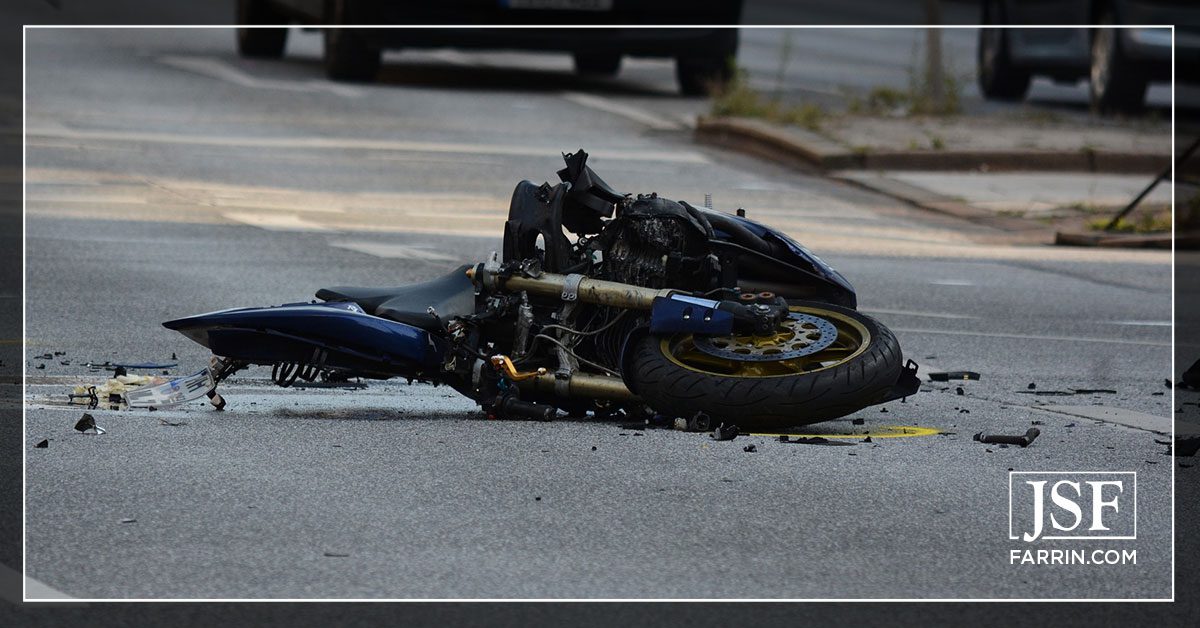
According to the National Highway Traffic Safety Administration (NHTSA) “When motorcycles and other vehicles collide, it is usually the other (non-motorcycle) driver who violates the motorcyclist’s right-of-way.” And the most commonly cited reason for this violation is, quite simply, that they never saw the motorcycle. Police actually list this on police reports as “LBFS” which stands for Looked But Failed to See.
So, while it may be considered common for drivers not to see a motorcycle, it’s also often considered negligent of that driver. If you have been injured in a motorcycle accident due to the negligence of another driver, you may be able to get compensation for your injuries.
Our North Carolina motorcycle accident lawyers have handled hundreds of motorcycle cases involving a variety of causes. With so much at stake in a motorcycle wreck, we urge you to contact an attorney who can help you pursue compensation for your losses, which may include expensive medical bills, loss of wages, pain and suffering, and future rehabilitation. Contact us for a free and confidential case evaluation. There is no obligation.
[ Back to Top ]What Are Common Motorcycle Accident Injuries?
Since motorcyclists are less protected than the majority of other drivers on the road, they are also the ones who sustain more injuries. Motorcycle injuries tend to be more severe than car crash injuries, and the most serious ones, including traumatic brain injuries, spinal cord injuries, complex fractures, and amputations, can affect mobility, cognition, and the ability to work for years. The most common motorcycle accident injuries include:
 Arm injuries – such as breaks, sprains, cuts, bruises, damage to the nervous system (called biker’s or rider’s arm), and amputations

Leg injuries – such as breaks, sprains, cuts, bruises, and amputations
 Head injuries – such as headaches, amnesia, skull fractures, concussions, and brain damage
 Road rash – friction burns or skin abrasions caused by scraping along the ground
Tragically, some motorcycle crashes are fatal. In a wrongful death claim, the family may be able to pursue funeral and burial expenses, medical bills from the final injury, the income and services the person would have provided, and the loss of their care, companionship, and guidance. If your loved one was killed in a motorcycle accident caused by another driver’s negligence, contact an experienced North Carolina wrongful death attorney.
An experienced NC motorcycle accident attorney can help document your injuries and needed medical care so that you can seek compensation for the harm and losses you may have experienced.
[ Back to Top ]How Do I Contact the Law Offices of James Scott Farrin?
At the Law Offices of James Scott Farrin, we have lawyers who personally understand the call of the open road. We also recognize the financial, physical, and emotional trauma that often accompanies a motorcycle wreck.
You don’t have to take on the insurance company by yourself – we know how to counter aggressive adjuster tactics and lowball settlement offers. We level the playing field for our clients by negotiating for the highest possible settlements, and if needed, our skilled litigators are fully prepared to take cases to court.
There is no cost to talk to us, and no obligation to hire us. If we take your case, you owe us no fee unless we recover for you. Guaranteed.2 Call 1-866-900-7078 to discuss your case and get a free case review.
And, most importantly, know that we are by our client’s side every step of the way, handling the details of your case as you focus on your recovery.
 Text Us
[ Back to Top ]
Motorcycle Accidents FAQs
Can a motorcycle passenger make an injury claim?
Often, yes. A passenger may have a claim against the motorcycle operator, another driver, or both, depending on what caused the crash. Because the passenger was not operating either vehicle, the liability analysis can be different from the rider’s claim.
What if the driver who hit me was uninsured, underinsured, or fled the scene?
There may still be options. Uninsured/underinsured motorist coverage can sometimes apply through the motorcycle policy or another applicable policy. It is important to identify every available policy and report a hit-and-run promptly, since notice and proof requirements can affect coverage.
Can an employer be responsible for a motorcycle crash caused by its driver?
Possibly. If the at-fault driver was working at the time of the collision – such as operating a delivery van, service vehicle, or company truck – the employer or another business may share responsibility. Photos of vehicle markings, company names, and identifying numbers can be useful evidence.
What if a dangerous road condition contributed to my crash?
A pothole, loose gravel, poor lighting, missing signage, or unsafe construction zone may be relevant to a claim. Depending on the facts, responsibility could extend beyond another driver to a contractor, property owner, or government entity. These cases can involve special procedures, so it is wise to have the facts reviewed quickly.
What if I had a pre-existing injury before the motorcycle accident?
A prior injury does not automatically prevent a claim. The key question is whether the crash caused a new injury or worsened an existing condition. Medical records from before and after the collision can help show how the accident changed your health, treatment needs, or ability to work.
Who pays my medical bills while my motorcycle accident claim is pending?
That depends on the coverage available and the facts of the case. Health insurance and other benefits may help with treatment costs while a claim is underway. Any reimbursement claims or medical liens should be identified early so there are no surprises when the case resolves.
How long do I have to file a motorcycle accident lawsuit in North Carolina?
Deadlines vary by claim and circumstance. Many North Carolina injury and property-damage claims have a three-year limitations period, while wrongful-death claims generally have a two-year period. Waiting can also make evidence harder to find, so speak with an attorney as soon as possible.
Motorcycle Accidents Help Is Always Nearby
- Asheville Motorcycle Accident Lawyers
- Charlotte Motorcycle Accident Lawyers
- Durham Motorcycle Accident Lawyers
- Fayetteville Motorcycle Accident Lawyers
- Goldsboro Motorcycle Accident Lawyers
- Greensboro Motorcycle Accident Lawyers
- Greenville, NC Motorcycle Accident Lawyers
- Greenville, SC Motorcycle Accident Lawyers
- Henderson Motorcycle Accident Lawyers
- Morganton Motorcycle Accident Lawyers
- New Bern Motorcycle Accident Lawyers
- Raleigh Motorcycle Accident Lawyers
- Roanoke Rapids Motorcycle Accident Lawyers
- Rocky Mount Motorcycle Accident Lawyers
- Sanford Motorcycle Accident Lawyers
- Wilson Motorcycle Accident Lawyers
- Winston-Salem Motorcycle Accident Lawyers