


Don’t miss out on needed workers’ comp benefits.

We can significantly increase your odds of getting full workers’ comp benefits.

This page refers to Am I Getting All My WC Benefits? in North Carolina.
Since laws differ between states, if you are located in South Carolina, please click here.
How Do You Maximize Workers’ Comp Benefits in North Carolina?
When you go to work each day, the last thing on your mind is suffering a serious injury. Yet, workers can have their lives turned upside down in a matter of seconds by a workplace accident. In those moments, the North Carolina workers’ compensation system is supposed to act as a safety net for most workers, helping cover medical care and a portion of lost wages while they recover.
These benefits can be a lifeline in a trying time, but the application process is confusing, and some insurance companies may be more focused on protecting their bottom line than on helping you heal.
Handling a workers’ comp claim is about much more than filling out a few forms. It requires strategic decisions, careful documentation, and a clear understanding of your rights from the very beginning. Working with an experienced North Carolina workers’ compensation attorney can help you significantly increase the odds of maximizing your workers’ compensation benefits.
Key Takeaways About Maximizing Your Workers’ Comp Benefits in North Carolina
- Promptly reporting a work injury in writing and seeking immediate medical care are critical first steps in a North Carolina workers’ compensation claim.
- Thorough documentation of symptoms, medical appointments, and expenses is essential for building a case for the full potential value of a claim.
- Strict adherence to a doctor’s treatment plan and work restrictions is necessary to prevent an insurance company from questioning the severity of the injury.
- Understanding how potential benefits like the Average Weekly Wage (AWW) are calculated is vital, as errors can significantly reduce compensation.
- An attorney can help handle communications with insurance adjusters, manage deadlines, and fight to help protect a worker’s rights throughout the claims process.
The Purpose of Workers’ Comp Benefits
In North Carolina, workers’ compensation is a type of insurance most employers are required to carry. If you get hurt on the job, this system is generally designed to provide specific benefits, usually without you having to prove your employer was negligent. It is an administrative system and process, not a lawsuit against your employer.
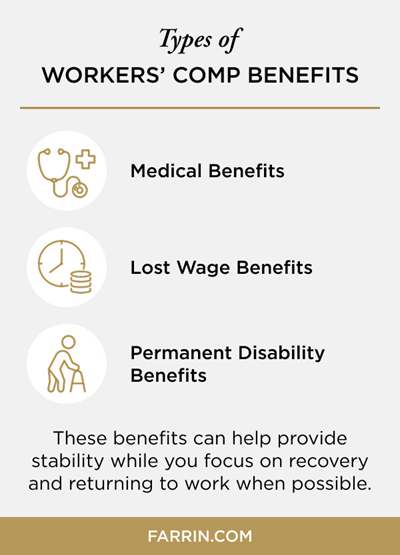
The main benefits typically fall into three categories:
- Medical Compensation: This can cover all reasonable and necessary medical treatment related to your work injury. This can include doctor visits, hospital stays, surgery, prescription medications, and physical therapy.
- Wage Replacement Benefits: If your injury prevents you from working, you might be eligible to receive a portion of your lost wages. This is generally calculated as two-thirds of your Average Weekly Wage (AWW), up to a maximum amount set by the state.
- Permanent Disability Benefits: If your injury results in a permanent impairment — meaning you don’t fully recover — you may be owed additional compensation. This is often based on any impairment rating assigned by your doctor.
These benefits are crucial for recovery, and ensuring they are calculated correctly and paid fully to those owed is the primary goal.
The First Steps Are Critical for Your Claim
What you do in the hours and days immediately following a work injury can set the tone for your entire claim. Insurance companies look closely at these early stages, so it’s important to handle them correctly.
Reporting Your Injury Promptly and Properly
The clock starts ticking the moment you are injured. In North Carolina, you generally have 30 days to report your injury to your employer. While you can tell your supervisor verbally, a written report creates a clear record that the notification happened. Waiting too long might jeopardize your claim.
You should also file a claim with the North Carolina Industrial Commission (NCIC), the state agency that administers workers’ comp laws. This is done by completing and submitting a Form 18, Notice of Accident to Employer. This officially starts the legal process of your claim.
Seeking Immediate and Appropriate Medical Attention
Your health is the top priority. Get medical help as soon as possible after an injury. This not only begins your recovery but also creates a medical record that can help link your injury to the workplace incident. When you see a doctor, be completely honest and detailed about how the injury occurred and the symptoms you are experiencing. Do not downplay your pain.
In North Carolina, the employer or their insurance company generally has the right to direct your medical care. This means they can choose the doctor you see. However, you still have rights within that system. For instance, if you are unhappy with the care you are receiving, you have the right to petition the NC Industrial Commission for a change of physician or for a second opinion.
Building a Compelling Case for the Benefits You Might Deserve
An insurance adjuster’s job is to evaluate your claim, but also often to minimize the amount the insurance company has to pay. To counter this, you should have a well-documented and organized case. Taking the following actions to build the foundation for your claim can help you try to maximize your workers’ comp benefits.
Meticulous Documentation: A Powerful Tool
From the moment you are injured, you should become the chief record-keeper of your case. The more detailed your records, the harder it can be for an insurance company to dispute the facts. It is wise to keep a dedicated folder for everything related to your claim.
- Keep a daily journal detailing your pain levels, physical limitations, and how the injury impacts your daily life.
- Log all mileage to and from your doctor’s appointments, physical therapy sessions, and pharmacy trips, as this can often be reimbursed.
- Save every receipt for out-of-pocket expenses, such as prescriptions, braces, or other medical equipment.
- Make copies of all work-status notes from your doctor, as well as any letters or emails you receive from your employer or the insurance company.
This collection of evidence provides a clear, consistent picture of your situation and can be invaluable when trying to demonstrate the full extent of your harms and losses.
Following Your Doctor’s Orders
The insurance company will watch to see if you are following your doctor’s treatment plan. If you skip physical therapy appointments, fail to take prescribed medication, or ignore your doctor’s advice, the adjuster might argue that you are not as injured as you claim or that you are not committed to your recovery. This could be used as a reason to reduce or deny your benefits.
Similarly, it is crucial to respect any work restrictions your doctor gives you. If you are placed on light duty, do not perform tasks that go beyond those restrictions — even if your supervisor asks you to. Doing so can not only worsen your injury but can also give the insurance company a reason to terminate your benefits.
Communicating Carefully With the Insurance Adjuster
You will likely have to speak with an insurance adjuster assigned to your case. Remember, the adjuster is not your advocate. Their goal is often to close the claim for the lowest possible cost. Be polite and professional, but also cautious.
Stick to the facts of your injury. Do not speculate on fault or offer opinions about your condition. Never agree to give a recorded statement without first seeking legal guidance. Anything you say can be taken out of context and potentially used to undermine your claim later. Provide simple, factual answers.
Common Pitfalls That Can Reduce Your Benefits
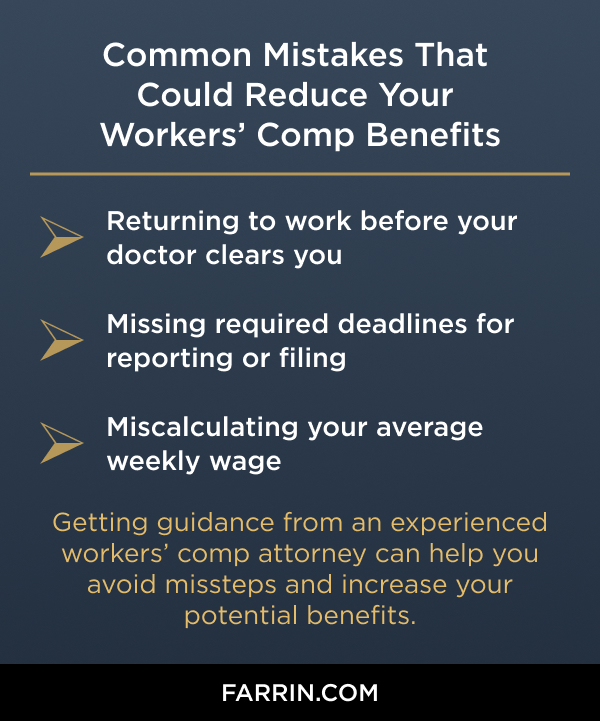
I’ve seen several common mistakes that can, unfortunately, result in injured workers receiving less than they otherwise might be owed. Being aware of these potential pitfalls can help you try to avoid them.
Returning to Work Too Soon
Many people may feel pressured to return to work before they are medically ready. This pressure can come from an employer, financial worries, or even a personal desire to get back to normal.
However, returning to work before your doctor releases you can be a serious mistake. It can signal to the insurance company that you are healed, which could lead them to stop your wage replacement benefits prematurely. It may also put you at a high risk of re-injuring yourself, which can create significant complications for your health and your case.
Missing Important Deadlines
The North Carolina workers’ compensation system runs on strict deadlines. You generally have 30 days to report your injury to your employer. You also typically have two years from the date of injury to file a claim (Form 18) with the North Carolina Industrial Commission, the state agency in charge.
Missing this deadline, known as a statute of limitations, can permanently bar you from receiving any benefits. You can learn more about this deadline directly from the state law, N.C. General Statute § 97-24.
Not Understanding Your Average Weekly Wage (AWW)
Your potential wage replacement benefits are based on your Average Weekly Wage. This figure is supposed to represent your average earnings in the 52 weeks prior to your injury. However, calculating the AWW can be complicated, especially if you work overtime, receive bonuses, or have a second job.
Some insurance companies may make errors in this calculation — errors that are rarely in the worker’s favor. An incorrect AWW can cost you thousands of dollars over the life of your claim, so it is vital to double-check the insurance company’s math.
How an Attorney Can Help You Try to Maximize Workers’ Comp Benefits in North Carolina
Having an experienced attorney on your side can significantly increase the odds of a better outcome in complex workers’ compensation cases.
Leveling the Playing Field Against the Insurance Company
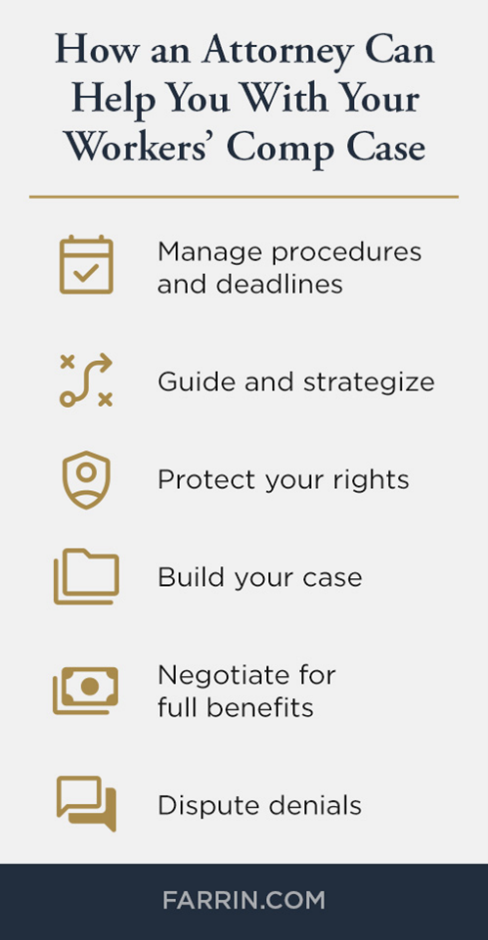
An attorney understands the tactics some insurance companies may use to try to devalue claims. They can help with communications and negotiations with insurers, helping to protect you from common pitfalls that could harm your case. Our attorneys know how to counter lowball settlement offers and push back against any unreasonable delays.
Guiding You and Protecting Your Rights
The workers’ compensation process has many rules and procedures. A lawyer can guide you through each stage, from filling out the initial paperwork to advising you on major decisions. We can help you:
- Fight back if you feel coerced to return to work too soon.
- Strategize on how to seek a second medical opinion if you are not comfortable with the company’s doctor.
- Monitor nurse case managers to try to ensure they are acting in your best interest, not just the insurance company’s.
This guidance can provide you with peace of mind and allow you to focus on what matters most — your health.
Building and Managing Your Case for Maximum Compensation
Ultimately, the goal is to fight for the maximum compensation possible under the law. A dedicated legal professional builds a compelling case by gathering the necessary evidence to try to prove the full potential value of your harms and losses. We strive to:
- Collect and meticulously examine your medical records to understand the full scope of your injuries.
- Depose doctors, vocational experts, and other witnesses, if needed, to strengthen your case.
- Fight for the highest possible lump sum settlement if appropriate by trying to demonstrate the long-term costs of your injury.
- Handle the complicated paperwork and deadlines so that your case can move forward without procedural errors.
By managing these details, we work to place you in a strong position when it comes time to negotiate for a settlement or, if necessary, present your case at a hearing.
FAQs for How Do You Maximize Workers’ Comp Benefits
Here are answers to some common questions we hear from people who have been injured on the job.
What if my employer doesn't have workers' compensation insurance?
In North Carolina, most employers with three or more employees are required to carry workers’ compensation insurance. If your employer fails to do so, you might still be able to seek compensation from the state’s Non-Insured Employers’ Fund, though the process can be more complex.
Can I be fired for filing a workers' compensation claim in NC?
No. It is illegal for an employer to fire you in retaliation for filing a workers’ compensation claim. This is called a retaliatory discharge. If you believe you were terminated for this reason, you might have grounds for a separate legal action against your employer.
What is a permanent partial disability (PPD) rating?
When you have reached what doctors call “maximum medical improvement” (MMI), your doctor will evaluate you to see if you have any permanent loss of function in the injured body part. They may then assign a PPD rating, which is a percentage of impairment. This rating is used to calculate any additional compensation you might receive for your permanent injury.
Do I have to accept the first settlement offer from the insurance company?
Absolutely not. The first offer is often a lowball offer made to see if you will accept a quick and cheap resolution. You have the right to negotiate for a fair amount that accurately reflects the full extent of your medical bills, possible lost wages, and any permanent impairment.
What happens if my claim is denied?
If the insurance company denies your claim, you have the right to appeal. The first step is typically a mediation, where a neutral third party tries to help you and the insurance company reach an agreement. If mediation is unsuccessful, your case can be presented at a formal hearing before the North Carolina Industrial Commission, the state agency in charge.
Contact an Experienced Workers’ Comp Attorney
Enduring a workplace injury can be a trying experience, filled with physical pain, financial stress, and uncertainty about the future. You don’t have to face the insurance company alone. At the Law Offices of James Scott Farrin, we fight for the rights of injured workers across the state.
Our mission is to do high-quality work for as many people as possible, and we have a strong track record of helping people seek maximum workers’ compensation benefits.1 We have the extensive resources and experience to build a compelling case on your behalf – several of our attorneys are North Carolina State Bar Board Certified Specialists in workers’ compensation law!
We work on a contingency fee arrangement, which means you pay no fee unless we get compensation for you.2 We will take your case only if we think we can get you a better result than you would get without us.
If you, or a loved one, have been injured or fallen ill at work, contact the Law Offices of James Scott Farrin today for your free case evaluation. Call us at 1-866-900-7078 or contact us online. Together, let’s tell them you mean business.