

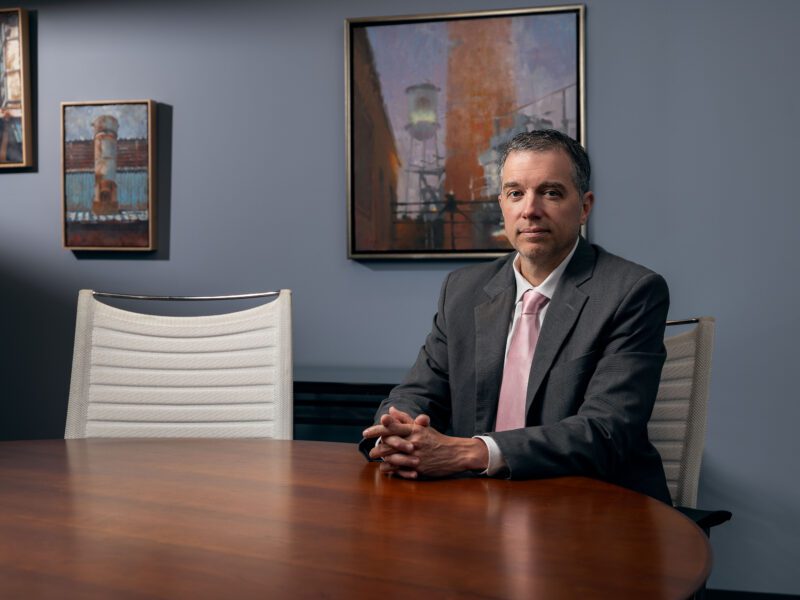
“When an injured client asks for assistance, my job is to help them understand what they’re facing, show them a path forward, and stay beside them until we get to where we want to go.”

Co-leader of the firm’s personal injury department

Former Senior Claims Representative for a major insurance company

Licensed to practice law in North Carolina and Virginia
Attorney Michael Shepherd (Partner)
I’ve learned a lot about what it takes to keep going when the road gets hard.
I worked full time while attending law school at night for four years. I studied for the Bar exam while still working and battling a painful case of shingles. And years later, after taking up running at age 39, I pushed myself through 50- and 100-mile ultramarathons knowing that at some point along the way something unexpected was going to happen and I’d just have to figure out how to get through it.
Those experiences taught me a lot about patience, perseverance, and what it means to keep moving forward when things don’t go as planned. They’ve also shaped the way I approach my work as a personal injury attorney.
Today, I’m a Partner at the Law Offices of James Scott Farrin and co-lead the firm’s Personal Injury Department. But I didn’t take a direct path to get here. I’ve seen personal injury claims from nearly every angle – as an investigator, an insurance adjuster, a paralegal, and an attorney.
Seeing What Happens When People Become Numbers
After earning my degree in Criminal Justice from Indiana University, I accepted a job as a private investigator, working mostly on workers’ compensation cases. I spent a lot of long days conducting surveillance from the back of a van. It was an unusual introduction to the world of claims, but it gave me my first glimpse into how the system worked from the other side.
From there, I moved into insurance claims. Every day, I talked with people who were frustrated or upset about how little the insurance company was offering them. Sometimes, I believed they deserved more, too, but the decision usually wasn’t mine to make.
I was constantly giving people bad news, constantly feeling like I wasn’t doing what I should for them. After a while, that really started to bother me. I saw how easily a person could become a claim number, a reserve, or a dollar amount on a screen.
I soon realized that I wanted to be on the other side of that equation.
Finding the Side of the Table Where I Belonged
When I moved to North Carolina, I started working as a personal injury paralegal. For the first time, I had the opportunity to help injured people directly. And something clicked.
Over the next five years, I learned just about every part of handling a personal injury claim. I talked with potential clients at intake, gathered police reports and medical records, visited clients in their homes, prepared claims, negotiated with insurers, and eventually managed the office.
More importantly, I got to know the people behind those claims. I saw what they were going through and how much it could mean to have someone knowledgeable on their side, helping them navigate an unfamiliar process.
I realized that I had finally found the type of work I was meant to do. I wanted to be a personal injury attorney.
Four Years. Full-Time Work. One Finish Line.
I also knew that taking that next step towards becoming a lawyer wasn’t going to be easy, especially since I needed to keep working. Nearly a decade after graduating from college, I applied to the evening program at North Carolina Central University School of Law which would allow me to work full time during the day and attend classes at night. And that’s exactly what I did for the next four years.
I finished near the top of my class, but getting there meant a lot of long days and late nights. Even studying for the Bar became an endurance test. I took two weeks off of my job to prepare and then, unfortunately, I developed shingles on my face and scalp. The headaches were so severe that sometimes I had to study in a darkened room, taking breaks whenever the pain became too much.
It was miserable. But I’d worked too hard to give up that close to the finish line.
Knowing How the Other Side Thinks
I joined the Law Offices of James Scott Farrin in 2010, and my years inside the insurance industry gives me an understanding of how adjusters evaluate claims, how reserves are often set, and what information insurance companies look for. It also helps me anticipate potential obstacles and think several steps ahead when I’m working on a client’s case.
One of the most important things I took away from those years was an understanding of how important it is to not lose focus on the person behind the paperwork. When someone is injured, they’re often dealing with pain, medical appointments, missed work, bills, and a lot of uncertainty. They’re often trying to navigate a system they may know nothing about while facing an insurance adjuster who deals with that system every day.
That’s an intimidating position to be in. And I don’t think anyone should have to face it alone.
I can’t take away everything clients are going through. But I can help them understand their options, prepare for the challenges ahead, and feel more confident about the decisions they make along the way.
Sometimes Getting to the Finish Line Means Helping Someone Else Get There
Running has become a passion of mine, and I see a lot of similarities between the endurance it takes to reach a finish line and the tenacity it takes to stand up to the insurance company.
I didn’t start running until I was 39. And when a coworker sailed past me during my first 5K, it didn’t exactly suggest I’d become an ultramarathon runner. But that inspired me to get better at it. So, I signed up for a half marathon. Then came marathons, 50Ks, 50-milers, 100Ks, an Ironman, and eventually 100-mile races.
At first, running was about seeing how far I could push myself. But somewhere along the way, that changed. The people became just as important as the race. I started entering events because I enjoyed being part of the running community and helping others when they needed it.
In an ultramarathon, you pretty much know something is going to go wrong at some point. You get tired. Something hurts. The weather changes. Whatever plan you had starts falling apart. You have to figure out what to do next and find a way to keep going.
I see some parallels in what our personal injury clients experience. They don’t always know how long the process will take, what challenges they’ll face, or whether they’ll have the resources to get through it.
I understand how overwhelming that uncertainty can be. And while I can’t promise them an easy road, I can help them figure out the next step and be there as they move forward. And that makes all the difference.
The Experience to Guide and the Grit to Keep Going
Today, I help lead a team of attorneys and staff handling personal injury claims. I enjoy working with people who care deeply about what they do, and I believe part of my responsibility is helping them learn, grow, and become even better advocates for our clients.
I think about the years I spent trying to find where I belonged. The long days working and the nights studying law. I’ve learned that difficult stretches don’t necessarily last forever, even when you can’t see the finish line.
Often, what makes the difference is having someone beside you who understands the road, believes there’s a way forward, and is willing to keep going with you.
Read and Hear More
 Former Personal Injury Client, Online Yelp Review
Former Car Crash Client, Online Google Review
For legal reasons and client confidentiality, reviews have been slightly edited to remove identifying information and correct typos.
*denotes past involvement