


A rear-end collision, even a minor one, can be a jarring and upsetting experience. In the aftermath, you may be left with more questions than answers. Who is responsible for the crash? Who pays for your medical bills? Can you be compensated for the time you missed from work? The simple answer is that the at-fault driver is responsible for paying for your potential damages. However, in many cases, determining who is at fault is not a straightforward process.
The legal and insurance process can be incredibly complex. From proving who was at fault to understanding the specific laws in North Carolina or South Carolina, every detail can impact your ability to recover the compensation you may need. As a car accident attorney licensed in North and South Carolina, I have helped many people in similar situations, and I understand the challenges that can arise. Let’s review who pays for rear-end collisions, the legal issues surrounding rear-end collisions, and how a legal professional cay help you fight for compensation.
Key Takeaways About Rear-End Accidents
- In many rear-end collisions, the driver who hits the car in front of them is presumed to be at fault.
- Exceptions can exist when the front driver acted negligently, such as by brake-checking or having non-functional brake lights.
- North Carolina and South Carolina have different laws that can affect a plaintiff’s ability to recover compensation.
- A skilled car accident lawyer can help you manage the entire legal process, from dealing with the insurance company to negotiating for a settlement or bringing your claim to trial if needed.
How to Determine the At-Fault Driver Who Is Responsible in North and South Carolina
In many rear-end collisions, the driver of the rear vehicle is considered to be at fault. This is because every driver has a duty to maintain a safe following distance and to pay attention to the vehicles ahead of them. When a driver fails to do so, they may be found negligent.
The Driver of the Rear Car is Often at Fault for Rear-End Crashes
Most rear-end collisions are caused by a form of driver inattention or negligence, for example:
- Following too closely: A driver may be following the vehicle in front of them too closely, leaving insufficient time and distance to stop.
- Distracted driving: A driver may be distracted by their phone, passengers, or other objects in their car, causing them to miss a change in traffic conditions ahead.
- Speeding: A driver may be traveling too fast for the road or weather conditions, which makes it impossible for them to stop in time to avoid a collision with the vehicle in front of them.
- Driving under the influence: A driver who is impaired by alcohol or drugs may have delayed reaction times and poor judgment.
- Fatigued driving: A driver who is sleepy or tired may not be able to react quickly to the car in front of them.
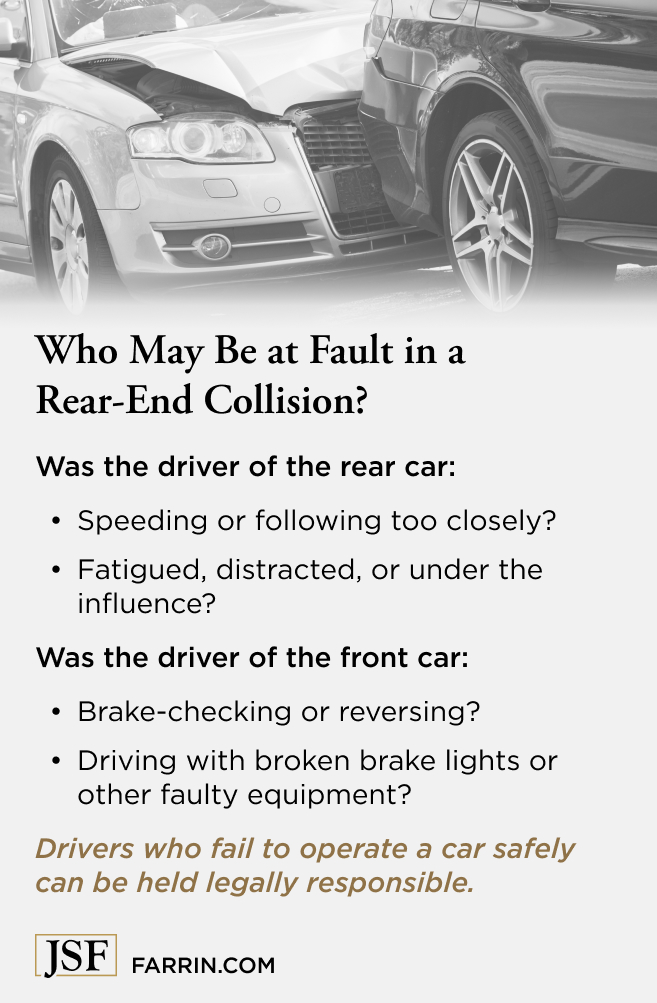
Can the Driver of the Car in Front be Found at Fault?
While the at-fault driver is often the person who hits the car in front of them, there are some situations where the driver of the lead vehicle may be found partially or fully at fault.
- Brake-checking: If a driver intentionally and aggressively hits their brakes to cause a collision, they may be found at fault for the accident.
- Reversing: A driver who suddenly and unexpectedly reverses into another car may be found at fault.
- Faulty equipment: If the lead vehicle has broken brake lights and the rear driver could not see that they were stopping, the lead driver may be found partially at fault.
In these situations, it can be especially difficult to determine fault, and the case may become a legal battle. This is one of the reasons why it is important to work with experienced legal counsel to protect your legal rights.
Navigating the Legal Landscape: North Carolina vs. South Carolina Laws
The rules regarding rear-end collisions and an injured plaintiff’s ability to recover compensation vary between North Carolina and South Carolina. While the fundamental legal principles are similar, the state-specific laws can have a significant impact on your case.
North Carolina Laws
The North Carolina statute of limitations for filing a personal injury claim is generally three years from the date of the accident. For a wrongful death claim, the statute of limitations is generally two years. This means that if you do not file a lawsuit within this time frame, you may be barred from recovering any compensation.
The legal system in North Carolina is complex, and even small mistakes can harm a case. For example, if the at-fault driver’s insurance company can prove that you were at fault for the accident, even just 1%, you may be barred from receiving any compensation. This is one of the reasons why I recommend that people who have been injured in a car accident seek legal advice as soon as possible.
South Carolina Laws
The statute of limitations in South Carolina is generally three years for both personal injury and wrongful death claims. Again, if you miss this filing deadline, your lawsuit would likely be dismissed, and you would likely lose the right to recover any compensation from the at-fault party that caused your accident.
South Carolina follows a modified comparative fault system. This means that you can still recover compensation even if you are partially at fault for the accident, as long as your fault is not greater than 50%. The amount of your potential compensation would then be reduced by your percentage of fault.
However, if your fault were found to be 51% or greater, you could be barred from recovering any compensation. A knowledgeable personal injury lawyer can explain how they may be able to reduce your comparative fault to help increase the amount of compensation you may receive.
Common Injuries From Rear-End Collisions
The force of a rear-end collision, even at a low speed, can cause a range of injuries. Even if you do not immediately feel pain, you should seek medical attention, as some injuries, like whiplash, can take days or weeks to appear.
- Whiplash: This is one of the most common injuries from a rear-end collision. It occurs when the head and neck are violently jerked back and forth.
- Spinal cord injuries: The sudden force of the collision can cause severe spinal cord injuries, which may lead to long-term pain, paralysis, and disability.
- Traumatic brain injuries (TBIs): The force of the impact can cause the brain to hit the inside of the skull, which may lead to a traumatic brain injury.
- Broken bones: The impact can cause broken bones in the arms, legs, or torso.
- Internal injuries: In some cases, the force of the collision can cause internal injuries, such as internal bleeding or organ damage.
How a Lawyer Can Help With Your Case in North and South Carolina
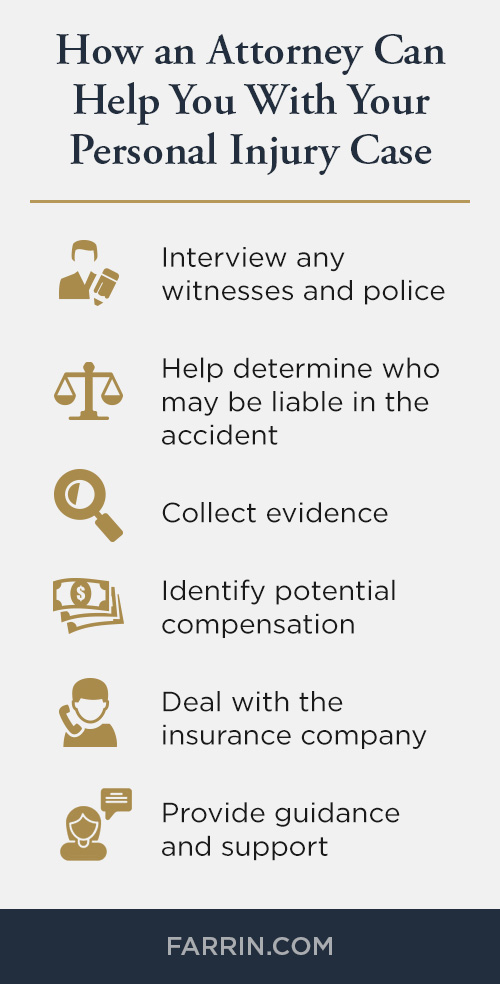
After a rear-end collision, you are likely facing physical pain, emotional distress, and mounting medical bills. You may benefit from working with a lawyer who can try to prove that the at-fault driver was negligent and fight for the full compensation you may deserve. A skilled team of legal professionals can help you with the following:
- Manage all the details: We will complete complicated paperwork, follow procedures correctly, and adhere to strict deadlines.
- Advise and communicate: We will listen to your questions, tell the truth, and help provide peace of mind.
- Protect your rights: We can level the playing field with insurance companies and address and negotiate liens to try to put more money in your pocket.
- Handle the insurance company: We can communicate and negotiate on your behalf and counter lowball tactics.
- Build your case: We will gather and examine evidence, depose witnesses and doctors as needed, and work with investigators to reconstruct the accident scene if needed.
- Fight for compensation: We will seek out all sources of possible compensation and calculate the full value of the harms and losses you may have suffered.
- Seek great results: We will push back against insurance delays and constantly follow up with medical providers for critical records as needed.

Common Car Accident Claim Concerns
Can I handle the case myself?
Yes, you can try to handle the case yourself, but the law is complicated and many people may leave money on the negotiating table because they did not have the legal knowledge or resources to fight for their rights. The insurance companies have many tools at their disposal and most want to reduce the amount of compensation they pay out as much as possible. They often have teams of lawyers and investigators to help them protect their interests. A skilled law firm can help protect yours.
Doesn’t a lawyer cost too much?
Not necessarily. At the Law Offices of James Scott Farrin, you don’t pay anything up front or hourly. In fact, you pay nothing at all unless we win for you.2 Our contingency fee arrangement reduces the financial risk to you, allowing you to focus on your recovery while we fight for the compensation you may need.
Will the insurance company be fair?
Most insurance companies make more profits by paying out less on accident claims. Most are for-profit businesses, and they are protecting their own interests, not yours. They may offer you a lowball settlement in the hopes that you will accept it without understanding the true potential value of your case. An attorney can help you negotiate with the insurance company and help protect you from the negotiation tactics some may use.

 Text Us