

Have you experienced severe side effects after using a GLP-1 diabetes or weight-loss drug?

Drugs like Ozempic, Wegovy, Rybelsus, Mounjaro, Zepbound, Saxenda, and Trulicity are facing GLP-1 drug lawsuits from people alleging severe side effects that were never disclosed…
GLP-1 Drug Lawsuits in North and South Carolina
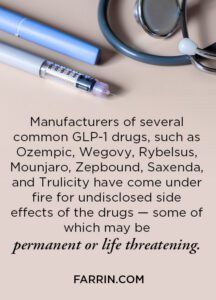 Did you suffer side effects like gastroparesis or other stomach problems after taking a GLP-1 drug such as Ozempic, Wegovy, Rybelsus, Mounjaro, Zepbound, Saxenda, or Trulicity?
The manufacturers of these drugs, including Novo Nordisk and Eli Lilly, have come under fire for undisclosed side effects of these drugs – some of which may be permanent or life threatening.
The GLP-1 class of drugs stimulate the body into producing more insulin. They mimic the GLP-1 (glucagon-like peptide 1) hormone produced in the gut as a response to eating, which raises insulin production and lowers blood sugar. In short, the drugs target receptors in your brain to help regulate your appetite.
However, this benefit may come at a cost.
People taking these GLP-1 drugs allege that they have also caused serious health problems – ones the manufacturers did not properly warn them about.
In addition, some of these drugs’ side effects are more severe and widespread than originally believed or disclosed to users:
- A study published by the National Center for Biotechnology Information reported that instances of intestinal obstruction were 4.5x higher for GLP-1 receptor agonists like Ozempic and Wegovy than for other glucose control medications.
- Recent lawsuits have alleged that several of these medications (Ozempic, Wegovy, Rybelsus, Mounjaro, Zepbound, Saxenda, and Trulicity) are linked to sudden, permanent vision loss, a condition called Non-Arteritic Anterior Ischemic Optic Neuropathy (NAION).
Below is information about Ozempic, Wegovy, Rybelsus, Mounjaro, Zepbound, Saxenda, and Trulicity and the adverse side effects they are linked to. If you, or someone you know, have taken any of these drugs, you may have been deceived by the manufacturers, and you may be owed significant compensation for the harm you have suffered.
Call 1-866-900-7078 today for a free professional opinion on your case.
Has Ozempic Harmed You?
Novo Nordisk’s Ozempic is approved by the FDA to treat type-2 diabetes, and it has been widely prescribed for the off-label benefit of weight loss. Ozempic’s active ingredient is semaglutide, and at present, the drug may be linked to severe side effects including:
- Vision loss or changes
- Gastroparesis (stomach paralysis)
- Neuropathy with gastroparesis
- Intestinal blockage (often requiring surgery to repair)
- Cyclical vomiting
- Pancreatic cancer
- Necrotizing pancreatitis
- Esophageal injury with surgery
- Blood clots and pulmonary embolism
Has Wegovy Harmed You?
Wegovy, another Novo Nordisk drug with semaglutide, is prescribed to help obese people lose weight and to reduce the risk of major cardiovascular events in obese or overweight adults with known heart disease. However, lawsuits accuse Novo Nordisk of not adequately warning users of the following possible side effects:
- Vision loss or changes
- Gastroparesis (stomach paralysis)
- Neuropathy with gastroparesis
- Intestinal blockage (often requiring surgery to repair)
- Cyclical vomiting
- Pancreatic cancer
- Necrotizing pancreatitis
- Esophageal injury with surgery
- Blood clots
Has Rybelsus Harmed You?
A third Novo Nordisk drug containing semaglutide, Rybelsus, is prescribed to treat type 2 diabetes but is also commonly used for weight loss. Of the many lawsuits against the manufacturer, several allege that using the drug resulted in the following medical issues:
- Vision loss or changes
- Gastroparesis (stomach paralysis)
- Neuropathy with gastroparesis
- Intestinal blockage (often requiring surgery to repair)
- Cyclical vomiting
- Pancreatic cancer
- Necrotizing pancreatitis
- Esophageal injury with surgery
- Blood clots
Has Mounjaro Harmed You?
Mounjaro is another commonly prescribed GLP-1 medication for managing type 2 diabetes. Its main active ingredient is tirzepatide, and while Mounjaro is not approved by the FDA for weight loss, some doctors prescribe it off- label for this use. There are many lawsuits against its manufacturer, Eli Lilly, claiming that the drug has caused severe side effects, including:
- Vision loss or changes
- Gastroparesis (stomach paralysis)
- Neuropathy with gastroparesis
- Intestinal blockage (often requiring surgery to repair)
- Cyclical vomiting
- Pancreatic cancer
- Necrotizing pancreatitis
- Esophageal injury with surgery
- Blood clots
Has Zepbound Harmed You?
Zepbound, another tirzepatide drug manufactured by Eli Lilly, is approved by the FDA for chronic weight management. Lawsuits against Zepbound allege that Eli Lilly failed to warn users of serious side effects caused by the drug, including:
- Vision loss or changes
- Gastroparesis (stomach paralysis)
- Neuropathy with gastroparesis
- Intestinal blockage (often requiring surgery to repair)
- Cyclical vomiting
- Pancreatic cancer
- Necrotizing pancreatitis
- Esophageal injury with surgery
- Blood clots
Has Saxenda Harmed You?
Saxenda is a GLP-1 drug manufactured by Novo Nordisk and approved by the FDA for chronic weight management. Lawsuits against Novo Nordisk claim that it failed to warn users of the risk of the following side effects:
- Vision loss or changes
- Gastroparesis (stomach paralysis)
- Neuropathy with gastroparesis
- Intestinal blockage (often requiring surgery to repair)
- Cyclical vomiting
- Pancreatic cancer
- Necrotizing pancreatitis
- Gallbladder disease
- Blood clots
Has Trulicity Harmed You?
Trulicity is a medication approved by the FDA to manage type 2 diabetes and to reduce the risk of major cardiovascular events in those with the disease. It is also used off-label for weight loss. Lawsuits against Trulicity’s manufacturer, Eli Lilly, claim that it knew, but did not warn users, of the risk of the following side effects:
- Vision loss or changes
- Gastroparesis (stomach paralysis)
- Neuropathy with gastroparesis
- Intestinal blockage (often requiring surgery to repair)
- Cyclical vomiting
- Pancreatic cancer
- Necrotizing pancreatitis
- Esophageal injury with surgery
- Blood clots
Do you have a case against these drug manufacturers for harm they’ve caused you? For a free professional opinion on your case with no obligation, call 1-866-900-7078 now.
Can GLP-1 Drugs Kill You?
Gastroparesis (stomach paralysis), which has been linked to Ozempic, Wegovy, Rybelsus, Mounjaro, Zepbound, Saxenda, and Trulicity, causes constant and severe nausea and vomiting, abdominal pain, severe dehydration, acid reflux, malnutrition, and weight loss.
Both gastroparesis and intestinal blockage, which has also been linked to these GLP-1 drugs, can be fatal if not treated (likely including surgery). Neither condition is a listed side effect of the drugs.
What Are GLP-1 Vision Loss Lawsuits About?
Thousands of personal injury claims across the country about sudden vision loss and GLP-1s have been consolidated into a single federal court process in the Eastern District of Pennsylvania. Multi-District Litigation (“MDL”) is how the court system handles situations where large numbers of people are harmed by the same product. All of the cases are managed together by one federal judge, which keeps things efficient and consistent. Your case is still yours; now, you’re part of a larger, coordinated effort to hold these companies accountable.
This GLP-1 vision loss legal action is MDL No. 3163. It is separate from MDL No. 3094, which focuses on gastrointestinal injuries from GLP-1s. The condition at the center of these MDL No. 3163 lawsuits is called NAION — Non-Arteritic Anterior Ischemic Optic Neuropathy. NAION is a rare condition where blood flow to the front part of the optic nerve gets cut off and the optic nerve swells. The result is sudden, irreversible vision loss.
The drugs connected to these injuries include Ozempic, Wegovy, Rybelsus, and Saxenda (made by Novo Nordisk) and Mounjaro, Zepbound, and Trulicity (made by Eli Lilly). These medications were prescribed for, among other things, the treatment of Type 2 diabetes — and more recently, for weight loss. These drugs and the companies that made them were trusted. Many users were never warned of the risk of vision loss.
To qualify to be a part of MDL No. 3163 (focused on NAION cases), you must have:
- Taken a GLP-1 medication such as Ozempic, Wegovy, Rybelsus, Zepbound, Saxenda, Trulicity, or Mounjaro;
- Been diagnosed with NAION; and
- Filed by your state’s deadline (don’t wait to contact an attorney)
Can I File a GLP-1 Drug Vision Loss Lawsuit?
Yes. Defective drugs with undisclosed side effects can wreak havoc on your life. Some GLP-1 users could not work because they were vomiting constantly. Some users with severe side effects from these GLP-1 drugs have reported vision loss, multiple trips to the ER, corrective surgeries, depression, and other serious consequences. Below are two MDLs related to GLP-1 drugs:
- MDL No. 3163 which focuses on NAION vision loss allegedly linked to GLP-1s
- MDL No. 3094 which focuses on gastrointestinal injuries allegedly linked to GLP-1s
Lawsuits have a statute of limitations – a legal deadline after which you lose your right to sue, no matter how strong your case is. For GLP-1 claims, the applicable statute of limitations depends on the state where you live or where your medication was prescribed, and it’s typically two years from the date of your medical diagnosis.
Don’t lose your right to seek compensation. Contact an attorney immediately for a free case evaluation.
What Kind of Compensation Can I Seek in a GLP-1 Drug NAION Lawsuit?
Patients who have suffered from the undisclosed side effects of Ozempic, Wegovy, Rybelsus, Mounjaro, Zepbound, Saxenda and Trulicity often must make many ER visits, have severe quality of life issues, and need multiple medications for the rest of their lives.
You can and should seek compensation if you’ve suffered undisclosed side effects from using these GLP-1 drugs, including possible compensation for:
- Medical bills, including any future medical needs
- Lost wages from missing work due to your symptoms
- Permanent disability as a result of the drug’s side effects
- Pain and suffering
- And more
Contact James Scott Farrin for a GLP-1 Drug Lawsuit Case Evaluation – Free & No Obligation
Many Ozempic, Wegovy, Rybelsus, Mounjaro, Zepbound, Saxenda, and Trulicity users have suffered life-changing negative effects from taking these drugs – effects they weren’t warned about. This is wrong, and we are passionate about helping people take on big companies who may have put profit over patients.
Since 1997, our firm has recovered over $2 billion in total compensation for over 78,000 people.1
We know how to help you. Call 1-866-900-7078 or contact us online right now to get clarity on your case at no cost and no obligation.
The Law Offices of James Scott Farrin consults with a national network of attorneys on product liability, defective drugs, and defective products cases in an attempt to provide the best representation we can for our clients. Depending on the details of your case, our firm will likely refer your matter to another law firm with which we associate. We will only do this if we believe it is in your best interests and if you agree.