
Were you injured because of an unsafe condition at an Airbnb, Vrbo, or another short-term rental?
We help vacation renters seek compensation when landlords are negligent.
North Carolina Vacation Rental Injury Lawyers
Short-term rental property owners in North Carolina (including Airbnb and Vrbo) have a legal duty to keep their property reasonably safe for guests. This includes fixing hazards they know, or should know, about and warning renters about dangers that cannot be fixed right away. When a property owner or landlord fails to do this and someone gets hurt, the renter can seek compensation for their injuries from the negligent property owner.
Unsafe vacation rental conditions can include broken stairs, loose railings, unsafe decks, poor lighting, faulty locks, exposed wiring, and much more. Problems like broken smoke detectors, missing handrails, or unsafe swimming pools can also create hazardous conditions for renters.
If you were injured while staying at an Airbnb, Vrbo, or other short-term rental property in North Carolina, you have the right to seek compensation from the property owner for medical bills, lost income, and other damages caused by unsafe conditions at that property. The Law Offices of James Scott Farrin can help you fight for compensation and accountability.
Key Takeaways About Short-Term Vacation Rental Injuries in NC
- The North Carolina Vacation Rental Act states that landlords who rent residential properties for short-term stays have a legal duty to provide and maintain fit and habitable premises for their guests.
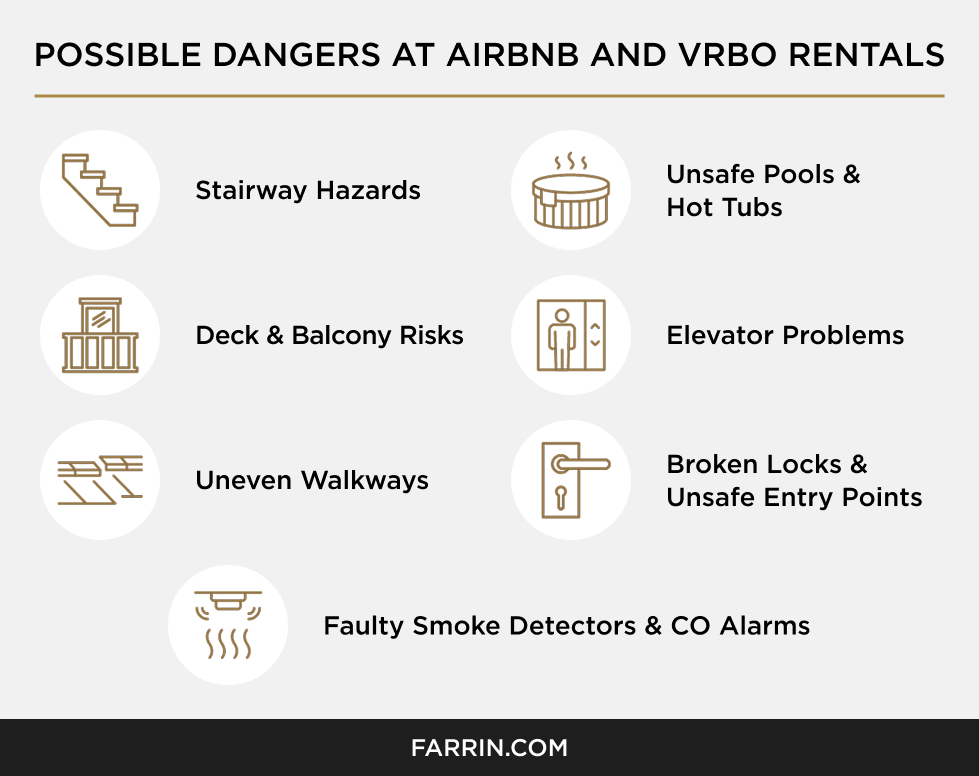
- Dangerous conditions that can lead to injuries include broken or uneven stairs, loose or missing handrails, unsafe decks and balconies, slippery floors, electrical wiring, broken appliances, exposed outlets, missing or broken smoke and carbon monoxide detectors, and improperly maintained swimming pools and hot tubs.
- Owners, landlords, property managers, contractors, maintenance companies and cleaning services could be liable for a short-term renter’s injuries.
- An experienced North Carolina Airbnb or Vrbo injury lawyer can help injured renters navigate a claim involving premises liability for short-term rentals.
What Counts as a Short-Term Vacation Rental Under North Carolina Law?
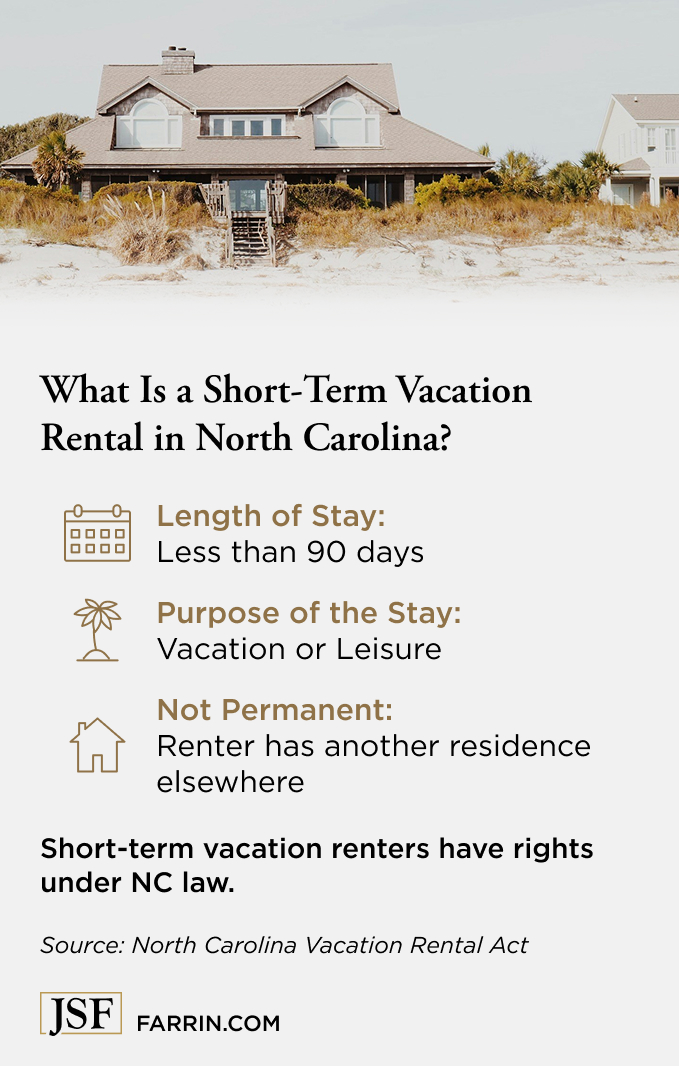
Under North Carolina law, a short-term vacation rental is generally a residential property rented out for a short (less than 90 days) stay for vacation, leisure, or recreation purposes. This includes homes, cabins, condos, and similar places that someone rents from a company like Airbnb, Vrbo, and other short-term vacation rentals instead of a hotel or motel. The law also states that the person who rents the place must have another permanent home to which they plan to return.
North Carolina treats short-term vacation rentals differently than long-term rentals (which are usually 90 days or more) and differently from hotels, motels, or campgrounds. Local cities and counties may also have their own rules that define and regulate short-term rentals in addition to state law.
The North Carolina Vacation Rental Act: Landlord’s Duty to Provide Fit and Habitable Premises
Under the North Carolina Vacation Rental Act, landlords and property owners who rent out residential properties for short-term stays have a legal duty to provide and maintain fit and habitable premises for their guests. This means the rental should be in a condition that a reasonable person would consider safe and suitable for occupancy throughout the rental period.
In general, North Carolina law states that an owner/landlord of a residential property used as a vacation rental must:
- Comply with all building and housing codes (including applicable elevator safety requirements) that apply to the property. These codes set minimum standards for things like structure, electrical systems, and plumbing.
- Make necessary repairs and take reasonable steps to keep the property fit and habitable during the rental.
- Keep all common areas safe so that guests are not exposed to hazards.
- Keep electrical, plumbing, heating, and major appliances in safe working condition, and fix them within a reasonable time after being told in writing that something is broken.
- Provide operable smoke detectors and carbon monoxide alarms.
This duty means owners/landlords must act if a condition arises that could make the property unsafe, unhealthy, or unlivable. Failing to do so can expose the property owner to legal liability if a guest is injured or otherwise harmed as a result of an unfit condition.
How Section 42A-31 Can Hold Airbnb, Vrbo, and Other Short-Term Rental Owners Responsible for Injuries
Section 42A-31 of the North Carolina Vacation Rental Act can play an important role in determining liability after an injury at an Airbnb, Vrbo, or other short-term rental property. This law requires landlords to keep their property fit, habitable, and reasonably safe for guests. When they fail to meet these duties and a guest is hurt as a result, the law allows the injured party to seek compensation for the harms and losses they may have endured.
The law requires rental owners to take reasonable steps to repair known problems and maintain basic systems and appliances in safe working order, or “to provide fit premises.” If a dangerous condition existed, such as faulty wiring, broken steps, or an unsafe heating system, and the owner did not fix the issue within a reasonable time, that failure may be evidence of negligence. If a renter is hurt because of this negligence, they can seek compensation for medical expenses, lost income, and other damages caused by the hazardous condition.
Why Short-Term Rental Owners Must Inspect and Maintain Properties More Often
Short-term rental properties are often used by many different guests throughout the year. With frequent turnover, normal wear and tear can happen faster than in long-term rentals. Loose steps, broken handrails, faulty locks, poor lighting, or unsafe appliances can go unnoticed if the property is not regularly checked, and renters may not notice hazards right away or may assume a problem has already been reported.
These conditions can become dangerous if they are not repaired in a timely manner. Because of this, owners must inspect and maintain their properties more often to identify and fix safety problems before someone gets hurt.
Dangerous Conditions That Commonly Lead to Airbnb, VRBO and Other Short-term Rental Injury Claims
Common dangerous conditions at short-term rentals include broken or uneven stairs, loose or missing handrails, and unsafe decks or balconies. Slippery floors and wet surfaces can also lead to serious slip and fall injuries.
Other hazards may involve faulty electrical wiring, broken appliances, exposed outlets, or missing smoke and carbon monoxide detectors. Swimming pools, hot tubs, and outdoor areas can be especially dangerous if they are not properly secured, maintained, or clearly marked.
When these types of conditions cause an injury, the property owner may be held responsible if they knew, or should have known, about the danger and failed to fix it or warn guests.
Stairway Falls and Common Stairway Hazards
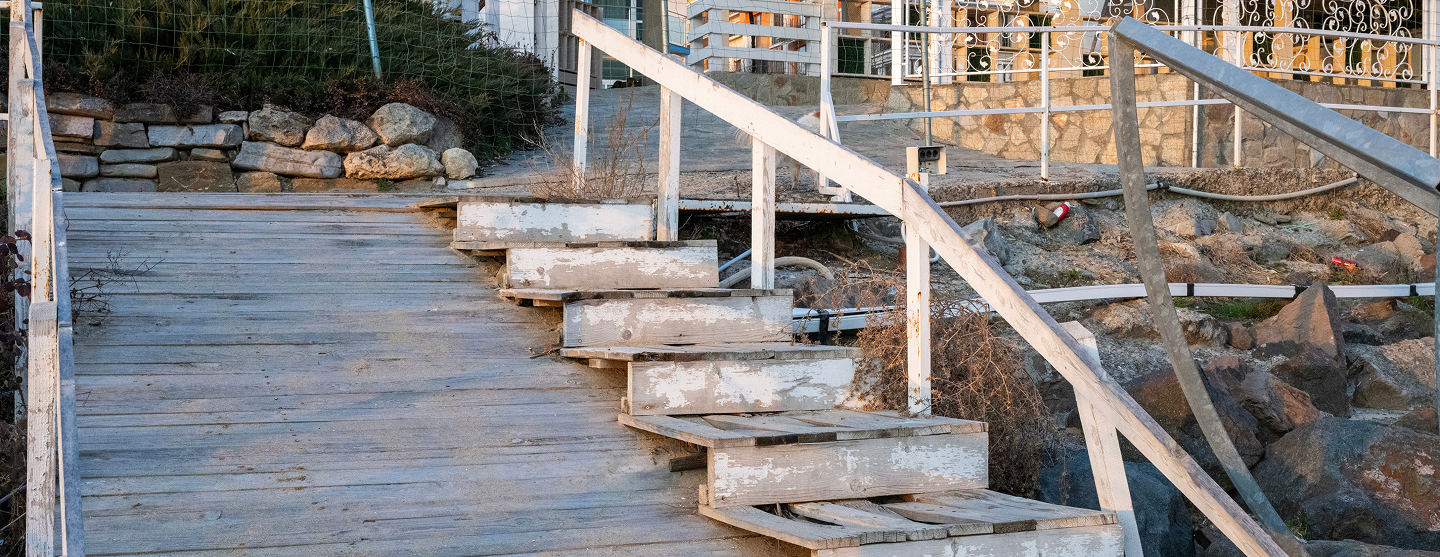
Stairways are a common place where guests are injured at Airbnb, Vrbo, and other short-term rental properties. Falls often happen when stairs are not properly maintained or do not meet safety standards.
Common stairway hazards include loose railings, uneven or broken steps, and poor lighting. Stairways that are dim or missing light fixtures can increase the risk of serious falls, especially at night. Some stairway injuries are also caused by code issues, such as missing handrails, improper step height, or stairways that do not meet local building requirements.
When stairways are dangerous due to poor maintenance or code violations, property owners may be held responsible if a guest is injured. Short-term rental owners are expected to inspect stairways regularly and reasonably fix hazards before they cause harm.
Deck and Balcony Collapse Risks
Decks and balconies can become dangerous when they are not properly inspected and maintained. Problems such as rotting wood and broken guardrails can weaken the structure and increase the risk of collapse or serious falls. When owners fail to repair these hazards, guests may suffer severe injuries.
Walkway Trip Hazards and Poor Maintenance
Walkways around short-term rentals can be dangerous when they are not properly cared for. Uneven surfaces, missing steps, and poor maintenance can cause guests to trip and fall. Property owners are responsible for keeping walkways safe and repairing hazards before someone gets hurt.
Pool and Hot Tub Accidents
Pools and hot tubs can be dangerous if they are not properly maintained or secured. Drowning risks, slips on wet surfaces, and electrical hazards near water can all lead to serious injuries. Short-term rental owners must take reasonable steps to prevent these dangers and protect guests.
Smoke Detector and Carbon Monoxide Alarm Failures
Working smoke detectors and carbon monoxide alarms are critical for guest safety in short-term rentals. When these devices are missing or not working, preventable injuries or deaths can occur, and property owners may be held responsible.
Elevator Safety Issues in Vacation Rentals
Elevators in vacation rentals can pose serious risks if they are not properly maintained or inspected. Malfunctions, poor upkeep, or failure to meet safety standards can lead to sudden stops, falls, or other serious injuries to guests.
Negligent Security and Unsafe Access
Short-term rental owners must take reasonable steps to protect guests from foreseeable security dangers. Broken locks, poor access control, or lack of basic safety measures can expose guests to foreseeable crime risks. If the landlord/owner knew or should have known about unsafe access conditions or prior criminal activity and failed to act reasonably, they may be held responsible if a guest is injured as a result.
What Injured Guests Must Prove in a Short-Term Rental Premises Liability Case
To recover compensation after a personal injury at a short-term rental, an injured guest must prove that the property owner was legally responsible for the perilous condition. This usually requires proving several key points regarding short-term rental premises liability law in North Carolina:
- A dangerous condition existed on the property, such as broken stairs, poor lighting, or another safety hazard.
- The property owner knew or should have known about the condition through reasonable inspections or prior complaints.
- The owner failed to fix the problem or provide a clear warning within a reasonable time.
- The unsafe condition directly caused the injury and resulting damages, such as medical bills, lost income, or pain and suffering.
Evidence That Helps Prove the Owner Knew or Should Have Known About the Hazard
In North Carolina, when seeking compensation from a negligent property owner, an injured guest must prove that the owner knew or should have known about the dangerous condition that caused the harm.
Evidence that helps establish this knowledge may include:
- Actual notice – where the owner or someone acting on their behalf was directly informed of the hazard or saw it themselves
- Constructive notice – where the condition existed long enough that a reasonable owner should have discovered it through proper inspection and maintenance
Common types of evidence may include:
- Maintenance and inspection records showing whether hazards were identified or left unaddressed
- Prior complaints or incident reports demonstrating that the owner had earlier notice of the danger
- Witness testimony from guests, neighbors, or staff stating when a hazard was present and whether the owner was aware of it
- Photographs or video footage of the condition before and after the injury supporting a claim that the owner knew or should have known about the danger and failed to fix or warn about it
Who Else May Be Liable Besides the Property Owner?
In some short-term rental injury cases, the property owner is not the only party who may be held responsible. Other individuals or companies involved in managing or maintaining the property may also share liability, including:
Property Managers or “Host” Companies
Many Airbnb, Vrbo, and other short-term rental properties are managed by third-party companies or professional hosts. These managers often handle bookings, inspections, guest communication, and repairs. If a manager knew about a dangerous condition or failed to conduct reasonable inspections, they may be held responsible for injuries caused by unsafe conditions. Under North Carolina law, a property manager who takes control over the maintenance and operation of a property owes a duty of reasonable care to guests.
Maintenance, Repair, and Cleaning Companies
Owners and managers sometimes hire outside maintenance companies to inspect and repair the property. If a maintenance company performs negligent repairs or ignores obvious hazards or a cleaning service creates a dangerous condition, they may also be liable for resulting injuries.
Determining who may be negligent often depends on who had control over the property, who was responsible for repairs or condition, and who knew or should have known about the hazard. We can help you with these determinations.
Common Injuries in Airbnb, Vrbo, and Other Short-term Rental Property Cases
Injuries at short-term rental properties, such as Airbnb and Vrbo, can range from minor harm to life-threatening conditions. When unsafe property conditions are involved, guests sometimes suffer serious physical injuries that require medical treatment such as:
- Head injuries are common in slip and fall accidents, stairway falls, and balcony incidents and can include concussions, traumatic brain injuries, and skull fractures, especially when a guest strikes a hard surface.
- Burns may occur due to faulty wiring, kitchen fires, defective appliances, exposed heating elements, or malfunctioning hot tubs. Severe burns can lead to long-term scarring, nerve damage, and infection.
- Poisoning injuries can result from carbon monoxide exposure, gas leaks, chemical exposure, or unsafe water conditions. Carbon monoxide poisoning is particularly dangerous because it is odorless and can cause serious injury or death without warning.
When injuries are caused by dangerous conditions that a property owner or landlord knew or should have known about, the injured guest may have a short-term premises liability claim under North Carolina law.
North Carolina Airbnb and Vrbo Injury Claim FAQs
Here are answers to some questions we are frequently asked about injuries at short-term vacation rentals in North Carolina.
Can Airbnb or Vrbo be held liable for injuries at a rental property?
Airbnb and Vrbo typically avoid direct liability as they act as facilitators rather than property owners. However, in cases where Airbnb or Vrbo failed to address a known safety concern or enforce safety standards, they may share responsibility. A North Carolina Airbnb or Vrbo injury lawyer can help you determine potential liability in your specific case.
What types of compensation may be available after a vacation rental injury?
Compensation for short-term rental injuries may cover medical expenses, lost wages, and pain and suffering.
How long do I have to file a claim after being injured at an Airbnb, Vrbo, or another short-term rental in North Carolina?
In North Carolina, you generally have three years from the date of the injury to file a claim for injury accidents at a short-term rental property.
Is an Airbnb or Vrbo owner legally responsible for guest injuries in North Carolina?
In North Carolina, an Airbnb, Vrbo, or other short-term rental property owner may be found legally responsible for guest injuries if the injury was caused by an unsafe condition on the property and the owner failed to act with reasonable care.
What if the owner says they did not know about the dangerous condition?
In North Carolina, a property owner generally cannot avoid responsibility simply by saying they did not know about a dangerous condition. In premises liability cases, the law looks at whether the owner knew or should have known about the hazard. If the unsafe condition existed long enough that a reasonable owner would have discovered it through proper inspections and maintenance, they may be held accountable for injuries caused by it.
Contact an Experienced North Carolina Airbnb and Vrbo Injury Lawyer at the Law Offices of James Scott Farrin Today
If you, or a loved one, have been injured due to the negligence of a short-term rental landlord or property owner, you have the right to demand justice and seek the resources you may need to focus on healing. By choosing the Law Offices of James Scott Farrin, you are siding with a powerful legal ally with a long history of fighting for injured accident victims, and winning.1
Our commitment to justice is evident in our track record:
- Since we opened our doors in 1997, we have recovered over $2 billion total for over 78,000 clients.¹
- In 2025 alone, we recovered over $230 million total for over 4,500 people.¹
We will listen to your story and can answer your questions. We are ready, willing, and able to fight for you. And we always put your needs first. Our team is available 24/7, so contact us now to get started on your free, no-obligation case evaluation.
There’s no need to worry about cost, so don’t wait to get the help you need. Call us today at 1-866-900-7078. Together, we’ll tell them you mean business