


Protect your health and your case after a North Carolina car accident caused by the other driver.

An experienced car accident lawyer knows how to guide and protect you.

This page refers to What Should You Do (and Not Do) After a Car Accident? in North Carolina.
Since laws differ between states, if you are located in South Carolina, please click here.
What to Do After a Car Accident in North Carolina?
After a car accident in North Carolina, the most important steps are to prioritize your medical care, thoroughly document everything related to the crash and your injuries, and be extremely cautious when speaking with the other driver’s insurance company.
The minutes, days, and weeks following a wreck can feel like a blur of confusion, pain, and mounting stress. You may be facing unexpected medical bills, car repairs, and calls from the other guy’s insurance adjuster – all while trying to recover. I have created this guide of what to do after a car accident in North Carolina as you navigate this difficult time – to help protect your rights.
Key Takeaways – What to Do After a North Carolina Car Accident
-
- Seeking prompt and consistent medical attention after a car accident is a priority for health and for documenting injuries.
- Keeping detailed records of everything — from medical bills and lost wages to photos of the scene and vehicle damage — is vital.
- Insurance adjusters work for the insurance company, and their goal is often to minimize the company’s payout on a claim.
- North Carolina has very strict fault laws that can make recovering compensation challenging – but experienced legal guidance can significantly increase your odds of success.According to North Carolina law, if you are deemed to be even 1% at fault for the accident that caused your injury, you could be denied compensation.
- An attorney can level the playing field by managing the claims process and fighting for your best interests.
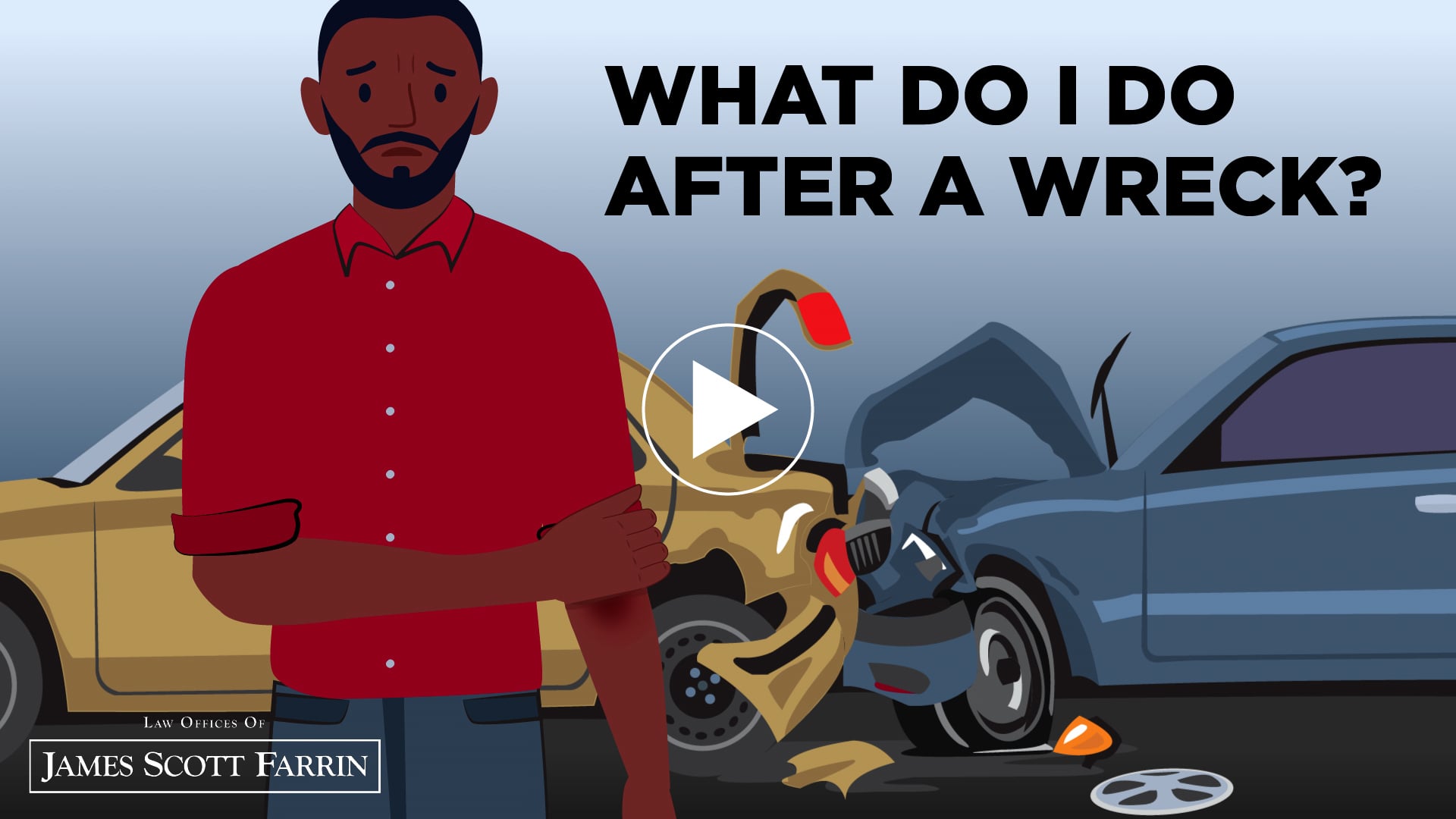
Your First Steps When You Get Home
Most car accidents scenes are chaotic. Once the immediate emergency has passed and you are safely home, the real work of recovery begins. This is a critical time, and the actions you take can have a significant impact on your health and your potential car accident injury claim.
First and foremost, follow through on all medical advice. If your pain is severe, and you believe it is an emergency, consider going to the emergency room to get checked out. If you were advised to see a specialist or attend follow-up appointments, do so without delay. Some serious injuries, like whiplash or traumatic brain injuries, may not show symptoms immediately. Gaps in treatment can be used by insurance companies to argue that your injuries weren’t caused by the accident.
Next, start a journal for documentation purposes. Each day, write down:
- Your physical pain levels and symptoms
- Any emotional or mental struggles you are experiencing (anxiety, trouble sleeping, etc.)
- Ways the injuries are affecting your daily life (can’t lift your child, unable to do chores, missed social events)
- Every conversation you have related to the accident, including the date, time, person’s name, and what was discussed
This journal can become an invaluable piece of evidence later on, providing a detailed account of how the accident has impacted your life beyond just the medical bills.
How to Gather and Organize Important Information After a North Carolina Car Wreck
 After a car wreck in North Carolina, the amount of paperwork and information can quickly become a lot to handle. Staying organized from the beginning can reduce stress and help build a compelling case. Create a dedicated folder or digital file to store everything related to the accident.
The following is a checklist of essential documents and information your attorney can help you gather:
The Official Crash Report
You can typically obtain a copy of your crash report from the responding law enforcement agency or the North Carolina Division of Motor Vehicles (NCDOT). This report contains key details, such as the officer’s initial assessment of the accident.
Photos and Videos
Collect all photos and videos you took at the scene, including damage to all vehicles, skid marks, road conditions, and any visible injuries. If you couldn’t take photos yourself, ask if a friend, family member, or witness did.
Medical Records and Bills
Keep every bill, receipt, and explanation of benefits (EOB) from doctors, hospitals, physical therapists, and pharmacies. These documents help calculate the economic cost of your injuries that you may be entitled to compensation for.
Proof of Lost Income
You’ll need pay stubs and a letter from your employer detailing your regular pay rate, hours, and the specific time you missed from work due to your injuries.
Vehicle Repair Estimates
You’ll want multiple estimates for the repair of your vehicle to accurately determine and document the extent of the property damage.
Witness Information
If anyone saw the accident, their contact information is crucial. A third-party account can be very persuasive.
Having all this information organized in one place makes it easier to understand the full scope of your losses and prepares you for the next steps in the claims process.
What Should I Do When the Other Driver’s Insurance Company Calls?
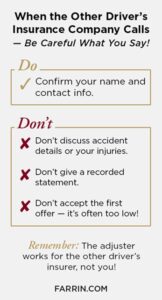 It likely won’t be long before an adjuster from the at-fault driver’s insurance company calls you. They are often trained to sound friendly and helpful, but it’s important to remember their job is often to protect their company’s bottom line by paying out as little as possible.
When they call, be polite but cautious. You can confirm basic facts like your name and contact information, but you are not obligated to provide details about the accident or your injuries. Most importantly, you should politely decline to give a recorded statement. These statements can be carefully dissected, and your words may be twisted and used against you later to devalue or deny your claim.
You might be offered a quick settlement. While the idea of getting fast cash can be tempting, especially with bills piling up, these initial offers are almost always far less than what you might need to cover your long-term injury expenses. You may not even know the full extent of your injuries yet. It is generally advisable to wait until you have completed your medical treatment, or have a clear prognosis from your doctor, before considering any settlement offer.
Understanding Fault: The “Three-Legged Stool” in a North Carolina Claim
Determining who was at fault is one of the most contentious parts of any car accident claim, and it is especially complicated here in North Carolina. The state has very strict laws regarding fault, and even a small mistake on your part can potentially jeopardize your ability to recover any compensation at all. This is a primary reason why having an experienced North Carolina car accident attorney evaluate your case (for free) is so important.
Instead of getting bogged down in complex legal jargon, it is helpful to think of proving fault like building a three-legged stool. For your claim to stand, an attorney will need to prove all three legs are solid:
- Negligence: The first leg is proving the other driver was negligent. Negligence is a legal term for when someone acts carelessly or fails to act with reasonable care, causing harm to another person. Examples may include texting while driving, speeding, or running a red light.
- Causation: The second leg is proving the other driver’s negligence caused the accident and your resulting injuries. For example, it’s not enough to show the other driver was speeding; you must also show that their speeding was the direct cause of the collision.
- Damages: The third leg is proving you endured harms and losses — known as damages — because of the injuries. These can include medical bills, lost wages, and pain and suffering.
If any one of these legs is weak or missing, the whole stool generally collapses. For-profit insurance companies generally look for any weakness that can knock out one of the legs and deny your claim. Your car wreck attorney fights to build a compelling case supporting all three legs.
What Kinds of Compensation Are Available After a Car Wreck?
If you are able to establish that the other driver was at fault, you may be able to recover significant compensation for a variety of losses. Every case is different, but potential damages are generally grouped into two categories: economic and non-economic.
Economic damages are tangible, financial losses that can be calculated with bills and receipts. These may include:
- Past and future medical expenses (hospital stays, surgery, physical therapy, medication)
- Lost wages from time missed at work
- Loss of future earning capacity if you are unable to return to your previous job
- Property damage to your vehicle and other personal items
Non-economic damages are intangible losses that don’t have a specific price tag but are very real. These often make up a significant portion of a personal injury claim and can include compensation for:
- Physical pain
- Emotional distress and mental anguish
- Disfigurement or scarring
- Loss of enjoyment of life
- Permanent disability or impairment
Calculating the full value of a claim, especially the non-economic damages, is a complex process. Some insurance companies can use software that downplays these very human costs. An experienced car accident attorney can help calculate the full potential value of your harms and losses and fight for a fair result.
How an Experienced North Carolina Car Accident Attorney Can Help
Dealing with a car accident is challenging. Trying to do it while recovering from injuries can feel overwhelming. Hiring a car accident attorney can level the playing field and allow you to focus on what matters most: your health. The Law Offices of James Scott Farrin recovered over $230 million total for over 4,500 clients in 2025 alone.¹
A North Carolina car accident attorney’s role is to take the burden off your shoulders. Here is what an attorney can do for you:
- Manage All the Details:They can handle the mountain of complicated paperwork, make sure all procedures are followed correctly, and meet the strict deadlines required by North Carolina law, such as the statute of limitations outlined in North Carolina General Statutes § 1-52.
- Advise and Communicate: An attorney can listen to your story, answer your questions truthfully, and keep you updated on your case every step of the way, providing peace of mind during a stressful time.
- Handle the Insurance Company: An attorney will take over communication and negotiations with the insurance company on your behalf. We know the lowball tactics some adjusters may use – and how to counter them.
- Build Your Case: Your attorney and team can gather and examine critical evidence, such as the police report, medical records, and witness statements. If needed, they can work with expert investigators to reconstruct the accident scene and try to prove what really happened.
- Fight for Maximum Compensation: An experienced attorney knows how to identify multiple possible sources of compensation and calculate the full value of your losses to fight for the maximum amount possible.
From the busy stretches of I-40 in Raleigh to the scenic roads along the Blue Ridge Parkway, accidents can happen anywhere. Having a dedicated advocate on your side can make a significant difference in the outcome of your case.
FAQs: What to Do After a Car Accident in North Carolina?
Here are answers to some common questions people have after being in a car accident in the Tar Heel State.
What Happens if the At-Fault Driver Is Uninsured or Underinsured?
If the at-fault driver has no insurance, you may still be able to recover compensation through your own Uninsured Motorist (UM) coverage. If their insurance isn’t enough to cover your damages, your Underinsured Motorist (UIM) coverage may apply. Reviewing your own insurance policy is an important step.
How Long Do I Have to File a Car Accident Lawsuit in North Carolina?
 The clock has likely already started ticking. In North Carolina, the statute of limitations for filing a personal injury lawsuit is generally three years from the date of the accident. For a wrongful death claim, it is typically two years from the date of death. It is critical to act well before this deadline, as missing it can mean losing your right to seek compensation forever.
Should I Post About My Accident or Injuries on Social Media?
It is highly recommended that you do not post anything about your accident, your injuries, or your daily activities on social media while your case is ongoing. Insurance companies often search claimants’ social media profiles for photos or posts that maybe used to argue that your injuries are not as severe as you claim.
What Is a "Contingency Fee" Arrangement?
The Law Offices of James Scott Farrin works on a contingency fee basis, meaning no upfront or hourly costs, and you pay no fee at all unless we recover compensation for you. Guaranteed.2 This arrangement allows people in need to get high-quality legal representation, regardless of their financial situation.
Do I Have to Pay My Medical Bills from My Own Health Insurance if the Wreck Wasn’t My Fault?
Yes, you should generally use your health insurance to pay for your medical treatment as you receive it. The at-fault driver’s insurance company will not pay your bills as they come in. Later, as part of your potential settlement or verdict, your attorney will seek reimbursement for those medical expenses. Your lawyer can also help address and negotiate any liens your health insurance company may place on your settlement.
What if My Own Insurance Company Is Giving Me a Hard Time?
Even your own insurance company can be difficult to deal with, especially in a UM/UIM (Uninsured Motorist/Underinsured Motorist) claim. Even though they are your insurance company, they may be an adversary in this situation. For-profit insurance companies generally want to pay the least amount they can, no matter how bad the victim’s injuries are. Some may try to delay or deny your claim. If you feel your own insurer is not treating you fairly, an attorney can step in to help protect your rights and fight to hold them to the terms of your policy.
The Law Offices of James Scott Farrin: We’re Here to Help
You don’t have to go through a car accident claim alone. We have recovered over $2 billion total for over 78,000 people since 1997. And counting.¹ If you have been injured, contact our compassionate team today at 1-866-900-7078 or through our online form for your free case evaluation. Tell them you mean business.