

For most of us here in the Tar Heel State, a trip to the grocery store is completely routine. You grab a cart, navigate the aisles for your weekly staples, and head home. In my line of work, however, I see a side of this errand that most people rarely think about: the potential for serious danger in what should be a safe environment.

I have represented many clients whose lives were changed in an instant just because they went out for milk and bread. Whether it was a slip on a wet floor that had no warning sign, an item toppling from a high shelf, or a trip over a carelessly placed pallet, the injuries are sometimes severe. If you have been injured at a North Carolina grocery store, I know you are likely worrying about medical bills and lost wages rather than what you’re making for dinner. It is a stressful position to be in, but I am here to help you understand your rights and help determine what steps to take next.
Key Takeaways About Your Legal Options After Being Injured at a North Carolina Grocery Store
- North Carolina law requires property owners, including grocery stores, to maintain a reasonably safe environment for their customers.
- Injuries at grocery stores can result from many hazards, such as spills, falling objects, cluttered aisles, or poorly maintained equipment.
- Gathering evidence at the scene, like photographs and the contact information of any witnesses, can be a critical part of a potential claim.
- Seeking a prompt medical evaluation after any injury is important for your health and for documenting the harm you may have endured.
A Store’s Responsibility: Understanding Premises Liability in North Carolina
When you walk into a grocery store, whether it’s a local market in Greensboro or a large chain in Charlotte, you have a certain legal status. Under North Carolina law, you are generally considered an “invitee.” This is a legal term that means you are on the property for the financial benefit of the owner — in this case, to shop. Because you are an invitee, the store owner owes you the highest duty of care.
This duty of care means the store has a legal responsibility to:
- Keep the premises in a reasonably safe condition
- Inspect the property to discover any hidden dangers
- Fix or remove any identified hazards in a timely manner
- Warn customers about any dangerous conditions that cannot be immediately fixed
If a store fails to meet this responsibility and a customer gets hurt as a result, the store might be considered negligent. Negligence is a legal concept that essentially means a failure to act with reasonable care. Proving that a store was negligent is a key part of any claim for an injury that happened on their property, a field of law known as premises liability.
Common Dangers Lurking in the Aisles
While a grocery store might seem safe, a number of hazards can lead to serious injuries. From the moment you pull into the parking lot until you check out, potential dangers can exist. I have seen cases arise from many different situations.
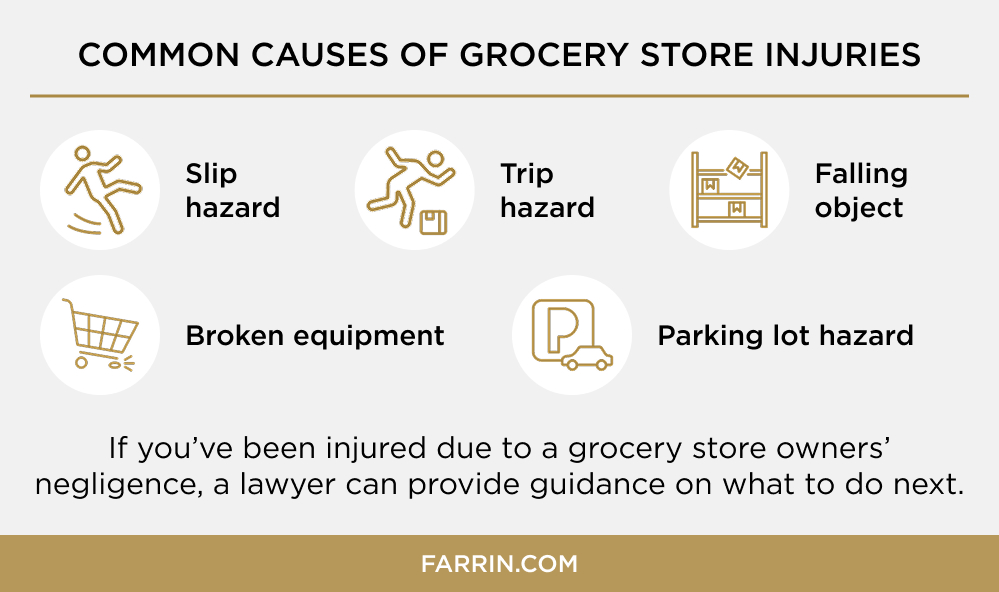
Some of the most common causes of grocery store injuries include:
- Slips and Falls: These are perhaps the most frequent incidents, often caused by spilled liquids, recently mopped floors without proper signage, leaking refrigerator cases, or tracked-in rain or snow near entrances.
- Trips and Falls: Obstacles in walkways, such as inventory carts, boxes, pallets, or electrical cords, can easily cause someone to trip. Uneven flooring, bunched-up floor mats, or potholes in the parking lot also pose significant risks.
- Falling Merchandise: Items improperly stacked on high shelves can become unstable and fall on an unsuspecting shopper below, causing head, neck, and shoulder injuries.
- Defective Equipment: Malfunctioning automatic doors, broken shopping carts with sharp edges, or faulty entryway mats can all lead to injuries.
These are just a few examples of how a routine shopping trip can go wrong. When store management or employees don’t take the proper steps to keep the store safe, innocent people can be the ones who pay the price.
The Three Pillars of a Personal Injury Claim
When I evaluate a potential personal injury case, I often think of it like a three-legged stool. For the stool to stand, all three legs must be strong and in place. If any one of them is missing, the whole thing collapses. The same is broadly true for a personal injury claim.
The three pillars, or “legs,” are:
- Liability: This means someone else is legally responsible, or at fault, for the injury. In a grocery store case, we must try to prove that the store’s negligence — its failure to maintain a safe environment — directly caused the accident.
- Damages: This refers to the harms and losses the injured person has endured. This generally includes tangible costs like medical bills and lost wages, as well as intangible harm like pain and physical limitations. Without damages, there is no claim to make.
- Source of Collection: This is the ability to actually collect any compensation owed. Fortunately, large grocery chains and even smaller independent stores almost always carry significant liability insurance policies to cover these types of incidents.
Successfully building a case requires establishing all three of these elements. It’s not enough to show you were hurt in the store; you also have to connect that injury to the store’s failure to keep you safe and identify a source from which to recover possible compensation.
Critical Steps to Consider After a Grocery Store Injury
The actions you take after a grocery store injury can be very important in protecting your rights. While your first priority should always be your health and safety, there are some steps you can consider to help document what happened.
- Report the Incident Immediately: Before you leave the store, if you are physically able, notify the store manager or the employee in charge. Ask them to create an official incident report and request a copy for your records.
- Document Everything: Use your smartphone to take pictures and videos of the exact location where you were injured. Capture what caused your fall — the spilled liquid, the object in the aisle, the cracked tile — from multiple angles. Also, take photos of your injuries.
- Talk to Witnesses: If anyone saw what happened, ask for their name and phone number. Independent witness testimony can be very valuable, as they have no stake in the outcome and can provide an objective account of the events.
- Seek Medical Attention Promptly: Even if you think your injury is minor, it is critical to get checked out by a doctor. Some serious injuries, like concussions or soft tissue damage, don’t always show immediate symptoms. A medical record can create an official link between the incident and your injuries.
- Be Careful What You Say: When speaking to store employees or their insurance representatives, stick to the facts of what happened. Avoid speculating on who was at fault or downplaying your injuries by saying things like “I’m okay” or “It’s not that bad.”
Taking these steps can help create a clear record of the incident, which can be essential if you decide to pursue a claim for compensation later on.
What Are Potential Types of Compensation?
If we can successfully prove that the grocery store was negligent and that their negligence caused your injuries, you might be able to recover compensation for a variety of damages. The goal of a personal injury claim is to try to make the injured person “whole” again, at least from a financial standpoint.
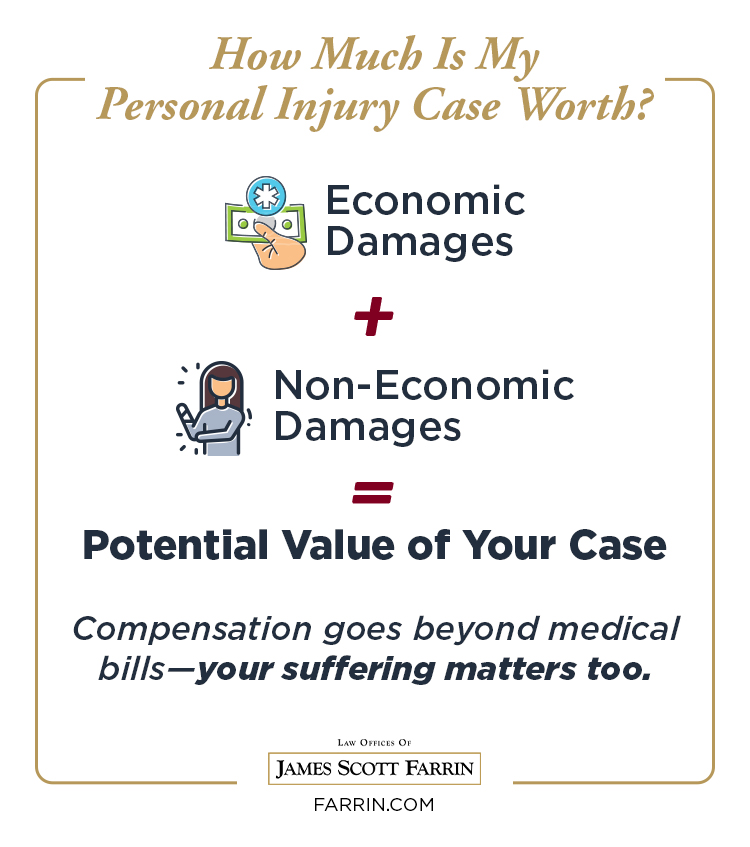
Potential compensation is generally broken down into two main categories:
- Economic Damages: These are the direct financial losses you may have incurred because of your injury. These potential damages are tangible and have a specific dollar amount attached to them. Examples include all past and future medical bills, lost wages from being unable to work, and other out-of-pocket expenses.
- Non-Economic Damages: These damages can compensate you for the non-financial ways the injury may have affected your life. They are more subjective but are just as real. This can include compensation for physical pain, emotional distress, and loss of enjoyment of life.
Calculating the full potential value of a claim requires a careful analysis of all your possible losses, both present and future. It’s not just about the medical bills you may have today; it’s also about the potential need for future treatment and how the injury might affect your ability to earn a living and enjoy your life for years to come.
How We Fight for People Injured in Stores
When someone comes to us after being injured at a grocery store, they are often in pain, worried about finances, and unsure of what to do. Our job is to take that weight off their shoulders. We handle the insurance company and the legal details so our clients can focus on what matters most: your recovery.
First, we build your case by thoroughly investigating the incident. This means gathering and examining evidence, such as store incident reports, video surveillance footage, and maintenance records. We depose witnesses if needed to get their sworn testimony about what they saw. When appropriate, we work with investigators to reconstruct accident scenes to demonstrate exactly how any negligence by the store led to the injury.
Next, we communicate with the insurance company. Their adjusters are skilled negotiators, and we level the playing field by knowing how to counter lowball tactics and delays. We push back if they try to unfairly shift blame, and we build a compelling case to try to show the full extent of your potential harms and losses.
Throughout the process, we advise and communicate with you every step of the way. We listen to your questions and tell you the truth, so you have the information you need to make sound decisions.
Our goal is to fight for the maximum compensation you may be owed, as quickly as possible, whether that means negotiating for a fair settlement or arguing your case in front of a mediator or at a hearing, if needed.
FAQs for People Injured at a North Carolina Grocery Store
Here are some common questions I hear from people who have been injured in a grocery store.

 Text Us