

As a civil rights attorney, I am frequently asked this question, and I think it’s important to set the record straight. The simple answer is: No, it is NOT generally illegal to record an on-duty police officer.
In fact, recording law enforcement can be a critical First Amendment right. Whether you are a member of the press or a bystander, the First Amendment generally protects your right to gather information about government officials and try to hold them accountable.
Key Takeaways About Whether It’s Illegal to Film the Police
- The First Amendment generally protects your right to record on-duty law enforcement officials.
- Filming the police is generally not an obstruction of justice or interference.
- Sometimes, citizen recordings are the only documentation of police-citizen interactions.
- There are a few limited situations in which filming police is not recommended.
Is Filming the Police Obstructing Justice or Interfering With a Criminal Investigation?
The two arguments I hear most often to stop people from filming are that by filming a police officer you could be: 1) obstructing justice, or 2) interfering with a criminal investigation. This is generally NOT the case. Unless you are positioning yourself so closely that you interfere with an officer’s movements or ability to perform their duties, these arguments are highly unlikely to hold up.
In a free society, transparency and accountability in law enforcement are essential. Some of the most significant moments exposing police misconduct, excessive force, or police brutality were documented because someone had the courage and foresight to record what they witnessed.
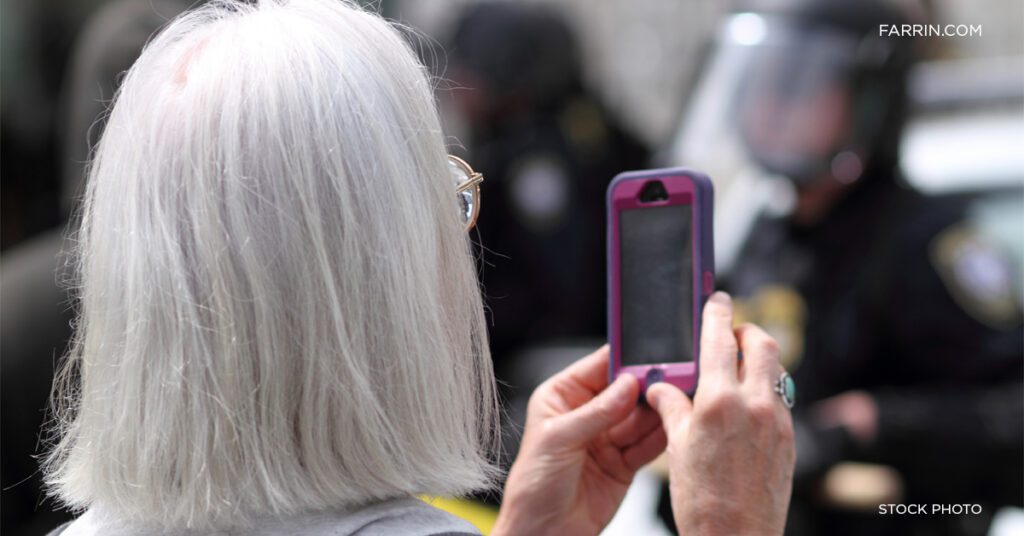
Police officers should have nothing to hide from someone recording. As long as you maintain a respectful distance and do not physically interact with them, you are generally not obstructing justice or interfering with a criminal investigation by simply filming them.
Why Citizen Recordings of Police Matter
Many people assume that most police-citizen interactions are fully documented through body-worn cameras or dashboard cameras. However, issues frequently arise when officers fail to activate recording equipment or when footage is incomplete or unavailable. In those situations, recordings captured by conscientious witnesses or bystanders may provide the only independent documentation of what occurred.
When Filming a Police Officer Is Not Recommended
Courts have recognized limited situations in which recording law enforcement may be limited or prohibited, such as:
- Required trespassing onto private property
- Violated reasonable public safety conditions set by law enforcement
- Violated certain privacy rights (typically in a private residential setting)
- Incited criminal activity
- Interfered with an officer’s official duties
There are also some cases where a court has decided that a person was acting illegally when their filming of a law enforcement officer bordered on stalking or intimidation – such as filming a police officer regularly leaving home to go to work.
Know Your Rights When Recording the Police
So, in the spirit of transparency and accountability, all citizens need to be aware that it is permissible by law to record police interactions. It is NOT generally illegal, and in most circumstances, an officer cannot lawfully prohibit you from recording them in public while they are performing their duties.
If they say you are obstructing justice or interfering with their duties, you can step back, maintain a reasonable distance, and continue recording.