


When you get hurt or fall ill on the job, your focus should be on your health and recovery. However, you may also find yourself facing a complex system of rules and paperwork. As an attorney, I have guided many people through the process that follows a workplace injury. Understanding the basics of your NC workers’ comp case can make a significant difference in your ability to get the care and support you may need while you are unable to work.
The process is governed by specific state laws and administered by the North Carolina Industrial Commission (NCIC), and it’s not always straightforward. From reporting your injury correctly to understanding what benefits you might be able to receive, every step is important. This information is intended to give you a clearer picture of what to expect and how to help protect your rights as an injured worker in North Carolina.
Key Takeaways About North Carolina Workers’ Compensation Cases
- North Carolina law requires most employers to carry workers’ compensation insurance for employees who are injured on the job.
- Injured employees must provide written notice of their injury to their employer within 30 days and file a claim with the NC Industrial Commission within two years.
- Potential workers’ compensation benefits can include medical treatment, mileage reimbursement for appointments, wage replacement payments, and more.
- Insurance companies for employers often try to limit the amount they pay on a claim, which can create challenges for injured workers.
- A workers’ compensation attorney can help an injured worker by managing communications, building the case, and fighting for their rights throughout the process.
The First Steps in Your NC Workers’ Comp Case
The actions you take immediately after a work injury are critical. Once you have received any necessary emergency medical attention, the procedural clock starts ticking. The North Carolina Workers’ Compensation Act establishes strict deadlines for reporting injuries and filing claims.
First, you must report your injury to your employer. While you should do this verbally as soon as possible, you must also provide written notice within 30 days of the incident. This written notice is a formal record that helps protect your eligibility for benefits. Failing to meet this deadline could jeopardize your entire case.
Next, you must file a claim with the North Carolina Industrial Commission. This is typically done by completing and submitting a Form 18, Notice of Accident to Employer and Claim of Employee. This form must be filed within two years of the date of injury. While two years sounds like a long time, gathering the necessary information and ensuring the form is filled out correctly takes time.
Here are the essential first steps for an injured worker:
- Seek Medical Attention: Your health is the top priority. Go to an emergency room, urgent care, or the company-approved doctor as directed by your employer. Be sure to explain that your injury is work-related.
- Notify Your Employer in Writing: Create a written record of your injury. Include the date, time, and a brief description of how the injury occurred. Give this to your supervisor or HR department within 30 days.
- File a Form 18 With the NCIC: This is the official start of your legal claim. Submitting this form within the two-year deadline is mandatory to pursue benefits.
Completing these steps correctly sets the foundation for your case and is the first move in helping protect your rights under North Carolina law.

What Benefits Can an Injured Worker in NC Receive?
The purpose of the workers’ compensation system is to provide a safety net for most people who get hurt while performing their job duties. If your claim is approved, the benefits are designed to cover medical costs and make up for a portion of your lost income. The specific benefits you may receive depend on the nature and severity of your injuries.
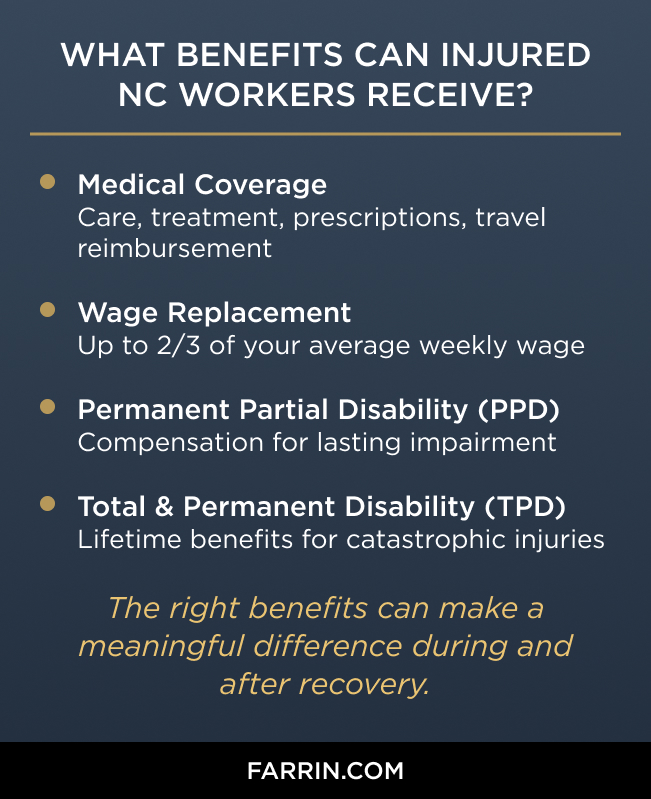
The primary categories of potential benefits in an NC workers’ comp case are:
- Medical Compensation: This can cover all reasonable and necessary medical treatment related to your work injury. This may include doctor visits, hospital stays, prescription medications, physical therapy, and medical equipment. It may also include reimbursement for travel to and from medical appointments.
- Wage Replacement Benefits: If your injury causes you to miss more than seven days of work, you may be eligible for wage replacement. These payments are typically calculated as two-thirds of your average weekly wage, up to a maximum amount set by state law.
- Permanent Partial Disability (PPD) Benefits: If your injury results in a permanent impairment to a specific body part — such as a hand, arm, or eye — you may receive PPD benefits. These are potentially paid based on an impairment rating assigned by a doctor once you have reached Maximum Medical Improvement (MMI), which is the point where your condition is not expected to improve further.
- Total and Permanent Disability (TPD) Benefits: In cases of catastrophic injury where you are unable to return to any form of employment, you may be able to receive TPD benefits, potentially for the rest of your life.
Understanding which potential benefits may apply to your situation and ensuring any are calculated correctly is a critical part of the workers’ comp process.
Common Hurdles in an NC Workers’ Comp Claim
After you report a work injury, your case is typically handed over to your employer’s insurance company. The insurance adjuster assigned to your case often has a key priority: protecting their company’s bottom line by minimizing what they pay on your claim. This can create significant challenges for an injured worker.
Even if you believe your case is straightforward, an insurance company has a team of professionals who may dispute your claim. Some of the common hurdles you might face include:
- An Outright Claim Denial: The insurer might argue that your injury did not happen at work, was the result of a pre-existing condition, or that you did not follow the proper reporting procedures.
- Disputes Over Medical Care: They may refuse to approve a specific surgery, therapy, or medication recommended by your doctor, arguing it is not necessary. They may also assign a nurse case manager to your claim, some of whom can try to influence your treatment plan.
- Pressure to Return to Work: You may feel pushed to return to a light-duty position or your regular job before you are medically ready. The insurance company may challenge your doctor’s work restrictions to try to stop paying your wage replacement benefits.
- Low Settlement Offers: If a settlement is discussed, the initial offer from the insurance company is often far below the potential full value of the claim.
In North Carolina, even a small misstep or an innocent comment about your injury can be used by an insurance company to challenge your claim. These hurdles are why having an experienced workers’ compensation lawyer on your side can be so important to help level the playing field.
How an Attorney Fights for You in a Workers’ Comp Case
When I take on an NC workers’ comp case, my primary role is to lift the burden from my client’s shoulders and fight for their rights. The legal system and insurance company tactics can be difficult for anyone, especially when they are also trying to recover from an injury. By handling the legal aspects of the case, I allow my clients to focus on what matters most: their health.
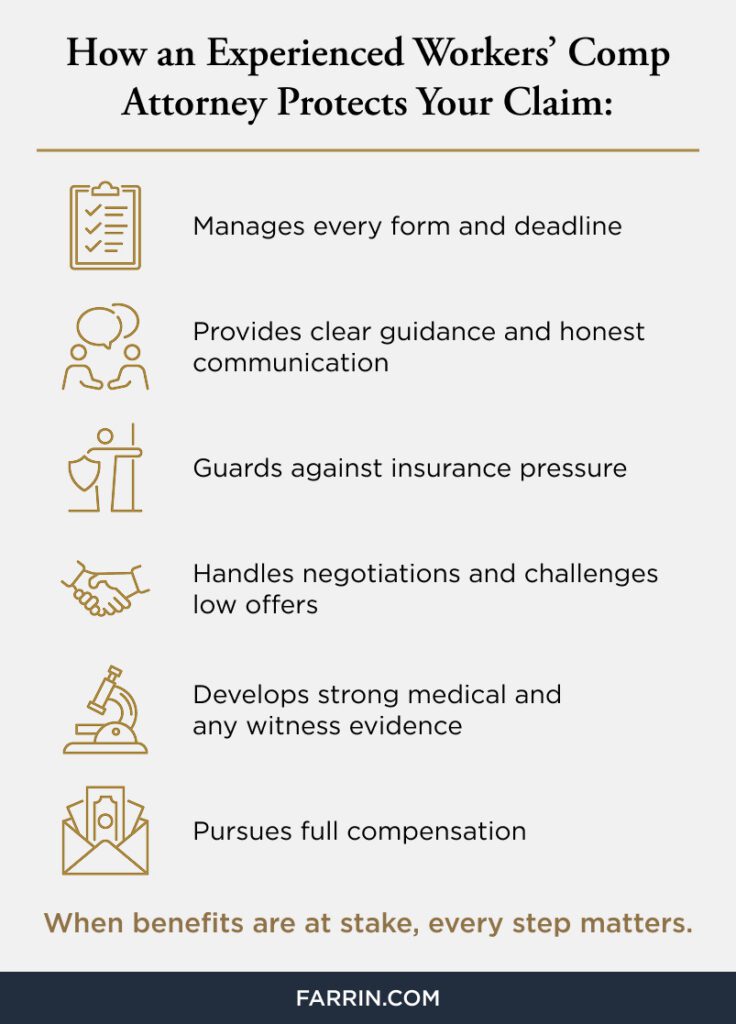
Here’s a look at what I do to build a compelling case for an injured worker:
- Handle All the Details
The amount of paperwork in a workers’ compensation case can be substantial. I manage it for my clients — from the initial Form 18 filing to responding to motions from the insurance company. I make sure all procedures are followed correctly and that every deadline is met, helping you avoid simple errors that could derail a case. - Guide and Communicate
I make it a priority to listen to my client’s questions and tell them the truth about their case. I explain their rights, advise them on the benefits they might be able to receive, and devise a plan to move their case forward. If there are concerns about job security, I can provide strategies to try to protect their employment. - Protect Your Rights
Some insurance companies can be aggressive. I push back when they try to coerce a client into returning to work too soon. If the company-approved doctor doesn’t seem to have the client’s best interests at heart, I can strategize on seeking a second medical opinion. I also monitor nurse case managers to try to ensure they do not improperly influence medical decisions. - Level the Playing Field
I take over communication and negotiation with the employer’s insurance carrier. I know their tactics, and I fight to get fast approval for necessary medical treatments. If they make a lowball settlement offer, I am prepared to counter it with evidence supporting the full potential value of the case. - Build and Manage Your Case
Building a compelling case means gathering and examining relevant evidence. I collect medical records and reports, and if needed, I depose doctors, eyewitnesses, or other relevant parties to strengthen the claim. My goal is to move the case forward efficiently while avoiding the common pitfalls that can delay or diminish it. - Pursue Maximum Benefits, Fast
My ultimate objective is to get a great result for my client as quickly as possible. I fight for them to receive the full amount of lost wage replacement they might be owed, prompt payment for all medical treatments, and the highest possible lump-sum settlement if appropriate.
If a claim is denied, I am prepared to argue the case before a neutral mediator or present it at a formal hearing before the NC Industrial Commission. The fight isn’t over until we have explored every available option.
Understanding Settlements in NC Workers’ Comp Cases
Many successful workers’ compensation cases in North Carolina are resolved through a settlement. A settlement is a potential voluntary agreement between you and the insurance company to close out your case in exchange for a lump-sum payment. This agreement, often called a “clincher agreement,” must be approved by the North Carolina Industrial Commission.
Deciding whether to settle is a major decision with long-term consequences.
- Pros of Settling: A potential settlement provides you with a sum of money upfront, giving you financial freedom and control over your future medical care. It also provides finality, ending the ongoing disputes with the insurance company.
- Cons of Settling: Once you sign a clincher agreement, you generally give up your right to any future workers’ compensation benefits for that injury. This means the insurance company will no longer pay for your medical bills or lost wages.
Before recommending a settlement, I carefully calculate the potential full value of a case. This can include estimating future medical costs, future lost wages, and the value of any permanent disability. We can then weigh the certainty of a lump-sum payment against the potential risks and benefits of keeping the claim open for future medical care. The decision is always the client’s, but my job is to provide them with the information they need to make the choice that is right for them.
North Carolina Workers’ Comp Case FAQs
Here are answers to some common questions that come up in an NC workers’ comp case.
 Text Us