

As a workers’ compensation attorney who helps people injured on the job, I’ve seen firsthand how physically demanding warehouse work can be. Warehouse worker injuries are a frequent occurrence due to the pressure to meet quotas, the constant movement of heavy machinery, and the repetitive nature of the tasks. If you’ve been hurt at work, you are likely trying to figure out how to cover your medical bills and missed wages during recovery.
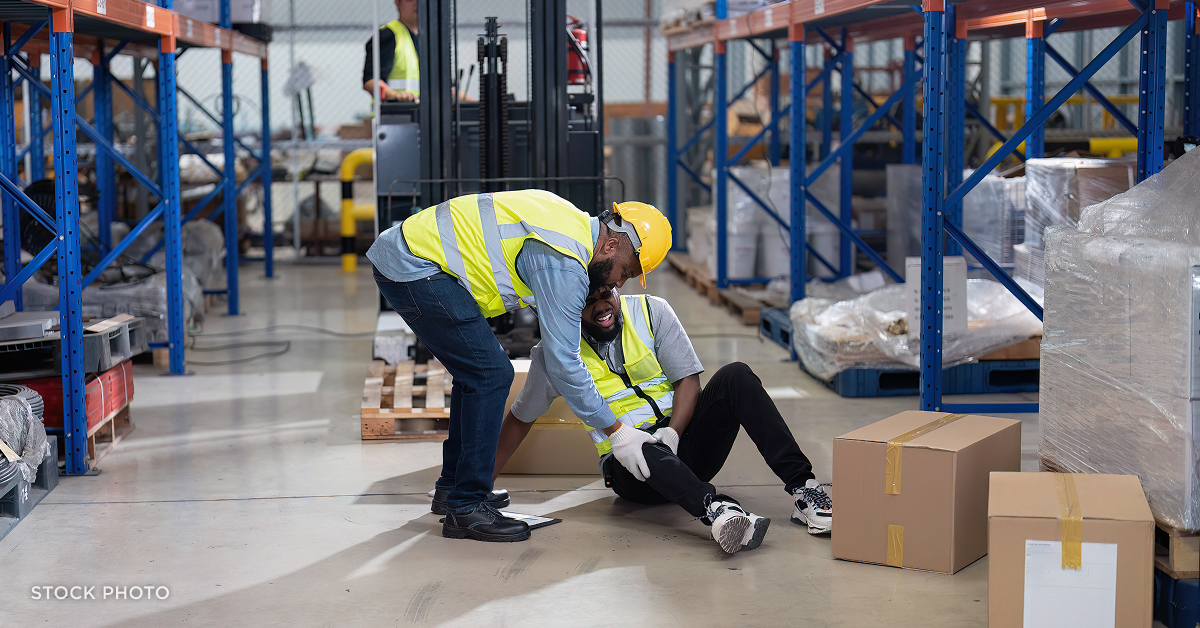
Workers’ compensation is a type of insurance that most NC and SC employers are required to have to provide benefits to most employees who are injured on the job. It’s a system that can help you, but it can be complicated.
Key Takeaways About Warehouse Worker Injury Claims
- Warehouse environments present numerous hazards, including forklift accidents, falling objects, and repetitive motion tasks, leading to a range of injuries.
- Common warehouse worker injuries include back and spine damage, repetitive stress injuries, broken bones, and catastrophic harm.
- Workers’ compensation is a system that provides specific benefits to most employees injured during their employment.
- Reporting an injury to an employer promptly and in writing is a crucial first step in the workers’ compensation process in both North Carolina and South Carolina.
- The process of filing a claim involves strict deadlines and specific forms, and an insurance company might dispute a claim for various reasons.
Common Causes of Warehouse Accident Injuries
In my experience, many warehouse accidents stem from a few common sources. The fast-paced setting, combined with heavy equipment and materials, means that a small mistake or a moment of inattention can lead to significant harm. The Occupational Safety and Health Administration (OSHA) identifies warehousing as a growing industry with notable risks.
Here are some of the most frequent causes of warehouse injuries I see:
- Forklift and Heavy Machinery Incidents: Forklifts are essential in warehouses, but they are also a leading cause of serious injuries. Accidents can happen when a forklift overturns, collides with a worker, or drops a load on someone.
- Slips, Trips, and Falls: Spills, debris on the floor, cluttered walkways, and uneven surfaces can all lead to falls. A fall from the same level can cause sprains and fractures, while a fall from a height — such as from a ladder or loading dock — can be devastating.
- Overexertion and Repetitive Motion: The job often requires lifting, pushing, pulling, and carrying heavy items. Doing this repeatedly or improperly can cause strains, sprains, and long-term back injuries. Repetitive tasks like scanning or packing can also lead to conditions like tendonitis or carpal tunnel syndrome.
- Falling Objects: Improperly stacked materials on high shelves can fall and strike workers below. This is a common hazard in the large warehouses that line logistics corridors from the Piedmont Triad in North Carolina to the Greenville-Spartanburg area in South Carolina.
- Hazardous Material Exposure: Some warehouses store chemicals or other hazardous materials. Spills or improper handling can lead to burns, respiratory problems, or other illnesses.
Recognizing these hazards is important, but even in the most safety-conscious environments, accidents can and do happen.
Types of Injuries Warehouse Workers Endure
The accidents described above can result in a wide array of physical harm. The injuries people endure often require extensive medical treatment and time away from work to heal. Some of these injuries can have lifelong consequences.
Some of the more common types of warehouse worker injuries include:
- Back and Spinal Cord Injuries: Lifting heavy objects is a primary cause of herniated discs, chronic back pain, and, in severe cases, spinal cord damage that could lead to paralysis.
- Repetitive Stress Injuries (RSIs): These develop over time from repeating the same motions. Examples include carpal tunnel syndrome from scanning items or tendonitis in the shoulder from lifting overhead.
- Broken Bones and Fractures: These can result from falls, being struck by an object, or machinery accidents.
- Head Injuries: A falling object or a fall can cause a traumatic brain injury (TBI), which can range from a mild concussion to severe, life-altering brain damage.
- Limb Loss or Amputation: Accidents involving heavy machinery, forklifts, or conveyor belts can sometimes lead to catastrophic injuries requiring amputation.
The medical care for these injuries can be expensive and lengthy, which is why the workers’ compensation system exists — to provide a safety net for most injured employees.
How to File a Workers’ Compensation Claim
If you’ve been injured in a warehouse accident, knowing what to do next can feel difficult. The workers’ compensation process has specific rules and deadlines that must be followed. While the laws in North Carolina and South Carolina differ slightly, the basic steps are similar.
Step 1: Report the Injury to Your Employer
This is the most important first step. You should report your injury to your supervisor or manager as soon as possible.
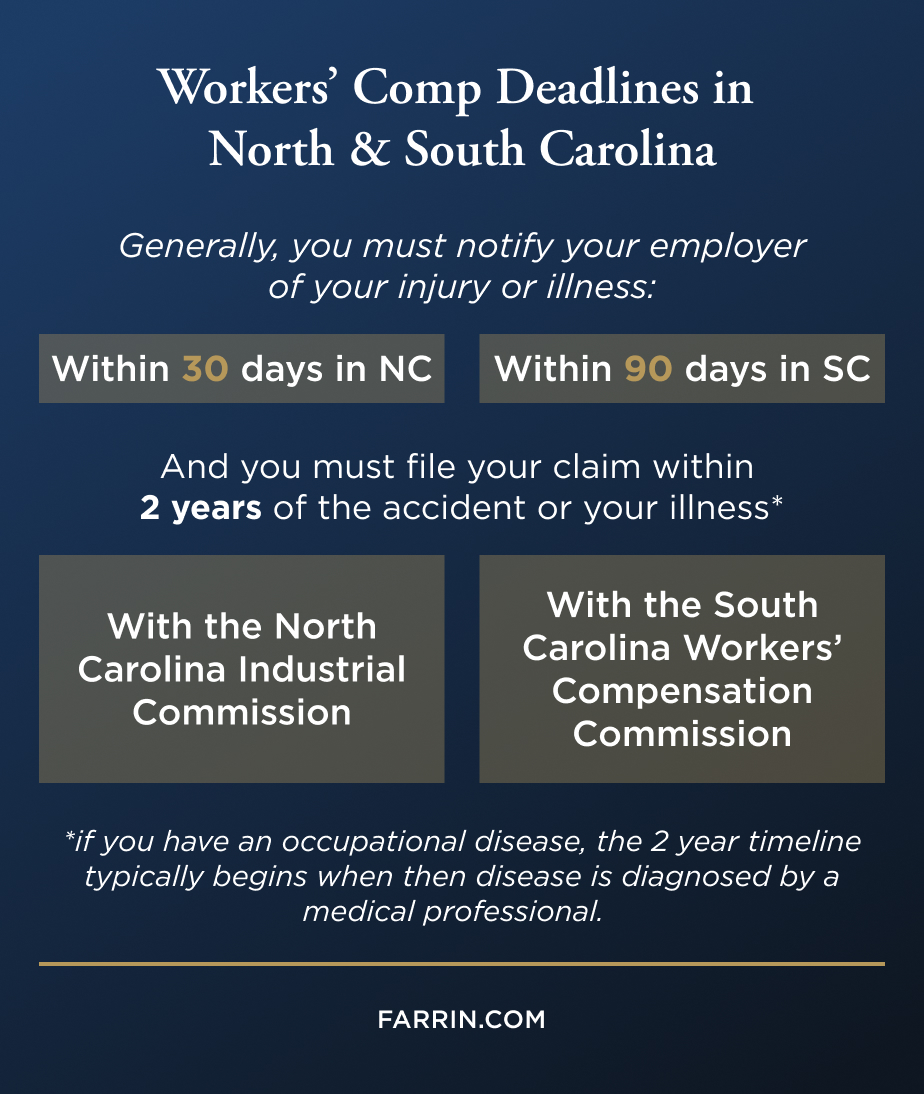
- In North Carolina: You generally have 30 days to report your injury in writing. The North Carolina Industrial Commission (NCIC) oversees the state’s workers’ compensation system.
- In South Carolina: You should provide notice of your injury to your employer as soon as you can, generally within 90 days. The South Carolina Workers’ Compensation Commission (SCWCC) manages claims in the state.
Failing to report your injury within these timeframes could put your ability to receive benefits at risk.
Step 2: Seek Medical Treatment
After reporting the injury, you need to get medical care. In most workers’ compensation cases, your employer or their insurance company has the right to direct your medical treatment, at least initially. It is important to go to the doctor they choose and to follow all medical advice and attend all appointments. This creates a record of your injury and treatment, which is critical for your claim.
Step 3: Formal Claim Filing
Reporting the injury to your employer is not the same as filing a formal claim with the state commission. If the insurance company accepts your injury, they will start paying benefits. Generally, you should still file a claim with the appropriate state agency (NCIC or SCWCC) within 2 years to protect your rights to potential future treatment, lost wages, and compensation for permanent impairment.
To file a formal claim:
- In North Carolina, this is typically done by filing a Form 18, Notice of Accident.
- In South Carolina, it is typically done by filing a Form 50 or Form 52.
This paperwork is where things can get complicated. Mistakes on these forms or missed deadlines can harm your case.
Potential Workers’ Compensation Benefits
The goal of the workers’ compensation system is to help injured workers by providing specific benefits while they recover. The exact amount and type of benefits you might receive depend on the specifics of your case and state law.
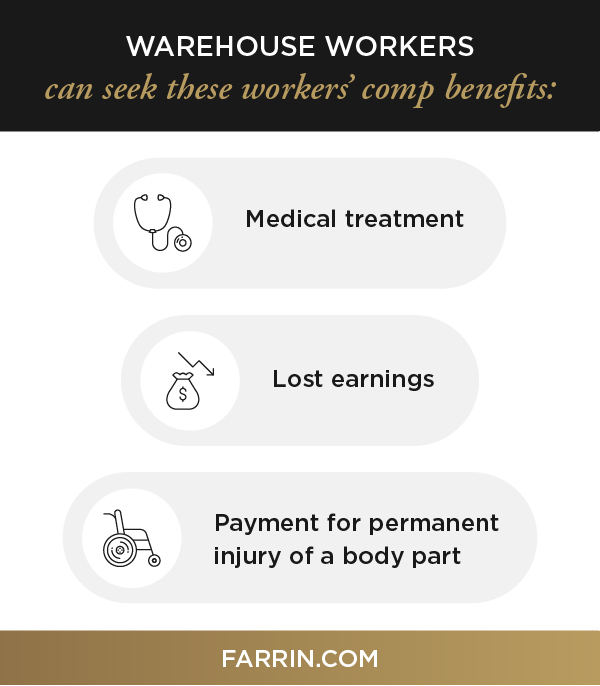
Generally, benefits can include:
- Payment for Medical Treatment: This can cover all necessary medical care related to your on-the-job injury, including doctor visits, hospital stays, surgery, physical therapy, and prescriptions.
- Lost Wage Benefits: If your injury prevents you from working, you might be able to receive a portion of your average weekly wages. These benefits are often called temporary total disability (TTD) if you cannot work at all or temporary partial disability (TPD) if you can work but earn less due to your injury.
- Permanent Disability Benefits: If your injury results in a permanent impairment, you might be eligible for additional benefits. This can be paid after you have reached what is called Maximum Medical Improvement (MMI) — the point at which your doctor believes your condition will not improve any further.
These benefits are a lifeline for many families, helping them stay afloat financially while an injured worker focuses on healing.
Why Might an Insurance Company Dispute Your Claim?
Unfortunately, getting the benefits you might be owed is not always straightforward. Insurance companies are businesses, and they often look to dispute or deny claims and protect their bottom line. I have seen them use many different reasons to fight a claim.
An insurance company might try to argue that:
- Your injury didn’t happen at work. They might claim your injury occurred at home or is related to a pre-existing condition.
- You missed a deadline.If you did not report your injury or file your claim on time, they will likely use that as a reason for a denial.
- The injury is not as severe as you claim. They might send you to a doctor of their choosing who provides an opinion that minimizes your injury or says you can return to work before you are ready.
- You were an independent contractor, not an employee. Misclassification of employees is an issue in some industries, and some employers may use it to try to avoid paying workers’ comp benefits.
When an insurance company disputes your claim, you have the right to fight back. This often involves gathering evidence, getting medical opinions, and presenting your case at a hearing.
How a Lawyer Can Help With Your Warehouse Worker Injury Claim
When you are trying to recover from an injury, the last thing you want is a fight with an insurance company. An experienced workers’ compensation attorney can handle the legal burdens for you. We fight to get our clients as much as possible, as quickly as possible.
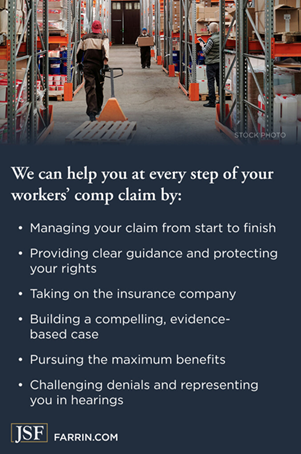 An attorney can help by:
- Handling the details. We can manage the complicated paperwork and make sure procedures are followed correctly, and strict deadlines are met.
- Guiding and communicating. We can advise you on what workers’ comp benefits you may be entitled to, listen to your questions, and devise plans to try to protect your job.
- Protecting your rights. If the insurance company tries to force you back to work too soon or sends a nurse case manager who isn’t acting in your best interest, we can fight back and strategize on seeking second medical opinions if necessary.
- Building and managing your case. We can collect and examine your medical records, move your case forward while helping you avoid pitfalls, and depose doctors or other witnesses as needed to build a compelling case.
- Pursuing maximum compensation, fast. We fight for lost wage replacement, payment for necessary medical treatment, and the highest possible settlement for your claim as appropriate.
Working with an experienced workers’ comp attorney levels the playing field and can give you peace of mind, allowing you to focus on your health and recovery.
Warehouse Worker Injuries FAQs
Here are answers to some common questions I hear from people who have been injured in warehouse accidents.