

As an attorney who handles workers’ comp for manufacturing injuries, I have spoken with many people who work in North Carolina’s manufacturing sector. From the furniture workshops in the Piedmont Triad to the advanced biotech facilities in the Research Triangle Park, these jobs are the backbone of our state’s economy.
They are also physically demanding and, unfortunately, can sometimes lead to serious injuries. If you’ve been hurt on the job, you are likely worried about your health, your family, and your financial future.
The North Carolina workers’ compensation system is designed to provide specific benefits to most employees who are injured at work. However, the process can be very complicated, and dealing with an employer’s insurance company is stressful. My goal here is to provide some clarity on what you might expect and the steps you can take to help protect your rights after a workplace accident.
Key Takeaways About Workers’ Compensation for Manufacturing Injuries
- North Carolina’s manufacturing industry presents various risks, leading to common injuries from machinery, repetitive motions, and hazardous materials.
- The North Carolina Workers’ Compensation Act provides benefits for most injured workers, which can include medical treatment and compensation for lost wages.
- Injured workers should report their injury to their employer in writing and seek immediate medical attention.
- Insurance companies might dispute or deny claims for various reasons, making the process potentially highly difficult for an injured person.
- An experienced attorney can handle the details of a claim, communicate with the insurance carrier, and fight for the full benefits an injured worker might be owed.
Common Causes of Manufacturing Injuries in North
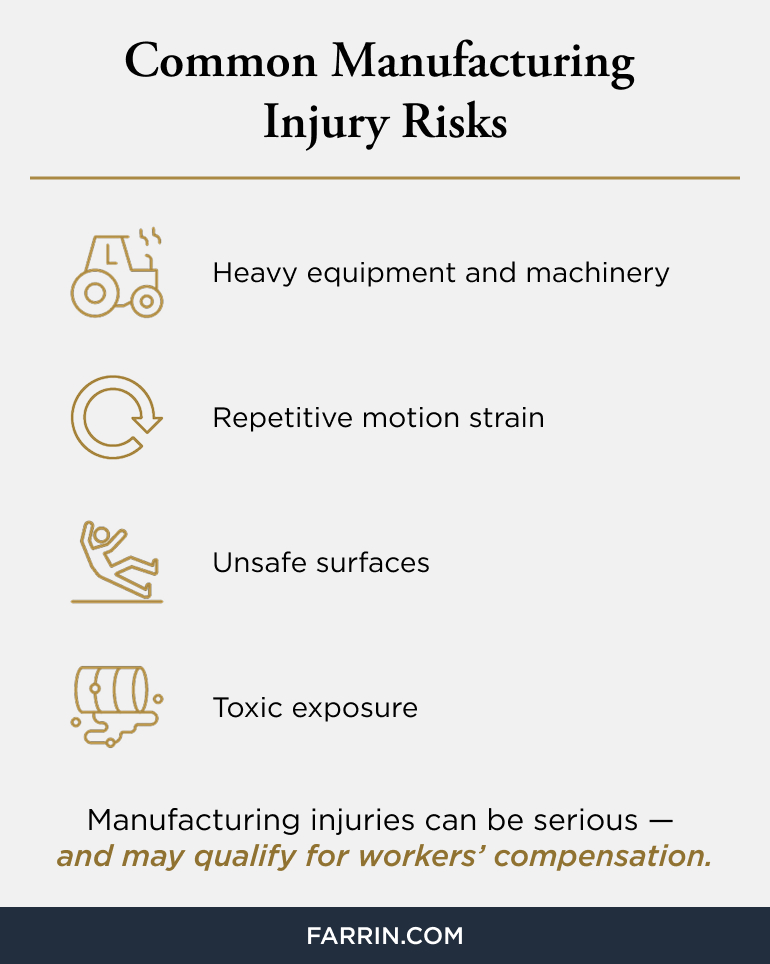
The manufacturing environment, by its nature, contains many potential hazards. I’ve seen firsthand how quickly a life can change due to a workplace incident. While safety protocols are in place at most facilities, accidents still happen. Some of the most frequent causes of accidents leading to workers’ comp for manufacturing injuries that I see include:
- Machinery and Equipment Accidents:Heavy machinery with powerful moving parts can cause crushing injuries, amputations, and severe lacerations if safety guards fail or are improperly used.
- Repetitive Motion Injuries:Many manufacturing jobs require the same physical motions over and over. This can lead to conditions like carpal tunnel syndrome, tendonitis, and debilitating back injuries that develop over time.
- Slips, Trips, and Falls:Spills, uneven flooring, or cluttered walkways can lead to serious falls. Falling from a height, such as from a ladder or platform, can result in catastrophic injuries.
- Exposure to Harmful Substances:Workers who handle chemicals, solvents, or other toxic materials can endure respiratory problems, skin conditions, burns, or other illnesses from exposure.
These are just a few examples, and the specific risks can vary widely depending on whether you work in textiles, aerospace, pharmaceuticals, or another one of North Carolina’s many manufacturing industries.
What to Do After a Manufacturing Injury
The moments after a work injury can be disorienting. Once you are home and safe after receiving initial medical care, it is important to think about the next steps. Taking prompt and proper action can have a significant impact on your ability to receive workers’ compensation benefits.
- Report the Injury to Your Employer in Writing. The North Carolina Workers’ Compensation Act requires you to notify your employer of your injury. While you should do this verbally as soon as possible, you must also provide written notice within 30 days. This creates a formal record of when and how the injury occurred.
- Seek Medical Treatment. Your health is the top priority. Your employer might direct you to a specific doctor or facility for treatment. It is crucial to follow the prescribed medical advice and attend all follow-up appointments. Be completely honest with the doctor about all your symptoms.
- Keep Detailed Records. Document everything related to your injury. Keep a journal of your symptoms and how they affect your daily life. Save all paperwork you receive from your employer, their insurance company, and your doctors. This includes medical bills, letters, and records of any missed time from work.
Following these steps can help create a clear record of your injury and treatment, which is essential for building a compelling workers’ compensation claim.
Understanding North Carolina Workers’ Compensation Benefits
If your claim is approved, the workers’ compensation system provides several types of benefits to help you during your recovery. The goal of the system is to help you get better and, if possible, return to work. These benefits are established by state law and administered by the North Carolina Industrial Commission.
The main potential benefits generally include:
- Medical Compensation:This can cover necessary medical treatment for your work-related injury. This can include doctor visits, hospital stays, surgery, prescription medications, physical therapy, and even mileage reimbursement for travel to and from medical appointments.
- Lost Wage Benefits:If your injury prevents you from working for more than seven consecutive days, you may be eligible to receive a portion of your lost wages. This is typically calculated as two-thirds of your average weekly wage, up to a maximum amount set by the state.
- Permanent Disability Benefits:If your injury results in a permanent impairment, you may be eligible to receive additional compensation. This could be for the loss of a limb or the permanent loss of use of a body part. These potential benefits are based on an impairment rating provided by your doctor.
In some cases where an injury prevents you from returning to your previous job, you might be offered vocational rehabilitation services to help you train for a new line of work.
It is important to understand that these potential benefits are specific and calculated according to formulas in the law. They are not intended to cover pain and suffering like a personal injury lawsuit might.
Why Your Employer’s Insurance Company Might Dispute Your Claim
Ideally, every valid claim would be approved without issue. In my experience, that is not always what happens. The insurance company that provides workers’ comp coverage for your employer is generally a for-profit business. If they pay out less in claims, they make more profit.
An insurance adjuster might dispute or deny your claim for several reasons, such as:
- Arguing the injury was not work-related: The insurer might claim your injury happened outside of work or is related to a pre-existing condition.
- Questioning the severity of the injury: They might send you to a doctor of their choosing who might downplay the extent of your injuries and suggest you can return to work before you feel ready.
- Stating you did not follow proper procedure: The insurance company could point to a failure to report the injury in time or not seeking authorized medical care as a reason for denial.
These are common tactics, and facing them on your own while you are trying to heal can feel like an impossible battle. This is often the point where an injured worker decides to seek legal guidance.
How an Attorney Can Help With Your Workers’ Comp Claim
Having a dedicated advocate on your side levels the playing field and can significantly increase your odds of a successful outcome. When I represent an injured worker, my role is to take the burden off their shoulders so they can focus on their recovery. A workers’ compensation attorney can fight for your best interests every step of the way.
Here are some of the ways we can help:
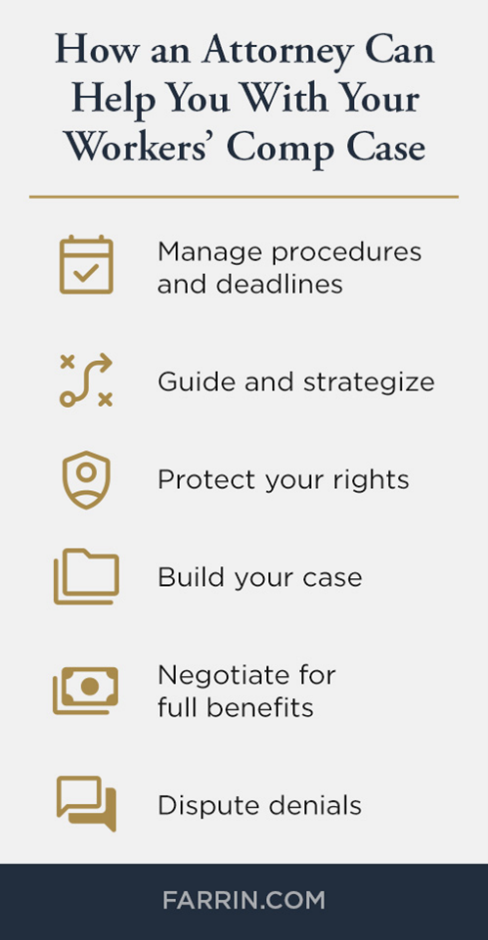
- Handle the details. We complete and file the complicated paperwork, make sure procedures are followed correctly, and meet the strict deadlines required by the North Carolina Industrial Commission, the state agency in charge.
- Guide and communicate. We advise you on what workers’ comp benefits you may be eligible to receive. We listen to your questions, tell you the truth about your case, and devise plans to try to maximize your benefits.
- Protect your rights. We fight back if the insurance company tries to coerce you to return to work if you feel it’s too soon. We can also help you strategize about seeking a second medical opinion if you disagree with the company doctor’s assessment.
- Level the playing field. We handle communication and negotiation with your employer’s insurance carrier. We fight for fast approval of necessary medical treatments and counter the lowball settlement offers they often make.
- Build and manage your case. We collect and examine your medical records and other evidence. If needed, we can depose doctors or other witnesses to try to strengthen your claim and help it move forward while avoiding common pitfalls.
- Pursue maximum compensation, fast. We fight for lost wage replacement, payment for necessary medical treatment, and the highest possible settlement, as appropriate.
- Dispute a denial. If your claim is denied, we can argue your case before a neutral mediator. If a fair agreement cannot be reached, we can present your case at a formal hearing before the NC Industrial Commission and handle appeals in certain instances.
Several attorneys who handle these types of cases at my firm are North Carolina State Bar Board Certified Specialists in Workers’ Compensation law. A lawyer who is certified as a specialist by the North Carolina State Bar Board of Legal Specialization has satisfied a number of rigorous standards for certification in the lawyer’s specialty field.
Workers’ Comp for Manufacturing Injuries FAQs
Here are some answers to common questions I hear from people hurt in manufacturing jobs.