


If your workers’ comp claim is denied in North Carolina, the critical thing to know is that you may be able to appeal that decision. A denial is not necessarily the final word. The North Carolina workers’ compensation system has a specific appeals process that allows injured workers to fight for the benefits they might deserve. However, this process involves strict deadlines and complex legal procedures, and a mistake could harm or end your case.
As an attorney who helps injured workers, I have seen the frustration and worry that a denial letter can cause. You were hurt on the job, you followed the rules, and now the insurance company has said no. It can feel like you’ve hit a brick wall. But there may still be a path forward. Understanding the reasons for the denial and the steps you can take next helps you protect your rights and determine if you may actually be eligible for the benefits you may need for your recovery.
Key Takeaways About Denied Workers’ Compensation Claims
- A denial of a North Carolina workers’ compensation claim is not necessarily the final outcome; injured workers have the right to appeal the decision.
- The first step in the appeals process is typically filing a Form 33, Request for Hearing, with the North Carolina Industrial Commission (NCIC).
- Strict deadlines apply to filing an appeal, and missing one can permanently bar a worker from receiving potential benefits.
- Common reasons for claim denials include missed reporting deadlines, disputes over whether the injury was work-related, or insufficient medical evidence.
- The appeals process in North Carolina may involve several stages, including mediation, a hearing before a Deputy Commissioner, and a review by the Full Commission.
Common Reasons Your NC Workers’ Comp Claim Can Be Denied
When an insurance company denies a workers’ comp claim, they must provide a reason for their decision. This is typically done on a document called a Form 61, “Denial of Workers’ Compensation Claim.” While every case is different, I often see denials based on a few common issues.
- Missed Deadlines:In North Carolina, you generally must report your injury to your employer in writing within 30 days. You also typically have two years from the date of injury to file a claim (using a Form 18) with the North Carolina Industrial Commission. A failure to meet these deadlines is a frequent reason for denial.
- Injury Not Work-Related:The insurance company may argue that your injury did not arise out of and in the course of your employment. For example, they might claim that your injury was caused by a pre-existing condition or that it happened while you were off the clock.
- Lack of Medical Evidence:The insurer may argue that your medical records do not sufficiently link your injury to the workplace accident. They might also question the severity of your injury or the necessity of the medical treatment you are seeking.
- Disputes Over “Employee” Status:Sometimes, especially in the construction or gig economy fields, an employer will classify a worker as an independent contractor to avoid paying for workers’ compensation insurance. If the insurance company believes you were a contractor and not an employee, they will deny the claim.
- Recorded Statement Issues:After an injury, an insurance adjuster may ask you for a recorded statement. It is very easy to say something unintentionally that they can later use to question your claim, such as downplaying your pain or being unclear about how the accident happened.
These are just a few examples, and sometimes the reason given is vague or seems unfair. The important thing to remember is that the insurance company’s reason is not the end of the story; it can be simply the beginning of the dispute process.
Your First Move After a Denial: Understanding the Formal Process
Receiving that Form 61 denial in the mail can be disheartening, but what you do next is crucial. You have the right to challenge the insurance company’s decision, but you must do so by following the specific procedures laid out by the North Carolina Industrial Commission, the state agency that oversees workers’ comp cases. Acting quickly and correctly can make a significant difference.
Critical Next Step: Filing a Form 33, Request for Hearing
If you disagree with the denial, your primary tool for fighting back is the Form 33, Request that Claim be Assigned for Hearing. Filing this form officially notifies the Industrial Commission and the insurance company that you are disputing the denial and want your case to be heard.
The Form 33 asks for basic information about you, your employer, and your injury. It also has a section where you must state the issues you are raising and what you are asking for. It is very important that this form is filled out completely and accurately. Any mistakes or omissions could potentially delay your case or even harm your ability to seek certain benefits. This is one of the key areas where the guidance of an experienced workers’ comp attorney can make a significant difference.
North Carolina’s Strict Deadlines for Appealing a Denial
Timing can be everything in a workers’ compensation appeal. In North Carolina, you must generally file your claim with the Industrial Commission within two years of the date of the accident. If the insurance company denies your claim, filing a Form 33 is the action that moves your case forward into the litigation, or dispute, phase.
If you miss a critical deadline, you could lose your right to pursue workers’ compensation benefits forever, regardless of the seriousness of your injury. The insurance company and their lawyers are very aware of these deadlines and can use a missed deadline to try to get a case dismissed. This is why I always recommend that injured workers act immediately after receiving a denial.
The North Carolina Workers’ Comp Appeals Process Explained
Once you file your Form 33, your case enters the formal dispute resolution process. This isn’t like a simple phone call to clear up a misunderstanding. It’s a structured legal journey with several possible stages. The goal is to resolve the disagreement between you and your employer’s insurance company.
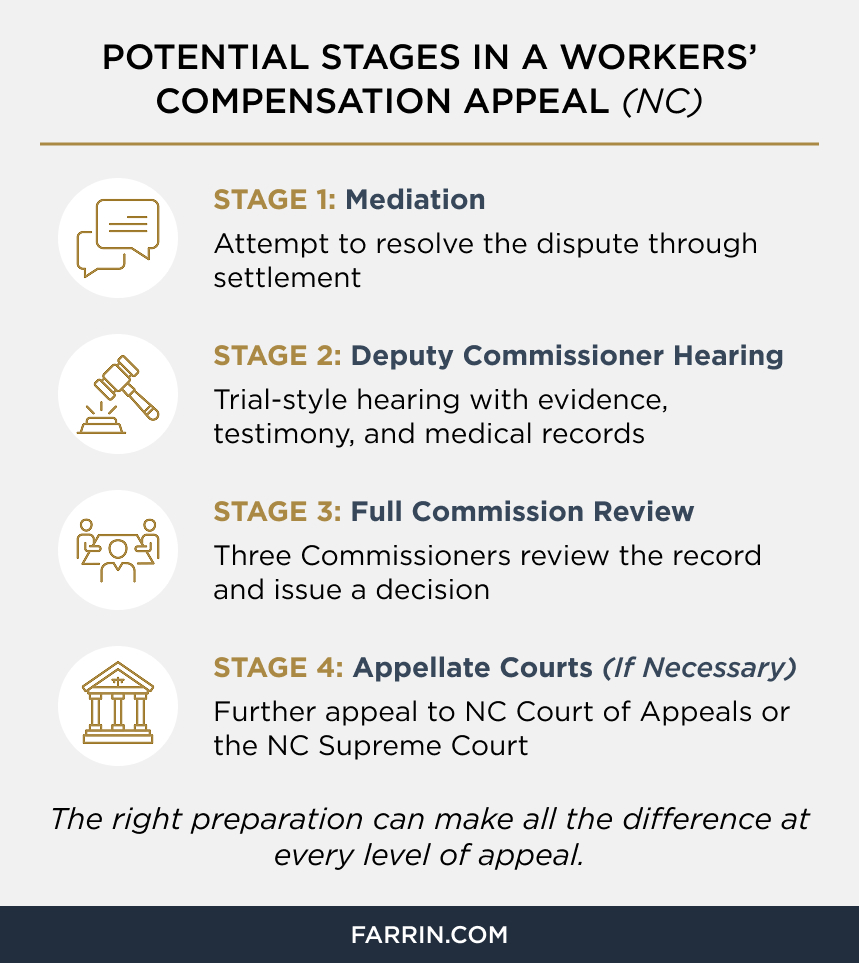
Stage 1: Mediation
In most disputed North Carolina workers’ compensation cases, the first step is mediation. Mediation is a meeting where you and your attorney, and the attorney for the insurance company, can sit down with a neutral third party called a mediator. The mediator’s job is to help both sides try to reach a voluntary agreement, or settlement.
Mediation is a very effective tool for resolving cases. It is less formal than a court hearing and allows for more creative solutions. If a settlement is reached, the case is over. If not, your case can proceed to the next stage.
Stage 2: The Deputy Commissioner Hearing
If mediation does not resolve the case, the next step may be a formal hearing in front of an NC Industrial Commission Deputy Commissioner. A Deputy Commissioner is a special judge who hears workers’ compensation cases. This hearing is like a trial.
- Both sides present evidence. This can include your medical records, safety reports, and other documents.
- Witnesses testify under oath. You will likely have to testify about your injury. Your attorney may also call witnesses on your behalf, such as co-workers or family members. The insurance company’s attorney may cross-examine you and your witnesses.
- Doctors may give testimony. Often, the most important evidence in a workers’ comp case is medical. Medical testimony is given through a deposition — sworn testimony given outside of court that is recorded by a court reporter.
After a hearing, the Deputy Commissioner will review all the evidence and issue a written decision, called an Opinion and Award. This decision will either grant or deny you the benefits you are seeking.
Stage 3: The Full Commission Review
If either side disagrees with the Deputy Commissioner’s decision, that party has the right to appeal to the Full Commission. The Full Commission is a panel of three Commissioners who will review the case.
This is not a new trial. Generally, no new evidence is presented. Instead, the Full Commission reviews the transcript and evidence from the hearing before the Deputy Commissioner. Both sides submit written legal arguments, called briefs, explaining why they believe the Deputy Commissioner’s decision was correct or incorrect. The Full Commission will then issue its own written decision, which can either affirm (agree with), reverse (disagree with), or modify the earlier decision.
Stage 4: Appeals to Higher Courts
In some instances, a case can even be appealed beyond the Full Commission to the North Carolina Court of Appeals and, potentially, the North Carolina Supreme Court. These appeals are rare and are typically based on arguments that the Industrial Commission made an error of law. This part of the process is legally complex and requires deep knowledge of appellate procedure.
This multi-stage process highlights how a simple denial can become a lengthy and involved legal battle. Each step requires a different strategy and a thorough understanding of the law and rules of evidence.
The Strategic Advantage of Having an Attorney When You’re Denied a Workers’ Comp Claim
When your claim is denied, the insurance company already has a team of adjusters and attorneys on their side. Their goal is usually to pay as little as possible. Trying to fight them on your own can be a difficult challenge. Having a dedicated advocate on your side helps level the playing field and protect your rights.
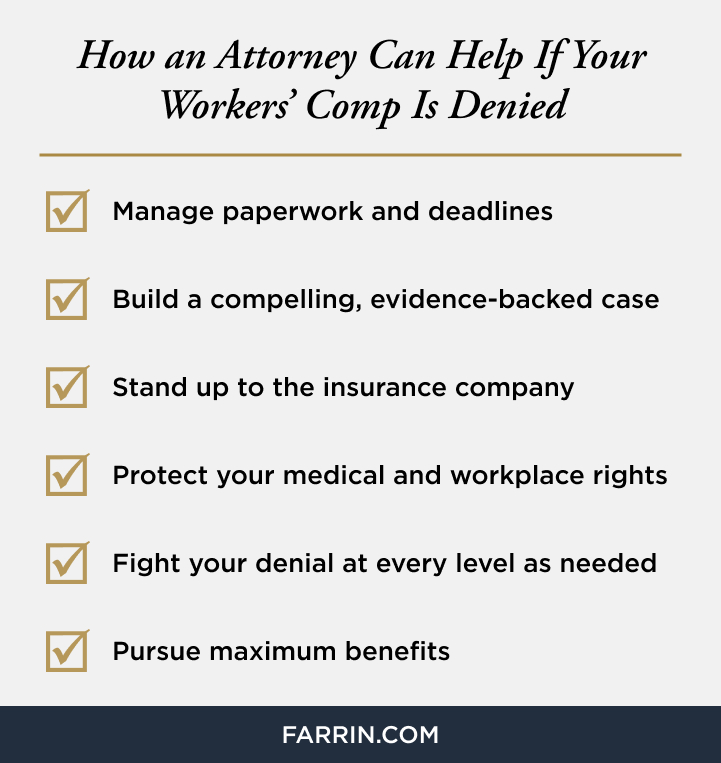
Here’s what an experienced workers’ compensation attorney can do for you:
- Handle All the Details:Your attorney and legal team will manage the immense amount of paperwork your case may require. They will work to make sure that all documents and forms, like the Form 33, are completed correctly and filed before the strict deadlines expire.
- Build and Manage Your Case:Fighting a denial is about building a compelling case supported by evidence. An attorney can collect all your medical records, communicate with your doctors, and, if needed, depose doctors and other witnesses to build a strong argument for why your injury should be covered.
- Level the Playing Field:The insurance carrier has professionals fighting for their interests. Your attorney fights for yours. They will handle all communications with the insurance company’s lawyer, negotiate any lowball settlement offers, and fight for fast authorization of necessary medical treatments.
- Protect Your Rights:An attorney can be your guide and protector throughout the process. They can advise you on your right to seek a second medical opinion if you disagree with the company-approved doctor. They can also fight back if your employer tries to coerce you into returning to work before you are medically ready.
- Dispute the Denial at Every Stage:An experienced attorney will know how to effectively argue your case in front of a neutral mediator. If a settlement isn’t possible, they will be prepared to present your case at a formal hearing, question witnesses, and present evidence to a Deputy Commissioner if needed.
- Pursue Maximum Compensation, Fast:The ultimate goal is to get you the benefits you may be owed as quickly as possible. This includes fighting for you to receive wage loss benefits and payment for all your related medical treatment. If your case is settled, an attorney will fight for the highest possible lump-sum settlement.
By taking on these responsibilities, a lawyer allows you to focus on what is most important: your health and your recovery.
FAQs: What to Do if Your Workers’ Comp Claim Was Denied
Here are some common questions I hear from injured workers in North Carolina after a claim denial.