

As a North and South Carolina workers’ compensation attorney, I have seen the distress and confusion that often follows a workplace injury. When you follow the rules, report your injury promptly, and see a doctor, you expect the system to provide for your medical bills and lost wages while you recover. Then, if a letter arrives from the insurance company stating that your claim has been denied or the benefit payments suddenly stop, you are likely shocked!

If you don’t know what to do when workers’ comp won’t pay, know this: a denial is not necessarily the end of the road. Taking organized, deliberate steps at this stage can increase the odds of getting workers’ compensation benefits.
Key Takeaways About When Workers’ Comp Doesn’t Pay
- Workers’ compensation claims can be denied for many reasons, including missed deadlines, disputes about the injury’s connection to work, or alleged pre-existing conditions.
- After receiving a denial, it is important to carefully review the denial notice, gather all relevant documents, and understand the specific deadlines for filing an appeal.
- The appeals process differs between North Carolina and South Carolina, involving different forms and hearings before state commissions.
- Building a compelling case for an appeal often involves collecting detailed medical evidence, witness statements, and other documentation to try to counter the insurance company’s reasons for denial.
- An attorney can handle the appeals process, manage communications with the insurance company, and fight for the full value of potential benefits on an injured worker’s behalf.
Common Reasons Your Workers’ Comp Claim Might Be Denied
When an insurance company denies a claim, they must provide a reason. While every case is different, many denials stem from a few common issues.
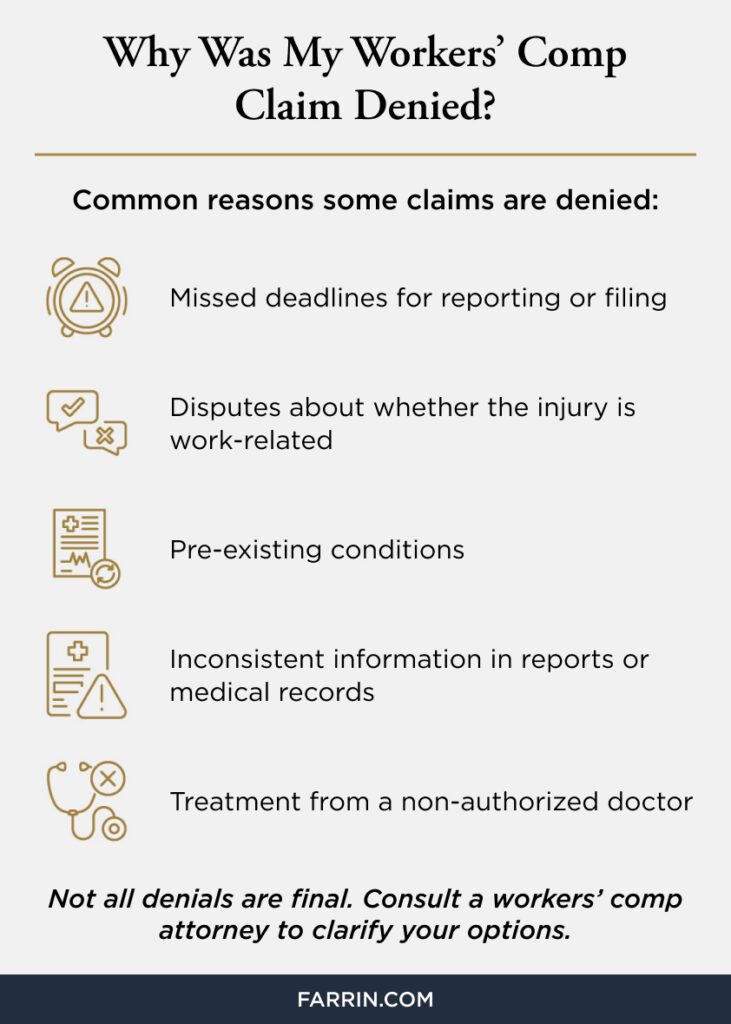
Here are some typical reasons an insurance carrier may give for not paying:
- Missed Deadlines: In both North Carolina and South Carolina, there are strict deadlines for reporting an injury to your employer and for filing a claim with the state. Missing one of these deadlines is a very common reason for an initial denial.
- Dispute Over Work-Relatedness: The insurance company might argue that your injury did not happen at work or was not related to your job duties. This can happen with injuries that develop over time, like carpal tunnel syndrome, or if the accident was not witnessed.
- Pre-Existing Condition: The insurer could claim that a pre-existing injury or medical condition is the true cause of your current pain, not the workplace incident. For example, they might point to a previous back injury to deny a new claim for back pain after a fall at work.
- Inconsistent Information: If the details you gave your doctor differ from what you told your employer or what was in the official accident report, the insurance company could use that inconsistency to question the validity of your claim.
- Failure to Use an Authorized Doctor: In most cases, your employer or their insurance carrier directs your medical care. If you seek treatment from your own doctor without approval, they might refuse to pay for it.
These are just a few examples, and sometimes the reason given can feel unfair or simply incorrect. This is often the point where an injured worker decides to seek legal guidance to help protect their rights.
Your First Steps After a Denial or Delay
Receiving a denial can be upsetting, but how you respond can make a significant difference. Acting quickly and methodically is key. The clock starts ticking the moment you receive that notice, so it’s important to have a plan.
First, remember that a denial is a roadblock, not necessarily a final judgment. Second, start getting organized. Here are the immediate steps I recommend people to consider when their workers’ comp claim is denied.
-
- Carefully read the denial letter: The letter from the insurance company is a critical piece of evidence. It must state the specific reason(s) they are denying your claim. Read it several times to make sure you understand their position. Is it a technicality, like a missed deadline? Or are they disputing the facts of your injury?
- Gather all your documents: Create a file and collect everything related to your injury and your claim. This includes the accident report, any emails or letters from your employer or the insurer, all of your medical records and bills, and notes on who you spoke to and when.
- Preserve any evidence: If there were witnesses, write down their names and contact information. If you have photos of the accident scene or your injury, make sure they are saved in a safe place.
- Formally dispute the denial:You cannot simply call the insurance adjuster and ask them to reconsider. You must file a formal appeal with the appropriate state agency.
- In North Carolina, this generally means filing a Form 33, Request for Hearing, with the North Carolina Industrial Commission (NCIC).
- In South Carolina, you would typically file a Form 50, Employee’s Notice of Claim and/or Request for Hearing, with the South Carolina Workers’ Compensation Commission (SCWCC). These forms officially begin the appeals process.
- Consult a workers’ compensation attorney: In my opinion, this is the most important step.
Building a Compelling Case for Your Appeal
Once you have filed your formal dispute, the next phase involves building a compelling case to counter the insurance company’s denial. They have their reasons for saying no, and your job is to present evidence to prove them wrong. This is where attention to detail becomes essential.
An appeal is not just about re-stating your side of the story; it’s about supporting it with facts, medical opinions, and proper documentation.
Collecting and Examining Evidence
The foundation of any strong appeal is the evidence you can present. The insurance company likely has adjusters and attorneys whose job is to scrutinize every detail to protect their bottom line. Leveling the playing field with an experienced attorney means significantly improving your odds of a successful outcome.
Our help for clients includes as needed:
- Your Complete Medical History: We gather not just the records from your work injury, but sometimes records of past treatments to try to show that a pre-existing condition was stable or asymptomatic before the workplace accident.
- Witness Statements: Statements from coworkers who saw the accident or know about the hazardous conditions that led to it can be very persuasive.
- Expert Opinions: As needed, we work with vocational experts who can testify about your inability to return to your previous job or other experts who can reconstruct an accident scene.
This evidence helps create a full picture of what happened and can help demonstrate the true extent of your injuries and their impact on your ability to work.
The Importance of Medical Opinions
Often, a workers’ compensation case comes down to a battle of medical opinions. The insurance company’s doctor might say you are ready to return to work, while your own body is telling you that you are still in pain. Your treating physician’s opinion is incredibly important.
To build the medical side of your case, we may:
- Request a Second Medical Opinion: If you disagree with the diagnosis or treatment plan of the company-approved doctor, you have the right to request a second opinion. In North Carolina, you can petition the Industrial Commission for a change of physician.
- Depose Your Doctor: A deposition is sworn testimony given outside of court. We can depose your doctor to get their formal, detailed medical opinion on the record regarding the cause of your injury, your physical limitations, and your prognosis for recovery.
- Obtain a Functional Capacity Evaluation (FCE): This is a comprehensive set of tests that can provide objective data about your physical abilities and limitations, which can be compelling evidence that supports your claim for ongoing disability benefits.
Strong medical evidence is often vital to trying to overturn a denial and getting the insurance company to approve necessary treatments and pay for your lost time from work.
The Appeals Process in the Carolinas: A General Overview
The appeals process follows a structured path designed to resolve disputes. While the specifics vary, both North Carolina and South Carolina have multi-stage processes. After you file your initial appeal form, the case does not usually go straight to a courtroom.
Typically, the first step is mediation. This is a meeting where you, your attorney, a representative from the insurance company, and a neutral third-party mediator all can sit down to try to reach a settlement. Many cases are resolved at this stage. It is an opportunity to negotiate without the formality of a hearing. Mediation provides a forum for potential resolution.
If mediation is unsuccessful, your case can be scheduled for a formal hearing.
- In North Carolina, this hearing is before a Deputy Commissioner of the North Carolina Industrial Commission. It functions like a trial, where both sides present evidence and call witnesses.
- In South Carolina, the hearing is before a single Commissioner from the South Carolina Workers’ Compensation Commission.
After a hearing, the Commissioner will issue a decision. If either side disagrees with that decision, there are further levels of possible appeal, first to the Full Commission in each state and then potentially to the state courts. Each step has its own strict procedures and deadlines, which is why many injured workers choose to have legal counsel guide them through the process.
How an Attorney Fights for You When Workers’ Comp Won’t Pay
When you are injured and out of work, the last thing you want is a fight with a large insurance company. Their adjusters and attorneys handle these disputes every day. An experienced workers’ compensation attorney can level the playing field and handle the legal process on your behalf, allowing you to focus on your recovery.
A lawyer’s role goes far beyond just filing paperwork. We become your advocate, your guide, and your fighter. When we take on a case where workers’ comp won’t pay, we immediately fight to protect your rights.
Here is what an attorney can do to help:
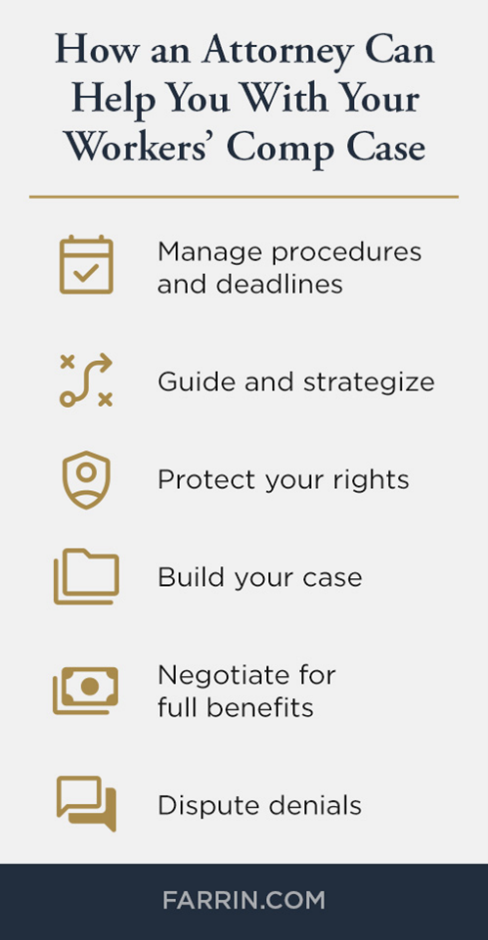
- Manage All Communications: We communicate with the insurance company so you don’t have to deal with adjusters if they are pressuring you to accept a low offer or return to work before you are ready.
- Build and Manage Your Case: We handle the evidence gathering, from requesting medical records to deposing doctors and witnesses if needed. We know what it takes to build a compelling case and how to counter the insurance company’s arguments.
- Meet All Deadlines: The workers’ compensation system is full of deadlines that can make or break a case. We manage the calendar to make sure forms are filed correctly and on time.
- Negotiate on Your Behalf: We seek the maximum compensation possible in your case. This includes fighting for full payment of medical bills, replacement of any lost wages, and the highest possible lump sum settlement when appropriate.
- Represent You at Hearings: If your case cannot be settled, we can present your case before a Commissioner, arguing the facts and applying the law to fight for a favorable decision.
We have extensive resources that we can dedicate to your case. The Law Offices of James Scott Farrin has more than 60 attorneys and over 200 staff. Many of our workers’ comp attorneys are North Carolina State Bar Board Certified Specialists in the field.
FAQs for What to Do When Workers’ Comp Won’t Pay
Here are answers to some common questions we hear from people dealing with a denied workers’ compensation claim.
 Text Us