

Hurt in a Rideshare Accident in Greensboro?
We fight powerful insurance companies for full compensation so you can focus on getting better!
Greensboro Rideshare Accident Lawyer: Fighting for People Hurt in Uber and Lyft Wrecks
Rideshare services like Uber and Lyft have become common transportation choices in Greensboro. Whether you are catching a ride from Piedmont Triad International Airport, heading to class at UNCG or North Carolina A&T, or going out for a night in downtown Greensboro, these services are convenient and accessible, but that does not guarantee safety.
When a rideshare vehicle is involved in a crash, the legal situation often becomes much more complicated than a standard car accident.
If you were injured in a wreck involving a rideshare vehicle — whether as a passenger, another driver, or a pedestrian — you might be facing mounting medical bills and uncertainty about who is responsible. A Greensboro rideshare accident lawyer from the Law Offices of James Scott Farrin can help. We understand the complex insurance policies involved in the gig economy and how to deal with the multiple insurance carriers that may try to deny your claim.
Key Takeaways About Greensboro, N.C. Rideshare Accident Claims
- Rideshare accidents can involve multiple insurance policies depending on the driver’s status at the time of the crash.
- North Carolina law governs liability, and specific rules apply to how insurance coverage works for Transportation Network Companies (TNC).
- Liability can shift between the driver’s personal insurance and the rideshare company’s corporate policy depending on the ride status.
- The Law Offices of James Scott Farrin has experience handling complex injury cases and dealing with large insurance providers.
- Injured parties may be entitled to compensation for medical expenses, lost wages, and other harms.
- Legal representation can help manage the unique procedural requirements of rideshare claims.
Why Choose the Law Offices of James Scott Farrin for Your Rideshare Accident Case?
When you are hurt and worried about the future, you want a formidable team in your corner. At the Law Offices of James Scott Farrin, we combine the personal attention of a local firm with the extensive resources of a powerhouse.
The James Scott Farrin Advantage:
- A Strong Track Record: We fight for maximum compensation, and it shows. We’ve generated more than $2 billion total for more than 78,000 clients since 1997. And counting.¹
- Inside Knowledge: We know how the other side works because we have several former insurance adjusters, defense firm attorneys, and even a former state senator on staff.
- No Fee Unless We Win: We work on a contingency fee arrangement. This means we don’t charge a fee unless we get a result for you — guaranteed.²
- No Waiting Around: Our proprietary software and streamlined processes allow us to move cases forward efficiently. We have a reputation for getting great results.¹
We treat every client with the dignity and respect they deserve. Our goal is to provide high-quality legal representation to as many people as possible, leveling the playing field against powerful insurance companies.

Understanding Rideshare Accidents in Greensboro
Greensboro is a hub of activity, and with major roadways like I-40, I-85, Wendover Avenue, and Battleground Avenue, traffic congestion is common. Rideshare drivers are under pressure to complete trips quickly and check their apps constantly, which can lead to dangerous driving behaviors.
A Greensboro rideshare accident lawyer can help you identify the specific factors that contributed to your crash. Even more than when a typical collision occurs between two personal vehicles, a rideshare crash can involve many corporate entities and specific state regulations regarding insurance coverage.
Common Causes of Rideshare Crashes
Rideshare drivers are subject to the same rules of the road as everyone else, but the nature of their job can introduce unique risks:
- Distracted Driving: Drivers must interact with their app to accept rides, check GPS navigation, and communicate with passengers. This takes their eyes off the road.
- Fatigue: Many gig economy workers drive for long hours or use ridesharing as a second job, which can lead to drowsy driving.
- Speeding: Financial incentives often encourage drivers to get passengers to their destinations as fast as possible to pick up the next fare.
- Unfamiliar Areas: Drivers may be navigating neighborhoods or parts of Greensboro they do not know well, leading to erratic driving or sudden stops.
- Improper Maintenance: Unlike taxis, which are often fleet-maintained, rideshare vehicles are personal cars that may not receive regular safety checks.
We investigate these factors thoroughly to try to build a compelling case on your behalf.
The “Period” System: How Rideshare Accident Insurance Coverage Works
One of the most confusing aspects of a rideshare accident is determining which insurance policy may apply. It is rarely straightforward. Uber, Lyft, and other rideshare companies operate under a tiered insurance system based on the driver’s status at the exact moment of the collision.
This system is often referred to as the “period” system:
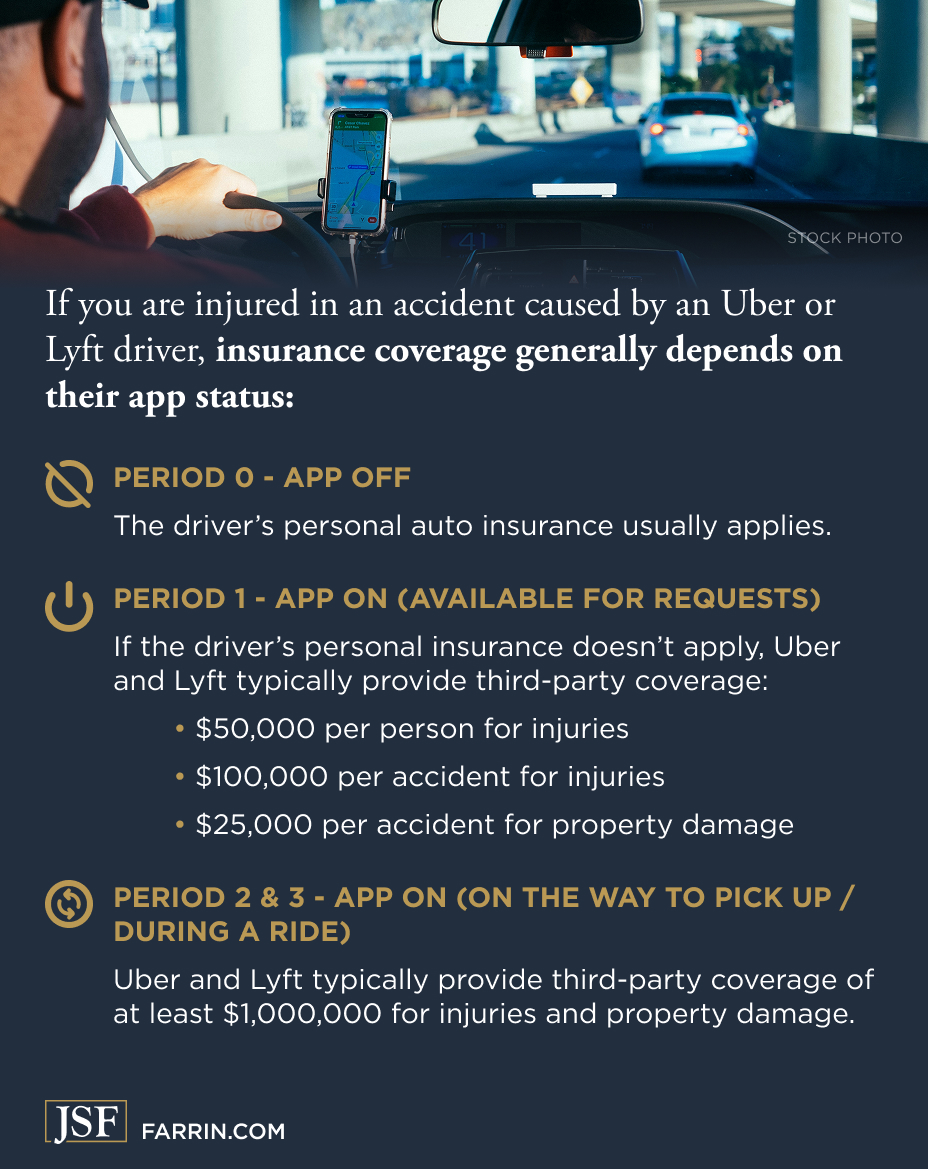
- Period 0 (App Off): If the driver is not logged into the rideshare app, their personal auto insurance is the primary coverage. However, many personal policies exclude business use, which can lead to coverage denials.
- Period 1 (App On, Waiting for Request): The driver is logged in but has not accepted a ride. The rideshare company typically provides limited liability coverage (often $50,000 per person/$100,000 per accident /$25,000 for property damage) if the driver’s personal insurance denies the claim.
- Period 2 (Request Accepted, En Route): The driver is on the way to pick up a passenger. The rideshare company’s higher-limit commercial insurance policy generally kicks in.
- Period 3 (Passenger in Vehicle): The passenger is in the car. This period usually carries the highest level of coverage, often of at least $1 million in liability and uninsured/underinsured motorist coverage.
Understanding these periods is vital. If the insurance company argues that the driver was in Period 1 rather than Period 2, the potential compensation for your injuries could drop significantly. We review electronic records and trip data to establish exactly when the accident occurred.
Determining Liability in a Greensboro Rideshare Wreck
Identifying who is at fault is the first step in pursuing a claim. In North Carolina, liability laws can be strict. We look at the “three-legged stool” of a case: Liability, Damages, and Coverage. Without all three, a case may not succeed.
Who Can Be Held Responsible?
- The Rideshare Driver:If they were speeding, distracted, or violated traffic laws
- Another Motorist:If a third-party driver hit the rideshare vehicle you were riding in
- The Rideshare Company:In some instances, if they failed to properly screen a driver with a dangerous history or if their technology contributed to the crash
- Vehicle Manufacturers:If a defect in the car caused the accident
Determining fault is not always simple. Insurance companies for the driver and the rideshare company may point fingers at each other to avoid paying.
The Risk of Making a Statement
In North Carolina, admitting even a tiny percentage of fault can potentially bar you from receiving any compensation. Insurance adjusters know this. Some may even call injured people quickly after an accident, acting friendly to get a recorded statement. They may try to get you to say something that could be interpreted as admitting fault.
Because of this risk, we strongly advise you to speak with a rideshare accident lawyer before giving a recorded statement to any insurance company. We handle the insurance company for you, so you don’t have to worry about what you’re saying and can focus on your health.
What Our Greensboro Rideshare Accident Attorney Does for You
 Dealing with the aftermath of an injury is exhausting. Greensboro auto accident attorneys step in to manage the legal and administrative burden so you can prioritize your health.
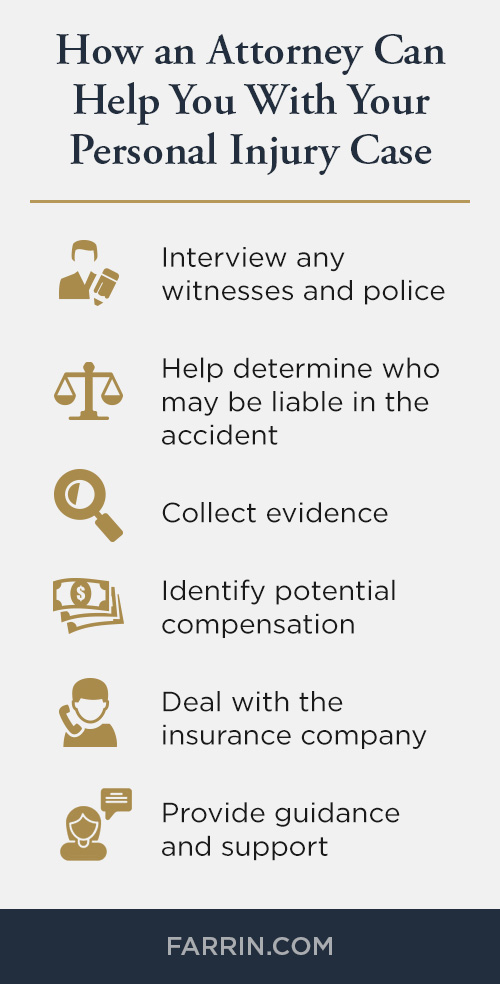
- Manage All the Details: We complete complicated paperwork, ensure all procedures are followed correctly, and meet strict deadlines.
- Protect Your Rights: We level the playing field with insurance companies and address any liens to try to put more money in your pocket.
- Handle the Insurance Company: We communicate and negotiate on your behalf, countering any lowball tactics and delays.
- Build Your Case: We gather and examine evidence, such as police reports and medical records. When needed, we work with investigators to reconstruct accident scenes.
- Fight for Maximum Compensation: We try to identify all sources of possible compensation and calculate the full potential value of your harms and losses.
We are dedicated to providing communication you can count on. We listen — and respond — because your case outcome and peace of mind are our top priorities.
Potential Compensation for Rideshare Injuries
If you were hurt in a rideshare accident that wasn’t your fault, you may deserve compensation for the physical, emotional, and financial toll the injury has taken on your life. The potential amount varies based on the severity of the injury and the available insurance limits.
We fight to recover damages that may include:
- Medical Expenses: Such as ambulance fees, emergency room visits, surgeries, hospital stays, physical therapy, and future medical needs related to the accident
- Lost Wages or Income: If you missed work due to your injury of if your injuries prevent you from returning to your previous job or earning the same income in the future
- Pain and Suffering: Potential compensation for the physical pain and emotional distress caused by the accident
According to the North Carolina Department of Insurance, auto insurance policies must meet minimum state requirements, but rideshare cases often involve much higher limits. Our goal is to analyze every policy involved to try to find every dollar available to you.
Types of Injuries We Handle
Rideshare accidents can happen on high-speed highways like I-85 or on slower city streets. The injuries can range from moderate to life-altering.
We help clients who have sustained all types of injuries, including:
- Traumatic Brain Injuries (TBI)
- Spinal cord injuries and paralysis
- Broken bones and fractures
- Internal organ damage
- Severe burns
- Whiplash and soft tissue injuries
Regardless of the injury, our goal remains the same: to get the medical treatment you need and the full compensation you may deserve.
Acting Quickly Is Important
Time is a factor in every legal case. North Carolina has a statute of limitations that sets a strict deadline for filing a personal injury lawsuit. Generally, this is three years from the date of the accident, but exceptions exist that could shorten this time.
Furthermore, evidence disappears. Security camera footage is overwritten, witnesses move away, and electronic data from the rideshare app can be difficult to secure as time passes. Contacting a lawyer as soon as possible often helps us preserve critical evidence to support your claim.
Greensboro Rideshare Accident FAQs
The following questions are commonly asked by those injured in rideshare accidents in the Greensboro area.
Can I sue Uber or Lyft directly if I am injured?
Generally, rideshare drivers are classified as independent contractors rather than employees. This often protects the corporate entity from direct lawsuits regarding the driver’s negligence. Injured passengers typically file a claim against the driver’s insurance or the rideshare company’s commercial insurance policy. In specific cases where the company was negligent in hiring or retaining a dangerous driver, a direct claim might be possible. We can evaluate the specific facts of your situation.
What happens if the rideshare driver hits me while I am in another car?
If a rideshare driver hits your vehicle, the insurance process depends on the driver’s status. If they had a passenger or were on their way to pick one up, the rideshare company’s $1 million liability policy likely applies. If they were just driving around with the app off, their personal insurance likely applies. We can determine which policy may be available to pursue the compensation you may need.
Do I have to pay a deductible if I was a passenger?
No, as an injured passenger, you generally do not pay a deductible to file an injury claim against the at-fault party’s insurance. Deductibles typically apply to property claims for your own vehicle. Your primary concern should be getting medical treatment, and our firm fights to ensure the responsible insurance carrier covers your damages.
Can I still get compensation if the rideshare driver was not at fault?
If another driver caused the accident while you were a passenger in an Uber or Lyft, you can pursue a claim against that at-fault driver’s insurance. If that driver is uninsured or underinsured, the rideshare company’s uninsured/underinsured motorist (UM/UIM) coverage may be used to help cover your costs. We explore all these avenues to try to secure a recovery for you.
How much does it cost to hire a rideshare accident lawyer?
At the Law Offices of James Scott Farrin, we work on a contingency fee basis. This means there are no upfront fees. We only collect a percentage of the gross recovery if we successfully get compensation for you. If we do not get you a result, you do not pay any fee. Guaranteed.²
Get Free Help From Our Greensboro Rideshare Accident Lawyers
If you have been injured in a rideshare accident, you don’t have to face the insurance company alone. We have the experience, the resources, and the determination to fight for compensation for you.
But don’t take our word for it. See what clients of our Greensboro office have to say:
 “I was treated like I matter and with so much attention, transparency every step of the way, and with compassion for my case and my feelings. Thank you!” –Sharitta M., Greensboro Google review1
Contact the Law Offices of James Scott Farrin today for free help with your case evaluation. Call us at 1-866-900-7078 or reach out through our online form. Tell them you mean business.