

Can’t work because of an on-the-job wrist injury?

Let our NC workers’ comp team fight for the benefits and full compensation you may be entitled to.
North Carolina Wrist Injury Workers’ Compensation Lawyer: Pursuing Max Compensation After a Work Injury
When you use your hands for a living, a wrist injury isn’t just painful—it is a direct threat to your livelihood. Whether you are a data entry specialist in Raleigh, a mechanic in Charlotte, or a factory worker in Greensboro, your ability to work depends on the function of your wrists. When a sudden accident or years of repetitive motion cause that function to fail, the financial stress can be immediate.
In North Carolina, the workers’ compensation system is designed to provide a safety net for employees hurt on the job. However, accessing these benefits is rarely as simple as filing a form. Insurance companies often look for reasons to pay out as little as possible. But you do not have to face these challenges without support.
The experienced North Carolina wrist injury workers’ compensation lawyers at the Law Offices of James Scott Farrin help injured people fight for the medical care and wage replacement they may be owed.
Key Takeaways About Workers’ Comp for Wrist Injuries in NC
- Wrist injuries in North Carolina can be classified as accidents or occupational diseases depending on the cause.
- Injured workers might be entitled to medical treatment and wage replacement benefits.
- Insurance companies may dispute wrist claims by blaming pre-existing conditions like arthritis.
- The “schedule of injuries” in North Carolina law determines potential compensation for permanent partial disability.
- Filing the correct forms with the North Carolina Industrial Commission is critical for protecting a claim.
Why Choose the Law Offices of James Scott Farrin for Your North Carolina Workers’ Comp Claim?
We opened our doors in 1997 with one simple goal: to provide excellent legal representation, one client at a time. Today, that mission has evolved into a powerhouse firm that fights for injured workers across North Carolina. We have a reputation for great results, and we seek to get you maximum compensation, fast.¹
The James Scott Farrin Advantage means you have a formidable team in your corner. Our roster includes several North Carolina State Bar Board Certified Specialists in Workers’ Compensation Law. We also have former insurance adjusters and defense firm employees on staff. We know how the other side works, and we use that knowledge to build compelling cases for our clients.
Our track record speaks for itself:
- We have recovered over $2 billion in gross for over 78,000 clients since 1997. And counting.¹
- We operate on a contingency fee arrangement. There is no fee unless we winyour case.² Guaranteed.
When you choose us, you are choosing a firm that puts you first. We have the extensive resources to take on powerful insurance companies, yet we remain dedicated to treating every client with the personal attention they deserve.
Wrist Injuries in the North Carolina Workplace
The wrist is a complex joint made up of eight small bones (carpals) and the two forearm bones (radius and ulna), all held together by a network of ligaments and tendons. Because of this complexity, the wrist is highly susceptible to injury. In the workplace, these injuries generally fall into two categories: injuries by accidents and occupational diseases.
A specific traumatic incident is what most people think of as an accident. You might trip over a cable and land on your outstretched hand, or a heavy object might fall on your wrist. These incidents usually result in immediate, acute injuries like fractures or sprains.
However, many wrist claims in North Carolina involve occupational diseases. These develop over time due to the nature of your job. If your work requires you to perform the same motion thousands of times a day – such as typing, scanning groceries, or operating vibrating machinery – you might develop a condition that is just as debilitating as a broken bone.
Common Work-Related Wrist Conditions
Our firm helps workers dealing with a wide variety of wrist impairments, including:
- Carpal Tunnel Syndrome: Occurs when the median nerve is compressed as it passes through the wrist causing numbness, tingling, and weakness in the hand
- Tendinitis:Inflammation of the tendons, often caused by repetitive strain
- De Quervain’s Tenosynovitis: A painful condition affecting the tendons on the thumb side of the wrist
- Distal Radius Fractures: A break of the part of the radius bone close to the wrist
- Scaphoid Fractures: A break in one of the small carpal bones, which can be difficult to heal
- Triangular Fibrocartilage Complex (TFCC) Tears: Damage to the cartilage structure on the small finger side of the wrist
Whether your injury was instant or gradual, it can prevent you from performing your job duties.
North Carolina Workers’ Compensation Benefits
If your wrist injury is covered under North Carolina law, you generally have the right to three specific forms of assistance. These benefits are designed to function as a complete support system—potentially providing medical care to help you heal and financial aid to keep you afloat.
Medical Compensation
The insurance company should pay for all medical treatment that is “reasonably necessary to effect a cure, provide relief, or lessen the period of disability.” This can include:
- Emergency room visits and x-rays immediately after an accident
- Surgery to repair fractures or release a compressed nerve (carpal tunnel release)
- Physical therapy to restore range of motion and strength
- Prescription medications for pain and inflammation
However, in North Carolina workers’ compensation cases, the insurance company typically has the right to choose the doctor you see. This can lead to conflict if the company doctor downplays your injury or clears you to return to work before you feel ready.
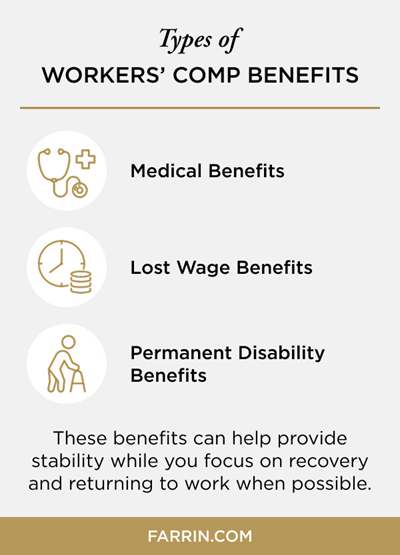
Lost Wages – Temporary Total Disability (TTD)
If your authorized treating physician writes you out of work for more than seven days, you might be eligible for weekly wage replacement checks. These checks are generally calculated as two-thirds of your average weekly wage. This money is often vital while you heal.
Permanent Partial Disability (PPD)
Once you have reached “Maximum Medical Improvement” (MMI) — meaning your condition has stabilized and is unlikely to improve further — the doctor may assign you a permanent impairment rating. North Carolina law assigns a specific value to different body parts. The hand (which includes the wrist for rating purposes) is valued at 200 weeks of potential compensation in the statutory schedule.
For example, if you have a 10% rating to your hand, you might be entitled to 20 weeks of compensation at your weekly comp rate. Verifying this rating is accurate is one area where a workers’ compensation lawyer can make a significant difference.
Why Wrist Injury Claims Get Denied (And How We Fight Back)
Insurance companies are businesses, and they often look for ways to reduce costs. Wrist injuries, particularly those involving repetitive motion, may be frequent targets for denial for some insurers.
Here are common arguments they may use:
- It’s not work-related. They might claim you hurt your wrist playing sports or doing yard work.
- It’s a pre-existing condition. If you have any history of arthritis, they might argue that your current pain is just the natural aging process, not a result of your job.
- You didn’t report it in time. North Carolina law has strict deadlines. You generally must notify your employer within 30 days (in writing) and file Form 18 with the Industrial Commission within two years.
- The injury isn’t an ‘accident’. For a back injury, you must prove a specific traumatic incident. For a wrist injury, the rules are slightly different, but some insurance adjusters might try to confuse the issue to deny coverage.
When we take your case, we counter these tactics. We gather medical evidence, interview any witnesses, and look at your job description to try to link your duties directly to your injury. We can fight to prove that your work was a significant contributing factor to your condition.
What The Law Offices of James Scott Farrin Can Do for You
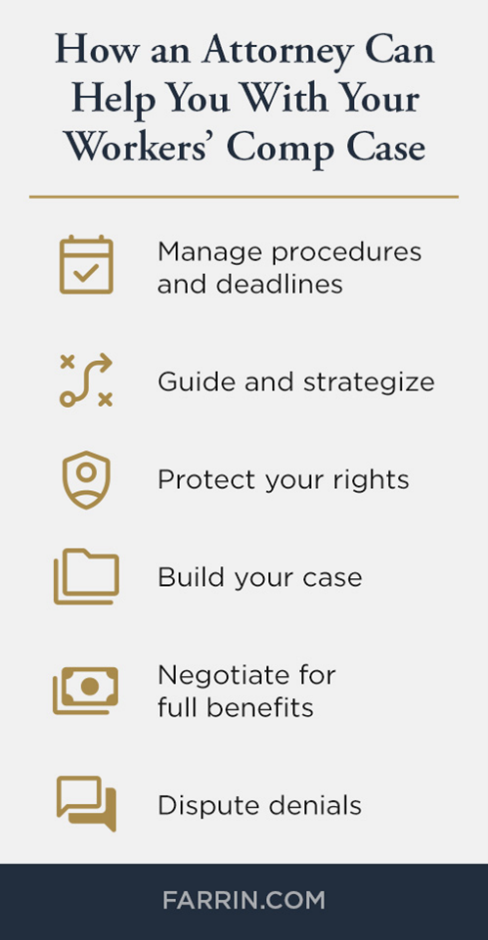
Dealing with a workers’ compensation claim can be exhausting. Our goal is to take that weight off your shoulders so you can focus on healing. Here is how we can help our clients throughout the process:
We Handle the Details
Paperwork in a workers’ comp claim can be confusing. One wrong box checked on a form can delay your benefits or lead to a denial. We manage the details for you.
- We complete complicated paperwork to ensure accuracy.
- We make sure procedures are followed correctly according to the North Carolina Industrial Commission.
- We monitor strict deadlines so you stay on track.
- We file the necessary forms, such as Form 18, to officially open your claim.
By handling the administrative burden, we know how to monitor for critical errors that can ruin your case.
We Protect Your Rights
The insurance company likely has adjusters and lawyers working for them; you should have someone looking out for you, too.
- We fight back against any coercion if you feel your employer tries to force you to return to work before it is safe.
- We strategize on how to seek second medical opinions if you feel the company doctor is not listening to your concerns.
- We monitor nurse case managers to try to ensure they are not interfering with your medical treatment.
- We can address and negotiate any liens to try to put more money in your pocket at the end of a case.
Having a legal team on your side helps level the playing field against large insurance carriers.
We Build and Manage Your Case
A successful claim requires strong evidence:
- We collect and examine medical records to try to find the proof needed to support your claim.
- We move cases forward while monitoring for common pitfalls that unrepresented workers often face.
- We depose doctors and witnesses if needed to establish the extent of your injury and its cause.
- We work with vocational experts when appropriate to show how your wrist injury impacts your ability to earn a living.
A well-built case can put us in a significantly stronger position to negotiate.
We Pursue Maximum Compensation, Fast
You have bills to pay, and you cannot wait forever for a resolution. We treat your case with the urgency it deserves.
- We fight for full lost wage replacement for the time you may be out of work.
- We push for payment of all necessary medical treatments, including surgeries and therapy.
- We negotiate for the highest possible lump sum settlements when appropriate.
- We can dispute denials by arguing cases before neutral mediators or at formal hearings if needed.
We strive to get you the best possible result as quickly as possible.
Specific Challenges With Repetitive Motion Injuries
In North Carolina, proving an occupational disease like Carpal Tunnel Syndrome requires meeting specific legal standards. You generally must prove that your job placed you at an increased risk of developing the condition compared to the general public.
For example, an administrative assistant who types for eight hours a day is at higher risk for wrist strain than someone who does not use a computer. However, proving this causation legally requires medical testimony.
Doctors usually need to state, to a reasonable degree of medical certainty, that your job caused or significantly contributed to your condition. Some insurance carriers may send injured workers to doctors who are skeptical of repetitive strain injuries!
We know how to interpret medical records and how to question doctors during depositions. We try to ensure that the medical evidence reflects the reality of your daily work duties and the physical toll they take on your body.
Returning to Work After a Wrist Injury
One of the most contentious times in a workers’ compensation case is the possible return-to-work phase. Your doctor might release you to “light duty,” restricting you from lifting more than five pounds or limiting your keyboard use.
If your employer offers you a job that meets these restrictions, you generally must accept it, or you risk losing your weekly checks. But what if the job they offer isn’t actually “light duty”? What if they ask you to do things that hurt your wrist?
We know how to guide our clients through a difficult transition. If an employer tries to force you to violate your medical restrictions, we can intervene. We fight to protect your right to heal without jeopardizing your potential benefits.
North Carolina Wrist Injury Workers’ Compensation Lawyer FAQs
Here are answers to some of the most common questions injured workers ask about seeking benefits for wrist injuries.
Can I choose my own doctor for my wrist injury?
In North Carolina, the insurance company generally has the right to select the doctor who treats you. However, you can request a change of physician if the current treatment is inadequate, or you might be entitled to a second opinion. We help clients navigate these requests with the Industrial Commission.
What if I had wrist pain before my job started?
You might still be eligible for benefits. If your job aggravated or accelerated a pre-existing condition, the claim could be compensable. We try to prove that your work duties made the condition worse than it would have been otherwise.
How is the value of my wrist injury calculated?
Potential compensation for permanent impairment is based on the doctor’s opinion and the schedule of injuries in the NC Workers’ Compensation Act. The hand is valued at up to 200 weeks of compensation. The amount you may receive depends on your disability rating percentage and your average weekly wage. Note: You could be entitled to a second opinion on the impairment rating if you disagree with any rating assigned by the authorized treating provider.
Can I sue my employer for my wrist injury?
Generally, no. Workers’ compensation is an “exclusive remedy,” meaning you usually cannot file a personal injury lawsuit against your employer. However, if a third party (like a machine manufacturer or a delivery driver) caused your injury, you might have a separate civil claim.
Is Carpal Tunnel Syndrome covered by workers’ comp?
Yes, Carpal Tunnel Syndrome can be covered as an occupational disease in North Carolina. You must prove that your employment placed you at an increased risk of contracting the condition compared to the general public and that your job was a significant contributing factor.
Get Help from a North Carolina Wrist Injury Workers’ Comp Lawyer Today
Your wrist injury has already disrupted your life. Do not let the insurance company disrupt your recovery. The Law Offices of James Scott Farrin is ready to stand up for you. Our NC workers’ compensation lawyers have the experience, the resources, and the determination to fight for the maximum compensation you may need.
If you, or a loved one, have injured your wrist at work, contact the Law Offices of James Scott Farrin today for your free case evaluation. Call us at 1-866-900-7078 or contact us online.
Tell them you mean business.
 Text Us