

When you’re injured at work, the uncertainty can be difficult. You’re dealing with physical pain, medical appointments, and the stress of being unable to earn your usual paycheck. As an attorney, I often speak with people who are worried about how they will support their families while they recover.
One of the most frequent questions I hear is, “How long can I receive temporary disability benefits in North Carolina?” It’s a critical question because these benefits are often the financial lifeline that keeps a family afloat.

North Carolina’s workers’ compensation system has specific time limits and conditions that determine how long you are eligible to receive potential payments. While there is a general cap, certain circumstances can change the duration. Knowing these details can help you better prepare for the road ahead.
Key Takeaways About How Long You Can Receive Temporary Disability Benefits in North Carolina
- North Carolina law generally limits temporary disability benefits to a maximum of 500 weeks from the date of first disability.
- The two main types of temporary benefits are Temporary Total Disability (TTD) and Temporary Partial Disability (TPD).
- Reaching Maximum Medical Improvement (MMI) is a key milestone that often signals the end of temporary disability benefits.
- Benefits can stop before the 500-week limit if an injured person returns to work or does not comply with certain medical or job-related requirements.
- In some extreme cases of severe injury, it is possible to apply for an extension of benefits beyond the 500-week cap.
What Are Temporary Disability Benefits?
Before we talk about time limits, it’s important to clarify what these benefits are. In North Carolina, when a work injury prevents you from earning your usual wages, you may be eligible for temporary disability benefits. These are payments intended to replace a portion of your lost income while you are recovering.
There are two primary types of potential temporary disability benefits:
- Temporary Total Disability (TTD): These benefits are for individuals who are completely unable to work due to their injury, as determined by an authorized doctor. If you are on TTD, you generally receive two-thirds of your average weekly wage, up to a maximum amount set by the state.
- Temporary Partial Disability (TPD): If your doctor says you can return to work but with restrictions (often called “light-duty work”) and you earn less than you did before the injury, you might receive TPD. These benefits typically cover two-thirds of the difference between your pre-injury and post-injury wages.
These benefits can bridge the financial gap during your recovery period. They can provide crucial support until you are medically cleared to return to your job or have reached a point of maximum healing.
The 500-Week Limit for Temporary Disability Benefits in North Carolina
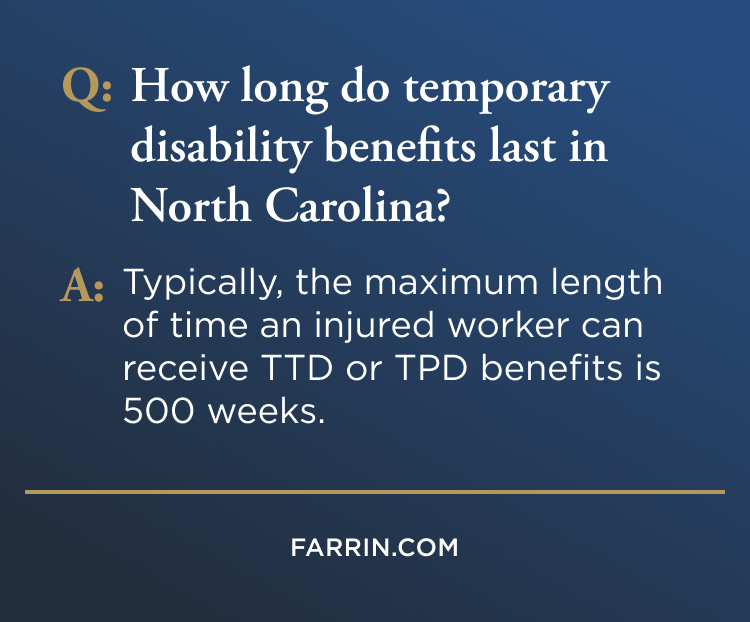
So, how long can these benefits last? The general rule in North Carolina is straightforward: an injured employee might be eligible to receive temporary disability benefits for a maximum of 500 weeks. This rule is established by the North Carolina Workers’ Compensation Act, specifically G.S. § 97-29(c).
This 500-week clock starts ticking from the date you first become disabled and miss time from work because of your eligible injury, not necessarily from the date of the injury itself. For many people, 500 weeks — which is over nine and a half years — seems like a very long time. However, it’s important to remember this is a maximum limit, not a guarantee. Many factors can cause your potential benefits to stop much sooner.
Think of the 500-week rule as the outer boundary for how long these specific benefits can be paid. It provides a cap, but the actual duration of any benefits will depend entirely on your individual medical recovery and work status.
Are There Exceptions to the 500-Week Rule?
While the 500-week limit applies to the vast majority of cases, the law recognizes that some injuries are so severe that a person’s ability to earn a living is permanently and drastically affected. In these situations, there is a possibility to receive benefits for a longer period.
An injured person can petition the North Carolina Industrial Commission — the state agency that administers workers’ compensation laws — to extend benefits beyond 500 weeks. To be successful, the person generally must prove that they have experienced a “total loss of wage-earning capacity.” This is a very high standard to meet and typically involves catastrophic injuries.
Examples of injuries that might qualify for extended benefits include:
- Severe traumatic brain injuries
- Paralysis
- Certain amputations
- Severe burns over a large portion of the body
This exception is not automatic. It requires a formal application and substantial medical evidence to show that the injury has permanently prevented the person from returning to any kind of suitable employment. The North Carolina Industrial Commission has detailed procedures for these types of claims, and fighting for them often means significant legal effort.
What Can Cause My Temporary Disability Benefits to Stop Sooner?
For most injured workers, the pressing concern is what might cause potential benefits to stop before the 500-week maximum mark. The insurance company is not generally obligated to pay for the full 500 weeks if your circumstances change. I have seen benefits terminated for several common reasons.
Here are some key events that can lead to the cessation of your temporary disability checks:
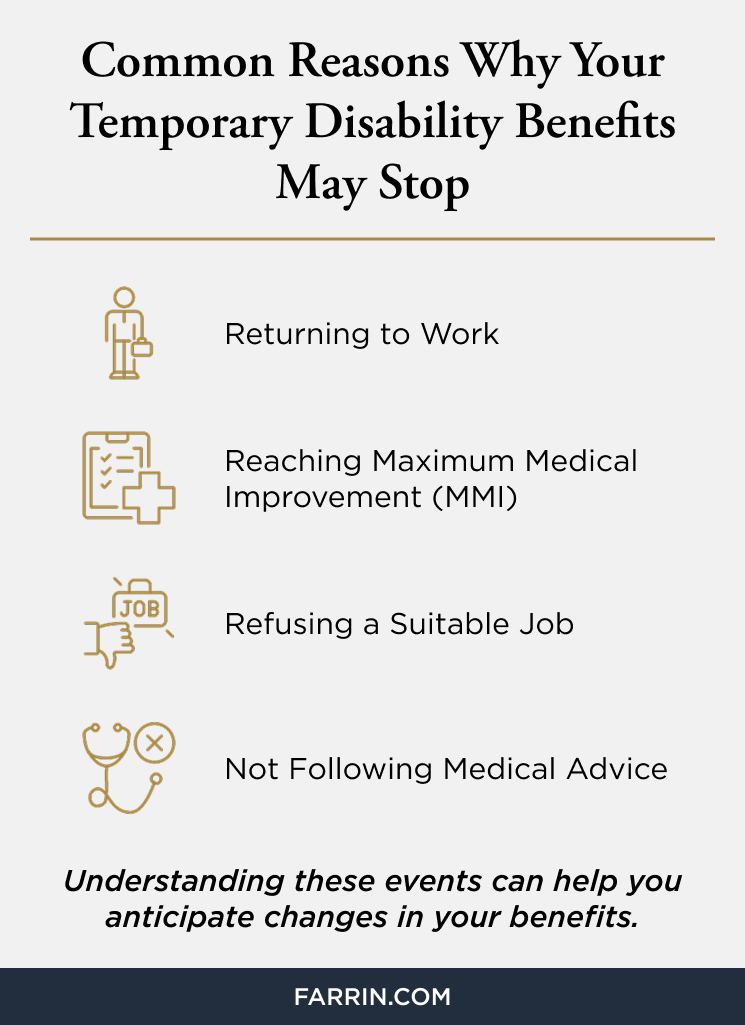
- Returning to Work: If you are able to return to your pre-injury job and earn your pre-injury wages, your temporary disability benefits will stop. If you return to a lower-paying or light-duty job, your TTD benefits will stop, but you might then become eligible for TPD benefits.
- Reaching Maximum Medical Improvement (MMI): This is perhaps the most significant milestone in a workers’ compensation case. MMI is the point at which your doctor determines that your medical condition has stabilized and is unlikely to improve further with additional treatment. Once you reach MMI, the insurance company will typically stop your temporary disability benefits. At this point, the focus shifts to determining if you have any permanent impairment from your injury.
- Refusing Suitable Employment: If your employer offers you a job that fits within the medical restrictions your doctor has given you, you are generally required to accept it. This is called “suitable employment.” If you refuse a suitable job offer without a good reason, the insurance company can petition to stop your benefits. This is an area where disputes often arise, as what the insurance company considers “suitable” might not be what you or your doctor believes is appropriate.
- Not Following Medical Advice: To continue receiving potential benefits, you generally must comply with your authorized treating physician’s medical advice. This includes attending appointments, participating in physical therapy, and following treatment plans. If you fail to do so, it can jeopardize your continued wage replacement benefits.
Understanding these triggers is important because the insurance company will be closely monitoring your case and is likely looking for any reason to stop payments. Remember: most insurance companies have a financial incentive to close claims as quickly as possible.
The Importance of Maximum Medical Improvement (MMI)
Let’s talk a little more about Maximum Medical Improvement, or MMI, because it plays such a pivotal role in the timeline of your potential benefits. As I mentioned, MMI is a medical determination. It does not mean you are 100% healed or back to how you were before the injury. It simply means your condition is not expected to get any better.
When your doctor declares you are at MMI, a few things happen:
- Your temporary disability benefits (TTD or TPD) will typically end.
- Your doctor will evaluate you for any permanent limitations or loss of function.
- This evaluation can result in a “permanent impairment rating,” which is a percentage that reflects the degree of any permanent damage to the injured body part.
Any impairment rating can then be used to calculate permanent partial disability (PPD) benefits you might be owed. So, while reaching MMI signals the end of one type of possible benefit, it opens the door to seeking another. The potential transition from temporary to permanent benefits is a critical phase of a workers’ compensation case, and it’s a time when having a clear understanding of your rights is essential.
How a Lawyer Can Help With Seeking Workers’ Compensation Benefits
The workers’ compensation system in North Carolina is filled with complex rules, strict deadlines, and procedures that can be difficult for anyone to handle, especially when they are focused on recovering from an injury. An experienced workers’ compensation attorney can help protect your rights and fight for the full benefits you may be owed.
As an attorney, I see my role as leveling the playing field for you. The insurance company typically has adjusters and lawyers who handle these cases every day; their goal is often to minimize what they pay out. My goal is to fight for maximum benefits for you.
Here are some of the ways a lawyer can assist with seeking your benefits:
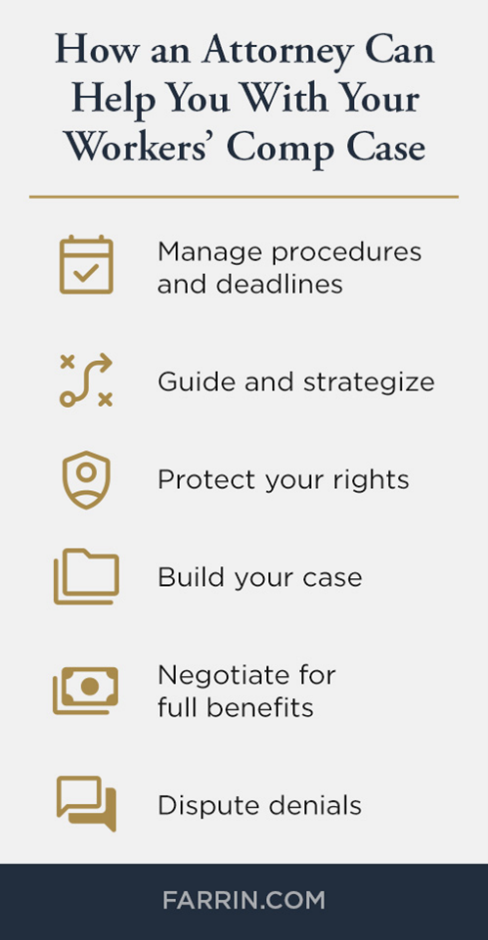
- Protect Your Rights: We can fight back if the insurance company tries to stop your benefits prematurely or pressures you to return to work before you may be medically ready. We can also advise you on how to handle interactions with a nurse case manager assigned by the insurer.
- Build Your Case: We can gather and examine medical records and other evidence. If there is a dispute about your ability to work or your medical needs, we can depose doctors and vocational experts as needed to build a compelling case on your behalf.
- Handle the Insurance Company: We can handle communications and negotiations with the insurance company. This allows you to focus on your health while we counter any lowball or delay tactics and push for the full compensation you may be owed.
- Address Disputes: If the insurance company denies a claim, stops payments, or refuses to approve necessary medical treatment, we can fight that denial. This may involve arguing your case at a mediation or presenting it at a formal hearing before the NC Industrial Commission.
Having a dedicated advocate on your side significantly increases the odds of a successful outcome in your case and helps reduce the stress of the process.
FAQs for How Long Can I Receive Temporary Disability Benefits in North Carolina
Here are answers to some common questions I hear about the duration of workers’ compensation benefits.
 Text Us