

In my years of practice, I’ve met with clients who are still visibly shaken when they walk into my office after a dog attack. They come in with painful wounds, mounting medical bills, and a sense of shock that lingers long after the stitches come out. Whether they were walking near the Bicentennial Gardens or taking a shortcut through a neighbor’s yard, the attack always seems to have come when they least expected it.

One of the most important things I do in those first conversations is help my clients understand how new dog bite laws in North Carolina apply to their situation. Knowing where you stand legally puts you in a much stronger position to protect your rights, and in my experience, it makes a real difference when it comes to pursuing the compensation you may be owed.
Key Takeaways About North Carolina Dog Bite Laws
- North Carolina generally follows a version of the “one-bite rule,” which allows owners to avoid liability if the dog showed no prior aggressive behavior, though exceptions exist for dogs running loose or previously declared dangerous.
- In North Carolina, owners of legally designated “dangerous dogs” face strict liability for injuries their animals cause.
- The statute of limitations for filing a personal injury claim is generally three years from the date of the attack.
- North Carolina law requires all dog bites to be reported to local health authorities, triggering a mandatory 10-day quarantine period for the animal.
- Compensation from dog bite claims might cover medical expenses, lost wages, pain, and other damages.
How North Carolina Handles Dog Bite Liability
North Carolina takes a hybrid approach when determining whether a dog owner bears responsibility for bite injuries. The state recognizes what legal professionals call the “one-bite rule,” but also imposes strict liability in specific situations involving dangerous dogs.
The One-Bite Rule Explained
The so-called one-bite rule creates a situation where dog owners might not face liability for their pet’s first bite — but only if they had no reason to believe the animal posed a danger. In plain terms, if a dog has never bitten anyone and shown no aggressive tendencies before an attack, the owner might argue that they could not have anticipated the harm.
This rule does not give dog owners a free pass, however. If an owner knew or should have known their dog was aggressive — perhaps because it growled at strangers, lunged at neighbors, or displayed territorial behavior — they could still be held responsible, even if the dog never bit anyone before. Courts look at the totality of the circumstances when evaluating whether an owner had knowledge of their pet’s dangerous propensities.
Strict Liability for Dangerous Dogs
North Carolina law draws a clear line when it comes to dogs officially classified as “dangerous.” Under Chapter 67, Article 1A of the North Carolina General Statutes, a dangerous dog is one that has:
- Killed or inflicted severe injury on a person without provocation
- Been determined “potentially dangerous” by local animal control authorities
- Been owned or harbored for the purpose of dog fighting
A “potentially dangerous dog” includes any animal that has bitten someone badly enough to cause broken bones, disfiguring lacerations, or injuries requiring hospitalization or cosmetic surgery. It also includes dogs that have killed or severely injured domestic animals when off the owner’s property, or approached someone in a vicious manner, suggesting an intent to attack.
When a dog carries this dangerous classification, the owner faces strict liability — meaning they likely bear responsibility for any injuries the dog causes, regardless of whether they acted negligently or took precautions. The law essentially says that once an owner knows their dog poses a danger, they assume full responsibility for any harm that follows.
What to Do After a Dog Bite in Greensboro
Taking the right steps after a dog attack can protect both your health and your potential claim. While your immediate reaction might be shock or anger, try to stay calm and focus on the following priorities.
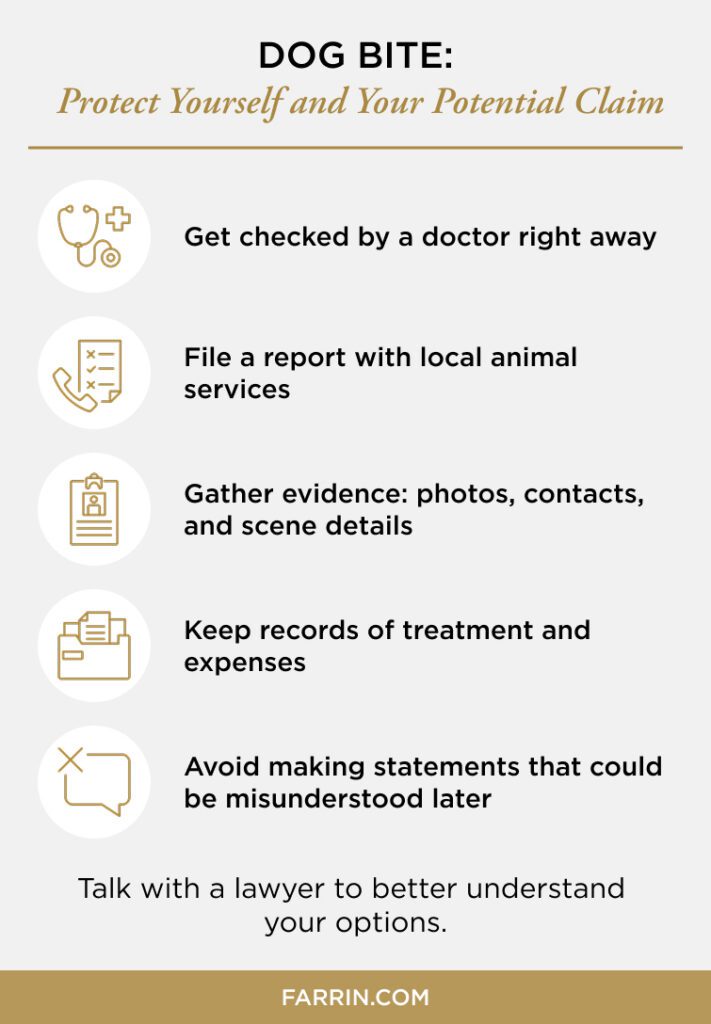
Seek Medical Attention Immediately
Dog bites carry a serious risk of infection because of the bacteria present in canine saliva. Conditions like rabies, tetanus, and cellulitis can develop from even seemingly minor wounds. If the bite broke the skin, caused deep puncture wounds, or resulted in heavy bleeding, get medical care right away. Even if the injury seems manageable, having a medical professional examine and document your wounds creates important records.
Dogs bite more than about 4.5 million people annually, and approximately 885,000 seek medical attention each year, with nearly 370,000 requiring emergency department care. These statistics underscore why prompt medical evaluation matters — you want professionals assessing whether your specific injury needs treatment beyond basic first aid.
Report the Dog Bite Incident to Guilford County Animal Services
North Carolina law requires all dog bites to be reported to local health authorities. In Greensboro and the surrounding area, you can contact Guilford County Animal Services at 336-641-5990 Monday through Saturday from 8 a.m. to 5 p.m. Reporting triggers several important processes, including:
- A mandatory 10-day quarantine period for the dog to monitor for rabies symptoms
- An official record of the incident
- Investigation into whether the dog should be classified as dangerous or potentially dangerous
Filing a report is not about punishing the dog or its owner — it is a public health measure designed to protect both you and others who might encounter the same animal.
Document Everything You Can
Strong documentation builds a stronger case. If you are physically able to do so, gather as much information as possible at the scene and in the days that follow:
- Photograph your injuries from multiple angles, both immediately and as they heal or change
- Get the dog owner’s name, address, phone number, and homeowner’s insurance information
- Collect names and contact information from any witnesses
- Take pictures of the location where the attack occurred
- Keep records of all medical treatment, medications prescribed, and follow-up appointments
- Save receipts for any expenses related to the bite, including medical bills, prescriptions, and transportation to appointments
Avoid Making Detailed Statements
Insurance companies representing dog owners often reach out quickly after an incident, sometimes offering what appears to be a quick settlement. Be cautious about accepting any offer or signing any documents before you fully understand the extent of your injuries and their potential long-term effects. What seems like a minor bite today could develop complications that require extensive treatment.
Similarly, be careful about what you say to the dog owner, their insurance company, or even on social media. Statements like “It was my fault for not seeing the dog” or “I probably shouldn’t have been walking there” could be used against you later.
Types of Compensation That Might Be Available
When a dog owner is held liable for injuries their animal caused, compensation might cover various categories of damages depending on the severity of the attack and its impact on your life.
- Medical expenses often form the largest portion of a dog bite claim. This generally includes emergency room visits, ambulance transportation, surgeries, wound care, prescription medications, physical therapy, and any future treatment you might need.
- Lost wages can cover income you may have missed while recovering from your injuries. If the bite prevents you from working temporarily or permanently affects your ability to do your job, this potential compensation might address both past and future lost earnings.
- Pain and related losses refer to the physical discomfort, emotional distress, and diminished quality of life that often follow a serious dog attack.
Children, in particular, might experience lasting psychological effects from a frightening bite incident. Scars, disfigurement, and the anxiety of being around dogs in the future can significantly affect daily life.
The Role of Homeowner’s Insurance
Most dog bite claims in North Carolina are covered by the dog owner’s homeowner’s or renter’s insurance policy. I often remind my clients that while they may feel uncomfortable pursuing compensation from a friend or family member, they may not have any other choice. Plus, the responsible party is likely to have homeowner’s insurance, and it’s the insurer who you’ll be seeking compensation from – not your family, friend, or neighbor.
Homeowners’ insurance companies pay out about $1.6 billion annually for dog-related injury claims, demonstrating that these policies routinely handle such incidents.
However, insurance companies are typically businesses that work to minimize payouts. They might argue that the owner did not know the dog was dangerous, that you provoked the animal, or that your injuries are less serious than you claim. Having proper documentation and understanding your legal options can help counter these tactics.
Filing Deadlines You Cannot Afford to Miss
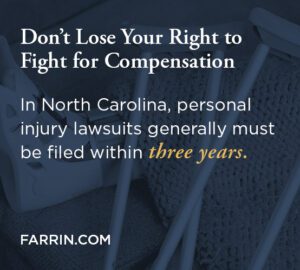
North Carolina imposes strict time limits on filing personal injury lawsuits. In most personal injury cases, North Carolina law gives you three years to file your lawsuit in court from the date of the bite. This deadline, known as the statute of limitations, applies to most dog bite cases.
Missing this deadline typically means losing your right to pursue compensation through the courts, regardless of how strong your case might be. While three years seems like plenty of time, investigation, medical treatment, and negotiation with insurance companies can cause months to pass quickly.
If a dog bite results in a death, the timeline changes. Wrongful death claims must generally be filed within two years of the date of death under North Carolina law. Given these strict deadlines, taking action early gives you the opportunity to build a strong case.
Children Face Unique Risks in Dog Bite Cases
Children make up a significant portion of these victims, highlighting the need for awareness and prevention. Young children, especially those under age 10, face one of the highest risk of dog bites and often sustain injuries to their faces and necks because of their height.
A child’s dog bite claim might include compensation for:
- Immediate and future medical care
- Reconstructive surgery for scarring or disfigurement
- Trauma therapy and mental health treatment
- Pain and the impact of permanent scarring on self-image
Parents and guardians can pursue claims on behalf of injured children. The law also recognizes that children cannot be expected to recognize danger the same way adults can, which might affect how insurance defenses like “provocation” are evaluated.
How an Attorney Can Make a Difference for You
North Carolina’s dog bite laws involve complicated questions about what the owner knew, when they knew it, and whether your own actions might affect your claim. Insurance companies handling these claims typically have teams of adjusters and attorneys working to protect their interests — and those interests often conflict with yours.
An attorney experienced in Greensboro personal injury matters can:
- Investigate the incident and gather evidence such as animal control reports, witness statements, and the dog’s history
- Investigate whether the owner violated local leash laws or had prior knowledge of the dog’s aggressive tendencies
- Handle communications and negotiations with insurance companies
- Calculate the full potential value of your claim, including damages you might not have considered
- File a lawsuit as needed if negotiations fail to produce a fair result
Many dog bite cases involve disputes over facts — the owner claims the dog was provoked, you insist you did nothing wrong. An attorney can help present your side effectively and counter arguments designed to shift blame onto you.
And you don’t need to worry about the cost of hiring an attorney – we operate on a contingency fee basis, and there are no fees unless we obtain compensation for you.²
Guaranteed.
This reduces the financial risk for you and allows you to seek justice without worrying about upfront costs.2
FAQs for New Dog Bite Laws in North Carolina
Here are answers to common questions Greensboro residents have about dog bite injuries and the legal process.
 Text Us